‘My mayor Muslim, my bagel’s Jewish’: who’s behind the Knicks chant uniting New York?

By Matthew Cantor • June 11, 2026 • US news
As the Knicks edge closer to winning the NBA finals for the first time in decades, a viral chant has become New York City’s anthem
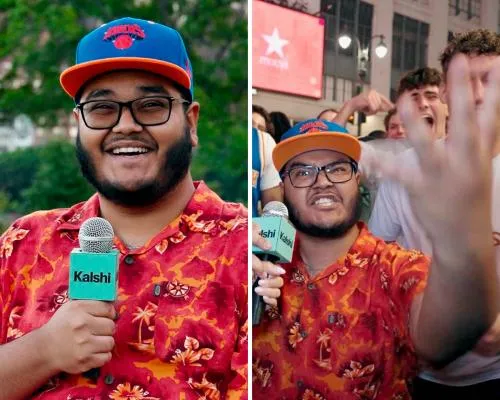
The New York Knicks are 3-1 up in the NBA finals, one game away from winning the championship for the first time since the 1970s. The mood in New York is electric, the city is strewn in blue and orange, crowds roar outside Madison Square Garden, and – at least last week – a viral chant has become a new unofficial New York City anthem: My mayor Muslim My bagel’s Jewish My Christian Dior Knicks in four After the team’s loss on Sunday, the last line is no longer viable – no team can now win the series in four games – but the chant has taken on a life of its own thanks to MD Ahnaf Hossain, a 23-year-old Knicks fan who shouted the bars in a Kalshi-branded TikTok video after a Knicks win last week. The New York Times called the lines “pure New York City poetry”, but the viral clip has spread far beyond the city limits, with 7.4m views on TikTok and the words appearing on T-shirts and hats. Last night Hossain was again filmed on the streets of New York with an updated version, which reflected the reality of the series and one Knicks fan celebrating in the Vatican: My mayor still Muslim My bagel’s still Jewish The pope’s on our side Knicks in five What is it about these lyrics that has propelled their rise? There’s Kalshi’s marketing power, of course – the video appeared on a channel where a Kalshi branded robot interviews fans, trying to copy the viral formula of the more organic New York man-on-the-street channel Sidetalk. There’s the positivity of the lines amid so much toxicity on social media. And there’s the easy sense of unity in a world that direly needs it, especially after a mayoral contest in which Zohran Mamdani’s opponents attempted to pit religious identities against each other. “I grew up with Jews, Muslims, Haitians, Pakistanis, Bengalis,” Hossain told the Washington Post. “I just had to bring everyone together.” The lyrics also build on hip-hop tradition, says AD Carson, a rapper and associate professor of hip-hop at the University of Virginia. “Hip-hop is ultimately as mimetic as any popular cultural product can be.” The first line is reminiscent of the Young Jeezy song My President, released in 2008 amid the rise of Barack Obama, which features the line “My president is Black, my Lambo’s blue”; the next year, after Obama’s inauguration, a Jay-Z remix of the song featured similar lyrics: “My president is Black, my Maybach too.” The Dior line, as Hossain has acknowledged, references the rapper Pop Smoke’s hit Dior. (Both Pop Smoke, who died in 2020, and Jay-Z are New Yorkers.) And the final line – a prediction of victory for a favored team in a set number of games – is also a familiar trope. “What the four lines are borrowing from – it’s a pretty rich, pretty fertile cultural text,” Carson says. What feels like an “offhand viral video moment” reveals “the capacity of rap – even a cappella rap lyrics – to hold information”. The lines also appear to have a direct predecessor: commentators have pointed out that tweets from May and early June use virtually the same language. Hossain told the Post he hadn’t seen the tweets. But how much would it matter if he had? “It’s hard to ever have a conversation like this about culture without discussing the politics of intellectual property,” Carson says. “I absolutely believe this is related to mimetic culture, which is to say he may not have seen the tweets and still could be influenced by them in the same way that ‘My mayor is Muslim’ seems to reference My President.” But that’s not the only source of controversy over the video. Others have pointed out that it is essentially an ad for Kalshi. The prediction market company is the source of the original clip, which was reposted by an X account with a bio promotes the site. Kalshi later posted a follow-up interview with Hossain, who said he was drawn to the “iconic green mic”. Kalshi gifted him an actual Dior scarf, during the second interview. Kalshi has since acknowledged “smart marketing” was behind the video, but remained vague about exactly how the clip was set up, telling Front Office Sports “it was also organic … we didn’t go find him and say, ‘Hey, come talk into this mic.’ He found us and then we connected to make the second video.” Jeff Hancock, founding director of the Stanford Social Media Lab, says marketing is part of the clip’s success, but it doesn’t explain all of it. He sees three ingredients at work: first, it’s all about New York, which remains the country’s biggest media market, second “it fits a moment, it’s funny, it’s engaging, it’s short and simple”. And finally, there’s the marketing behind the scenes, typically “some hidden engagement machine in which both the algorithms and some coordinated behavior” – related accounts that may be paid for highlighting and reposting a clip – serve to boost it. Of course, this doesn’t always succeed, which speaks to the potency of the chant. “They probably tried to do this kind of thing dozens of times, and it’s rare for it to go viral,” Hancock says. Hossain himself seems to be mostly taking his new found celebrity in his stride, he’s mostly focused on the games and the impact they’re having on the New York. He told the New York Times on Monday: “I think the sportsmanship is bringing a type of love we haven’t seen in the city for a long, long time,” he said.
Source: The Guardian
World News Today
97 posts
-
 Alleged rape of girl ‘simply not true’, Jeffrey Donaldson tells trial
Former DUP leader also rejects suggestion wife knew about or witnessed abuse, saying ‘there was nothing to know’
-
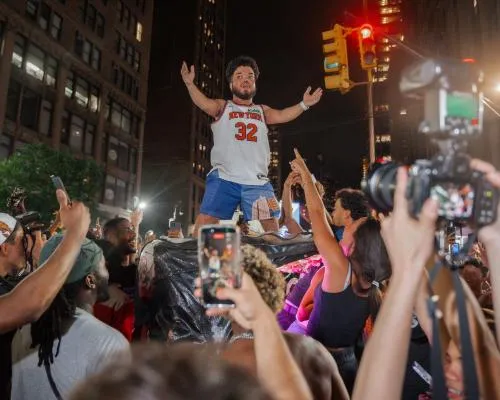 ‘Thank God for the Knicks’: New Yorkers abuzz after historic Game 4 comeback
Largest comeback in NBA finals history galvanizes city and inspires morning-after chants of ‘Knicks in five!’
-
 Hào quang của ông Trump dần phai trong giới giải trí Mỹ
Sức ảnh hưởng của Tổng thống Trump trong văn hóa đại chúng Mỹ có dấu hiệu suy giảm, phần nào phản ánh qua những sự kiện giải trí tại nước này.
-
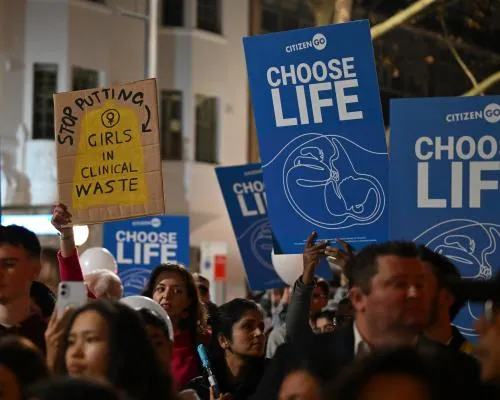 A shadowy overseas group is trying to influence Australian abortion policy. Who are they – and what do they want?
CitizenGo is hitching its wagon to Joanna Howe’s crusade, and the former Nationals MP George Christensen is on board
-
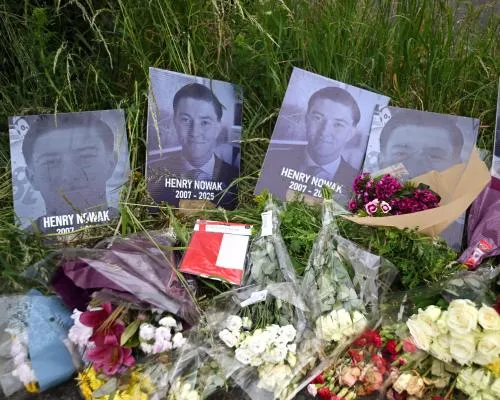 As a police officer, here’s what I saw in the video of Henry Nowak’s murder
Letter: We place too little emphasis on individual failures and instead extrapolate perceived organisational issues, says a reader
-
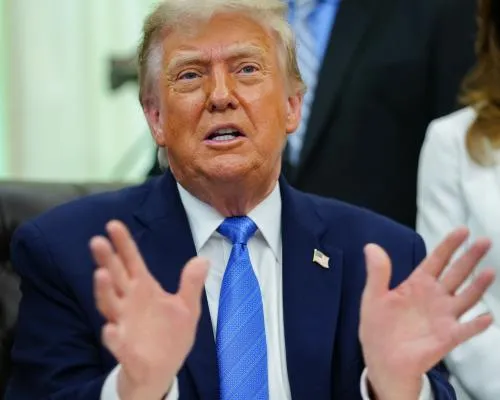 Trump threatens to strike Iran ‘very hard, tonight’ and to take Kharg Island
US president warns of further military action as both sides accuse each other of breaching temporary ceasefire
-
 Police warned for months about addresses targeted in Belfast riots
Exclusive: PSNI repeatedly warned by monitoring group for eight months after a so-called hitlist of addresses began circulating in far-right networks
-
 Rơi trực thăng quân sự ở Pakistan, ít nhất 22 người chết
Trực thăng Mi-17 của lục quân Pakistan gặp sự cố kỹ thuật và rơi tại vùng Kashmir, khiến ít nhất 22 người thiệt mạng.
-
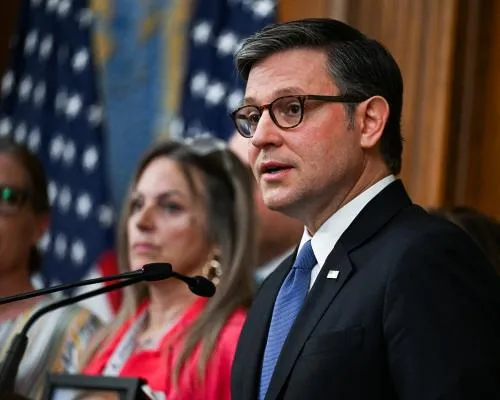 US House blocks extension of powerful surveillance law
Measure failed in 198-218 vote after Democrats said they would block renewal of Fisa over naming of Bill Pulte as acting director of national intelligence
-
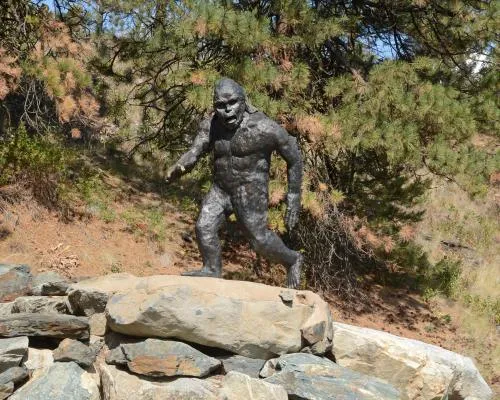 Sasquatch ‘sightings’ reignite fervour and scepticism about ape-like beast
Latest reports from rural Ontario add to tales going back decades about bipedal creature also known as Bigfoot


