By Leyland Cecco in Toronto and Bella Bella • June 11, 2026 • World news
Latest reports from rural Ontario add to tales going back decades about bipedal creature also known as Bigfoot
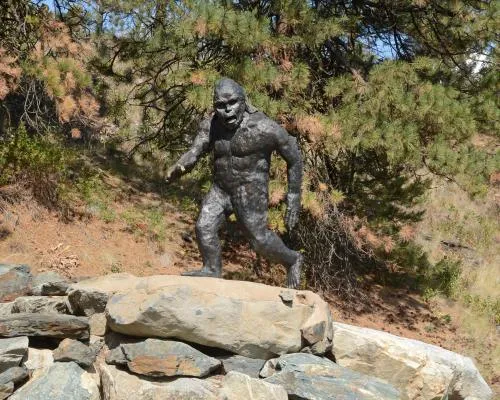
On a recent evening, residents in a corner of rural Ontario reported a series of strange encounters. “The birds stopped, the wind seemed to die down, and it got oddly quiet. That’s when I noticed movement ahead of me,” one witness wrote. A “strong, earthy smell” hung in the air. Then, “a massive figure slowly stepped out from behind the trees, and my heart instantly started racing”. Moments later, it vanished back into the forest and “everything slowly went back to normal”. The following morning, another witness reported seeing two creatures around sunrise. “One big, one not so big. The cinnamon was prominent on the smaller one,” they wrote. “There was an earthy stench.” The pair appeared to be scavenging through garbage. When the witness knocked on wood to scare them off, “they knocked back. That scared me off.” The creatures’ size, smell and movement matched closely with descriptions of the Sasquatch, or Bigfoot, a bipedal ape that believers say exists at the periphery of human understanding. Within days, the reports were circulating online and added to the Bigfoot Mapping Project, a database containing thousands of sightings from across the decades. In turn, the sightings were picked up by local news, prompting just the latest episode of fervour and scepticism over claims there are large, undiscovered species in the forests and woodlands of North America. What made the reports especially striking was their location. Chatham-Kent is one of Ontario’s least forested, most intensely farmed regions. It is a vast landscape of cropland punctuated by small woodlots and forested river valleys, far removed from the primal wilderness associated with Sasquatch lore. Canada, like the United States, has a long history of cryptid sightings. Some, like the 1620s account of a mermaid that swam up to a boat, only to be struck on the head with an oar by a panicked sailor, stretch the imagination. Others, such as serpents in the Pacific, could be linked to cases of mistaken identity. Yet no cryptid has loomed larger than the Sasquatch. “Humans are naturally curious, and while there can be something frightening about the unknown, there can also be something exciting about it,” said Josh Redstone, a professor of philosophy at Carleton University. “And for people who believe in Sasquatch, there’s an excitement around the possibility of discovering something new.” Centuries before European settlers arrived, Indigenous nations told stories about large human-like creatures living in forests that transitioned between physical and spiritual worlds. Others believed it was a malevolent force that served as cautionary tale for children. But it was not until 1929 that a magazine article first thrust the idea of a primeval survivor in the woods into the broader public consciousness. The piece, written by an Indian agent, recounted stories from the Chehalis First Nation, which told of the “Sasquatch” – taking the name “Sasq’ets” from the Halq’eméylem language. In the following years, thousands of reports flooded in, the majority of which described a large, dark-haired bipedal ape that was skittish around humans. Even renowned primatologist Jane Goodall conceded she was a “romantic” when it came to the prospect of something yet undiscovered. “I don’t want to disbelieve,” she said. Naturalist David Attenborough takes a more measured approach, suggesting Sasquatch – and its Himalayan counterpart the Yeti – reflect a long-held cultural memory of a long-extinct primate. Sceptics argue that Sasquatch believers underestimate just how many of these mammals would have to exist in order to maintain a breeding population that could persist for generations. For a giant primate to survive, there would need to be a population of several hundred individuals, across a large and wild environment. So far, no bones, body or DNA samples have ever been recovered. Footprints have proven frustratingly divisive. Still, this has done little to dim the hopes of groups such as the Bigfoot Mapping Project, which has catalogued more than 16,600 sightings across North America. The reports are concentrated around some of the continent’s wildest landscapes, but they also include golf courses, suburban ravines and prairie treelines. For Redstone, one of the most overlooked aspects of the Sasquatch phenomenon is how dramatically conceptions of the creature have changed over time. The idea of the giant ape hiding in the wilderness is now so culturally pervasive that many people assume the stories have always existed. But many Indigenous traditions understood it differently. “When people cite Indigenous stories of Sasquatch, they often ignore that for many communities, these creatures were actually a society of giant people who had clothing and tools but they just lived far away in the wilderness,” he said. “The idea of an ape – a lost primate – is relatively new.” It wasn’t until one British Columbia town, in an attempt to put itself on the map, hosted a Sasquatch hunt in the 1950s that people collectively began solidifying their view of what the monster lurking in the woods might look like. “And now,” he said, “it’s all people see.” The popular conception of Sasquatch was finally sealed in shaky 16mm footage which emerged from Bluff Creek, California in 1967. The one minute clip, showing what appeared to be a large ape, walking on two legs and staring back at the cameraman, cemented its place in popular culture. Redstone isn’t entirely dismissive of reported encounters, and says there is a middle ground that helps explain them. “Over millions of years, our brains have become very, very good at identifying what’s alive in our environment. But they also have the tendency to see life where there is none. Because from a survival perspective, it’s better to assume something is alive than the opposite,” he said. Many sightings are at night or in settings that jar the senses: dense forests, tangled river valleys, foggy roadsides. “Even familiar environments can seem kind of eerie, especially if you feel like something’s out there. It can be fascinating and unsettling – and an explanation for why a lot of people have these experiences,” he said. “I’m of the belief that we probably won’t ever find Sasquatch, but we should all go outside and encounter nature a little bit more.” A recent study suggested that purported Sasquatch sightings are actually black bears, a predator with shaggy fur, which stands on two legs at times and can move swiftly and effortlessly through the forest landscape. The study mapped reported Sasquatch sightings alongside known black bear populations and found a strong correlation. But Sasquatch researchers – including amateurs and tenured university professors – argue that, even if virtually all of the sightings are dismissed as hoaxes or misidentifications, the remaining sliver of unexplained experiences require further study. “I’ve long wanted to find out, once and for all, what’s happening” said John Zada, whose book, In the Valleys of the Noble Beyond examines the history of sightings in one of the most remote and disorientatingly wild parts of Canada. He found countless cases of misidentifications. But he also found that for many people the creature reflected something deeper. “For some people, it reflects an aspect of the wilderness that has been unconquered: the Sasquatch is a human personification of the most elusive heart of nature. For the First Nations people, it holds a place in a broader spectrum of environmental stewardship. There are symbolic aspects to this creature which transcend the question of ‘Does it or does it not exist.’” Sasquatch has endured for centuries, he says, precisely because it resists any single interpretation. That ambiguity persists in places such as Bella Bella, a community tucked in the folds of British Columbia’s central coast, where stories of Sasquatch are woven into the landscape itself. Inside the community’s Big House a Sasquatch-like figure is carved into one of the ceremonial cedar house posts. Most of the region is thick, unforgiving old growth rainforest. In the distance are mountains leaping vertically from the landscape and the punishing swells of the Pacific. Fog can quickly envelop the lands and waters. There is no road connection to the provincial highway network. For both believers and sceptics, it is the kind of location that makes an undiscovered species seem possible. It was near Bella Bella, in the summer of 1994, that Elroy White had an experience that has stumped him for decades. White, a trained archaeologist, Heiltsuk elder and elected councillor, has spent much of his life exploring the remote archipelago for hints of his ancestors’ presence. That year, he was working in a small camp, about 6 miles (10km) to the east of Bella Bella. One day, he went to check on a couple who lived nearby and the only people in the area. When he arrived, he found them picking berries near a river. “We heard this really loud clap – like hitting a tree with a plank of wood. And we knew no one was staying up the river.” In Heiltsuk oral tradition, the creature known as Thla’thla uses loud, rhythmic sounds that reverberate from deep within the forest. Sasquatch enthusiasts call it “wood knocking”. “It kept happening, and it kept getting closer and closer. It kept getting louder and louder,” he said. The group froze. About 60 metres or so away, across a broad grassy flat, was a trail. “We were waiting for it to emerge there. But when the sound got to the end of the trail – just out of sight – it stopped. “I don’t know what it was. I’d know if it was worried or scared of us. But nothing ever came out. And then it didn’t make that sound again. I haven’t heard anything like that since.”
Source: The Guardian

Guardian News World
101 posts
-
 Trump threatens to strike Iran ‘very hard, tonight’ and to take Kharg Island
US president warns of further military action as both sides accuse each other of breaching temporary ceasefire
-
 Police warned for months about addresses targeted in Belfast riots
Exclusive: PSNI repeatedly warned by monitoring group for eight months after a so-called hitlist of addresses began circulating in far-right networks
-
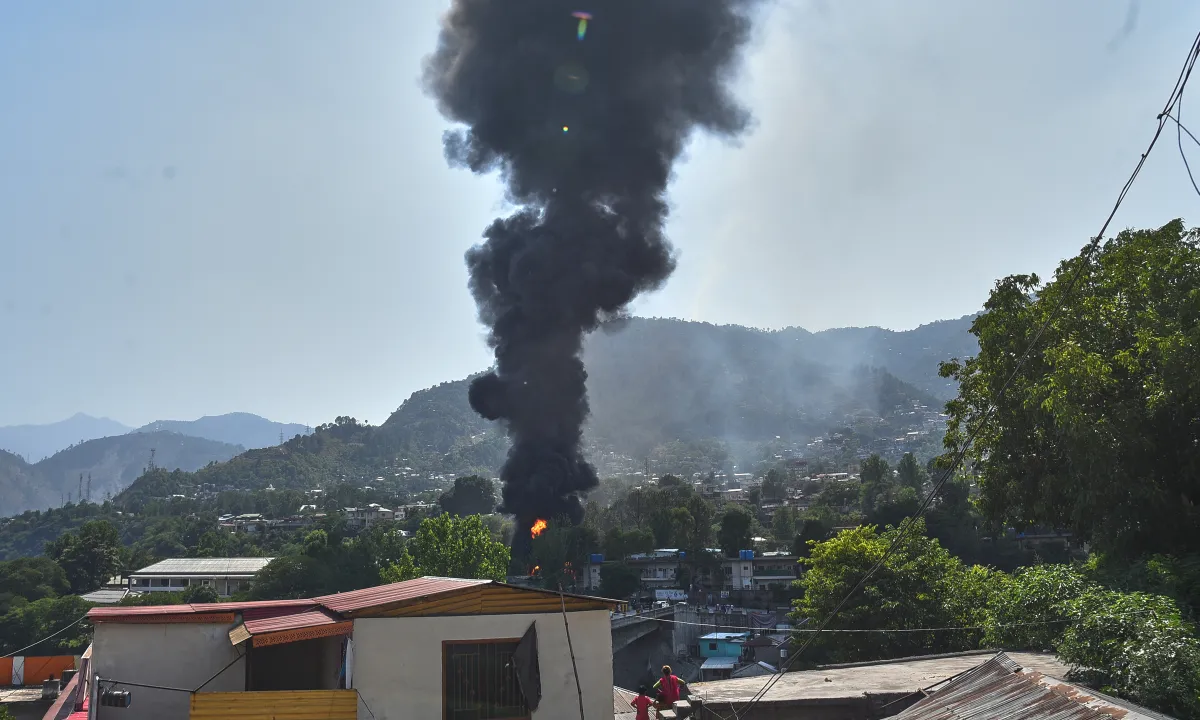 Rơi trực thăng quân sự ở Pakistan, ít nhất 22 người chết
Trực thăng Mi-17 của lục quân Pakistan gặp sự cố kỹ thuật và rơi tại vùng Kashmir, khiến ít nhất 22 người thiệt mạng.
-
 US House blocks extension of powerful surveillance law
Measure failed in 198-218 vote after Democrats said they would block renewal of Fisa over naming of Bill Pulte as acting director of national intelligence
-
 Xuất hiện video 'tên lửa Iran vượt qua lưới Patriot' ở Jordan
Video mới đăng cho thấy loạt tên lửa đạn đạo Iran lao xuống Jordan, trong khi các tổ hợp Patriot khai hỏa và có thể đã để lọt mục tiêu.
-
 Care worker fears being parted from unborn child and family after Home Office ‘go home’ letters
Pregnant woman in Scotland ‘stressed’ and unsure what will happen as result of UK government’s visa clampdown
-
 AI wealth boom sending San Francisco home prices surging: ‘It’s ridiculous’
Employees at artificial intelligence companies are coming into gargantuan sums of money amid boom in IPOs
-
 Steve Jobs - từ đứa trẻ bị chối bỏ đến biểu tượng công nghệ
Bị chối bỏ từ khi chưa chào đời, bỏ học, bị đuổi khỏi công ty mình sáng lập rồi trở lại đỉnh cao, Steve Jobs đã từng bước trở thành biểu tượng của giới công nghệ.
-
 Bộ trưởng Quốc phòng Anh từ chức
Bộ trưởng Healey từ chức vì bất đồng liên quan chi tiêu quốc phòng, chỉ trích Thủ tướng Starmer không cam kết đủ nguồn lực để bảo vệ đất nước.
-
 Hai tháng Mỹ - Iran vừa đánh vừa đàm
Mỹ và Iran ngừng bắn để đàm phán từ đầu tháng 4, nhưng tiếng súng đến nay không dừng lại, khi hai bên tìm cách dùng biện pháp quân sự để gây sức ép với nhau.


