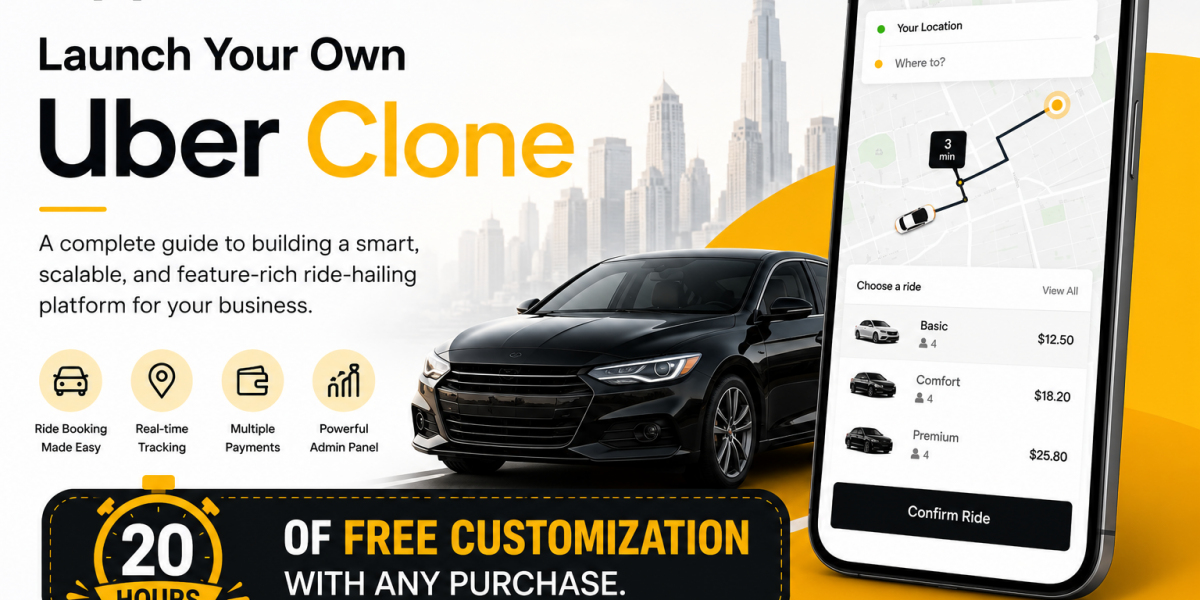
The technology to start a ride-hailing business is no longer the hard part — getting a real rider into a real car is. Founders who lean on an Uber Clone remove the engineering bottleneck, but they still face the operational work that decides whether the platform fills with rides or sits empty. This is a sequenced playbook: not "build an app," but "build a working local marketplace," step by step, in the order that actually works.
The throughline is sequencing. Founders fail less because they pick the wrong feature and more because they do things in the wrong order — chasing riders before they have drivers, or launching citywide before they have proven a single neighborhood. Follow the steps below roughly in order.
Step 1: Choose a Beachhead Market
Resist the urge to launch everywhere. Pick one city, or even one corridor within a city, where demand is concentrated and the competition is thin. University districts, suburbs underserved by incumbents, airport routes, and night-economy zones are classic beachheads. A narrow market lets your limited driver supply create short wait times, which is the single thing that makes riders return.
Step 2: Validate Before You License
Before spending, confirm demand. Talk to potential riders and drivers, study local transport gaps, and check the regulatory climate — some cities require specific permits for ride-hailing. This research costs little and saves you from launching a polished Uber Clone Script into a market that does not want it. Validation is the cheapest insurance you will ever buy.
Step 3: License and Brand Your Platform
With demand confirmed, choose your software. Pick reliable Taxi Booking Software that includes the rider app, driver app, and admin panel, then brand it as your own — logo, colors, name, and tone. This is where your business becomes visibly yours. Keep customization lean at first; you can refine the experience once real riders are giving you feedback.
Step 4: Solve the Supply Side First
This is the step most founders get backwards. In a marketplace, drivers come before riders, because an empty map kills demand instantly. Recruit a core fleet before you advertise to passengers — approach existing taxi drivers, gig workers, and local driver communities. Offer launch incentives like low or zero commission for the first months. A White Label App Solution with strong driver tools and fast payouts makes this recruitment far easier, because drivers can see they will actually get paid quickly.
Step 5: Run a Controlled Soft Launch
Open quietly to a small group before any big push. Invite friends, local businesses, and a handful of early riders to test real trips. Watch where the experience breaks — confusing screens, slow matches, payment hiccups — and fix them while the stakes are low. A soft launch turns embarrassing bugs into private lessons instead of public reviews.
Step 6: Drive Demand With Local Tactics
Now fill the cars. Hyperlocal marketing beats broad advertising at this stage: partner with bars, hotels, event venues, and student groups; offer first-ride discounts; and lean on referral rewards so each rider brings the next. Because your Ride-Hailing App already handles promo codes and referrals, you can run these campaigns without touching code. The goal is to keep wait times short, which means matching marketing spend to your available driver supply — not outrunning it.
Step 7: Measure, Fix, and Expand
Once rides are flowing, your admin dashboard becomes your compass. Track wait times, cancellation rates, repeat-rider percentage, and driver earnings. Fix whatever is leaking riders or drivers before you grow. Only when one zone is running healthily — short waits, happy drivers, returning riders — should you replicate the playbook in the next neighborhood or city.
FAQ
How many drivers do I need to launch? Fewer than you think for a tight beachhead — often twenty to fifty active drivers can keep wait times reasonable in a small zone. Density matters more than total count.
Should I market to riders or drivers first? Drivers, always. Riders who open the app to an empty map rarely come back. Build supply, then turn on demand.
How long until I see meaningful traction? With a focused beachhead and a recruited fleet, early operators often see steady daily rides within a few months. Citywide ambitions stretch that timeline considerably.
Conclusion
Launching a taxi startup on a ready-made platform is less about the software and more about sequence: choose a small market, validate it, brand your platform, recruit drivers first, soft-launch quietly, market locally, then expand only what already works. The technology gives you a running start; this order keeps you from tripping over the most common launch mistakes.
Launch Faster with Zipprr
Zipprr hands you a fully branded, ready-to-run platform so you can spend your energy on drivers and riders instead of code. Tell the Zipprr team about your beachhead city, and they'll help you get from idea to your first paid ride.

Hazel Davis Davis
2 posts
-
 Paraquat will continue to be used in Australia despite 70 countries banning weedkiller over Parkinson’s disease fears
Herbicide manufacturer Sygenta had reservations dating back to 1970s but regulator says tighter controls, including phasing out backpack sprayers, can protect workers
-
 Did you solve it? Dotty data and silly sentences
The solutions to today’s puzzles – and the winner of the Anguish Languish contest
-
 Can you solve it? Dotty data and silly sentences
When numbers and sounds are not what they seem
-
 Starwatch: how to spot Hercules the hero, jewel of the summer skies
Search for lopsided body and limbs of constellation between bright stars Vega and Arcturus
-
 Pointless words that litter our language are, like, so unnecessary
Letters: Readers reflect on Louis de Bernières’s dislike of imprecise and redundant speech
-
 Graham Clarke obituary
Other lives: Academic and author who specialised in the works of the psychoanalyst Ronald Fairbairn
-
 ‘It’s a scam’: Americans express unease over SpaceX’s influence on retirement savings
Guardian readers in the US share concerns about how the SpaceX IPO and AI boom affect their retirement accounts
-
 SpaceX makes largest ever stock market debut, making Elon Musk world’s first trillionaire
Initial public offering for aerospace and AI company made Musk the world’s first trillionaire as share prices jumped
-
 Ancient DNA provides evidence of earliest known plague outbreak
Discovery in Siberia suggests bacterium from raw marmots devastated hunter-gatherer tribes about 5,500 years ago
-
 Plantwatch: Russian dandelion offers solution to global rubber shortage
Scientists are returning to a wartime solution that may be more sustainable than the traditional rubber tree
-
 Goats can find food by following a human voice, study finds
Experiments show 29 animals moved towards a treat-filled bucket 60% of the time when guided by a researcher


