By Luca Ittimani • June 23, 2026 • UK news
Public transport users and coal miners are among the winners in NSW Labor’s 2026 budget, while NDIS participants and gun owners are among the losers
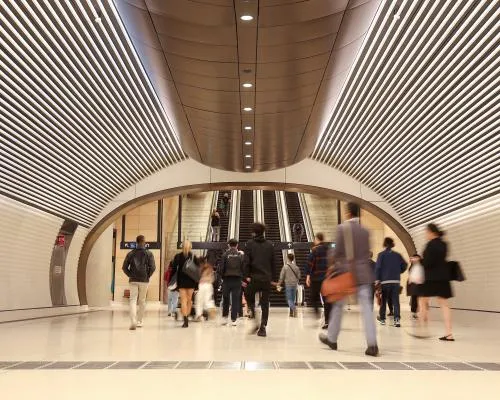
New South Wales’ latest budget has little to ease the state’s housing crunch and forecasts booming spending on essential workers. But after Labor’s fourth year running the books, who’s really winning? And how much debt will the state take on to pay for it? NSW budget winners Commuters The flagship cost-of-living relief measure is a one-year $100 discount on private vehicle registration. NSW’s 4.4 million motorists are expected to save a combined $435m on the measure. The weekly cap on road tolls will be cut from $60 to $50 for one year at a cost of $45m, Treasury says. Toll administration fees, which each cost at least $10, will be scrapped. For public transport, NSW has frozen 2025’s fares for a year after years of steady increases. About 400,000 people catch public transport each day and the freeze forgoes an estimated $43.3m of revenue over a year – suggesting public transport users will each save an average of $100 over the year. NSW’s relief does not go as far as Queensland’s 50c fares or Victoria’s free or half-price fares. Gambling operators Big poker machine operators continue to win hundreds of millions in tax breaks. Gaming machines in clubs are taxed at a lower rate than pokies in pubs. That concession will save clubs $1.16bn in 2026-27, costing the budget. Half of those breaks go to the top 6% of clubs that profit the most on poker machines. Some clubs also get tax rebates proportionate to their gaming machine profits, with ClubGRANTS rebates set to rise to $84m in 2026-27. The state collected $86m more on gambling and betting taxes than expected in 2025-26. The tax take is expected to rise from $3.8bn in 2025-26 to $4.7bn in 2029-30, with most of the growth coming from taxes on gaming machines in pubs. Coalminers The Middle East conflict is weighing on economic activity and government tax revenues – but coalminers are among the rare winners. The budget reports thermal coal prices are up more than 20% since the conflict broke out as the world sought to ensure its energy supply, meaning NSW’s 35 coalmines received windfall revenues. That will boost the tax take, with NSW forecast to get an extra $84m in royalties over the last few months alone, and $186m over the coming financial year. Essential workers The government is trumpeting huge growth in the hiring and wages of essential workers. NSW now has 70,895 nurses, an increase of 6,556 since 2023, and 6,310 paramedics, an increase of 986 since 2023. The budget puts $10.3bn towards adding 9,000 more health workers and a three-year pay rise of 16% for nurses and midwives. The state has 86,512 teachers on staff, up 2,263 since 2023, backed by 42,054 educational support staff, an increase of 2,098 since 2023. The number of vacant teacher positions is down 71% from late 2022, from 3,311 to about 960, according to the budget papers. The police force grew 2% larger on 1 May, when NSW swore in 249 recruit probationary constables, the largest class since 2012. Fire and Rescue NSW added 481 firefighters in the last six months, after growing by 648 over the previous year. Essential worker starting salaries have increased a long way from 2022-23 to 2026-27. The government reports the first year salary for registered nurses, teachers and paramedics have all risen more than 20% since 2022-23. Public health patients The government expects NSW’s health system to gain capacity for an extra 33,000 emergency department presentations a year and 2,900 extra planned surgeries a year. To reduce bed block, $35.7m will be spent on an aged care pilot program to help older patients stuck in public hospitals return home. An $11.9bn investment to upgrade or build 32 hospitals will see $3.8bn go to western Sydney. Renewable energy Labor is putting more money towards green energy projects. Households with combined incomes below $210,000 can apply for interest-free loans of up to $15,000 for solar and energy-saving technology. Households on combined annual incomes of up to $80,000, or eligible concession card holders, will also be able to get discounts of up to $4,000 on their upgrades. An additional $225m will go to infrastructure to connect the south-west renewable energy zone. NSW budget losers Housing market The budget offers little new to boost NSW’s struggling housing supply. Approvals and completions of new homes are rising but at their lowest level in ages. The state is running well behind its target under the Albanese government’s aim to build 1.2m homes in five years to 2029, building just 258,000 of an expected 376,000 homes each year on average. The budget offers little new funding to change that, adding $80m to last year’s developer finance guarantee to fund affordable housing. Worse, the slowdown in home sales from interest rate rises and the federal reforms to property investor taxes is going to cost the government $8.4bn in lost revenue over four years. The government projects its stamp duty exemption will drop from $664m worth of use this year to $600m of use, implying a 10% fall in first home buyer activity. State debt The state will hit $200bn of debt in 2027-28 thanks to surging expenses, a bar it had not previously expected to breach. That means debt is growing faster than NSW’s economic activity, or gross state product. It was expected to peak at 20.4% of GSP in 2026-27 then fall to 19.6% by 2028-29. Now it’s forecast to hit 20.7%in 2027-28 and hold at 20.5% by 2029-30 – when gross debt will total $219bn. This is a problem for the state’s interest bill, which threatens NSW’s credit rating and could lead to investors charging higher interest rates on the growing debt. NDIS participants The federal government is planning to cut 241,000 participants from the national disability insurance scheme but NSW says it can’t step in to save them. NSW has put just $631.9m over five years towards the federal Thriving Kids program, which is supposed to replace supports for children with autism younger than nine, as they are moved off the NDIS. That program is set to be delivered from October. Gun owners While every other state has pulled out of a gun buyback in the wake of the Bondi shooting, NSW is still working with the federal government on the funding and parameters of the buyback, the budget shows. The NSW firearms registry will also receive $42.8m over 10 years to tighten background checks for gun buyers and enforce the state’s toughened firearms laws, license restrictions and storage requirements. Sharks and feral pigs There’s $16.3m for regional pest control programs and feral pigs are the top priority. The government’s shark management program will be expanded after a spate of recent shark attacks. Smart drumlines, beach netting, surveillance drones and listening stations will be funded. The government will also set up a new office of animal welfare and fund the RSPCA and Animal Welfare League’s work, at a cost of $13.7m in 2026-27. Fatberg-clogged waterways A fatberg the size of four buses floats in the Malabar sewage treatment plant on Sydney’s coast. It is believed to have birthed the poo balls that closed Sydney beaches. Sydney Water is working improve its water processing in a 10-year $3bn Malabar system investment program. But an independent body sets Sydney Water’s prices and the agency has not received all the money it wants. The government has not added any more money in this budget to speed up solutions and clear the fatberg.
Source: The Guardian

Uk News Feed
182 posts
-
 ‘Geldof started flicking Vs at Farage’: the story of the Brexit campaign, told by those with a front-row seat
How five months in 2016 that encompassed Boris Johnson siding with Vote Leave, Jo Cox’s murder and David Cameron’s resignation shaped the UK’s future
-
 First Thing: Iran says there is ‘progress’ in talks despite Trump’s coarse threats
US president threatened Iran over strait of Hormuz in sweary outburst. Plus, Starmer to step down as UK’s PM two years after historic landslide
-
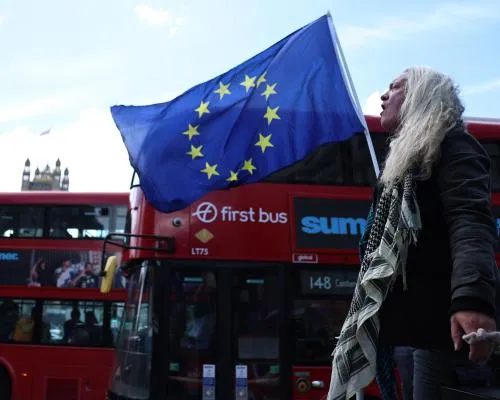 UK marks 10 years since the Brexit referendum – Europe live
Analysis, commentary and reaction on the decade since the UK voted to leave the European Union
-
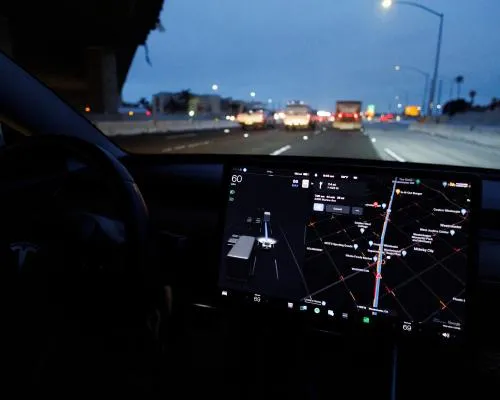 Tesla drivers crash into swimming pool and home in separate US incidents
Texas man using ‘automated driving assistance system’ crashed into house and Connecticut man drove into pool while trying to park
-
 Thủ tướng Anh từ chức: Kết thúc một nhiệm kỳ đầy thách thức
Thủ tướng Anh Keir Starmer thông báo từ chức sau gần hai năm tại vị
-
 Whistleblower investigating Ecuadorian president’s family business was murdered, activists say
Monika Silva Koniuszek died from a blow to the head and strangulation, postmortem found, despite government claim of suicide
-
 ‘I remember the shock’, ‘It can still be reversed’ – what do Europeans think of Brexit now?
After the 2016 referendum, panellists from other EU countries responded in the Guardian. Ten years on, we’ve gone back to them
-
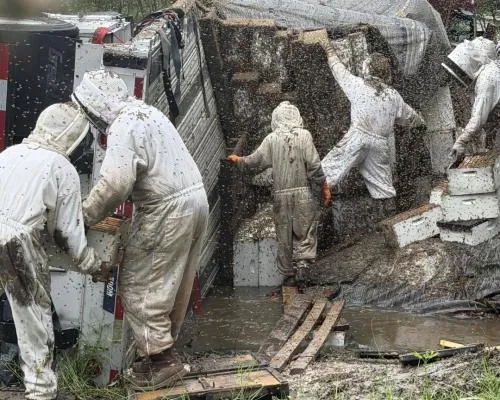 Two million bees escape after truck carrying hives overturns in Texas
Accident was resolved fairly quickly and authorities said the bees were being transferred to local beekeepers
-
 Mâu thuẫn Ba Lan - Ukraine về vấn đề UPA: Căng thẳng gia tăng
Mâu thuẫn giữa Ba Lan và Ukraine về vấn đề UPA và vụ thảm sát Volhynia
-
 Europe heatwave live: UK issues rare red temperature warnings; French PM to hold crisis meeting after heat deaths
Temperatures could hit 38-40C in parts of England and Wales, smashing June record set in 1976; red alerts in France after 19 heat deaths


