By Stuart Clark • June 22, 2026 • Science
Search for lopsided body and limbs of constellation between bright stars Vega and Arcturus
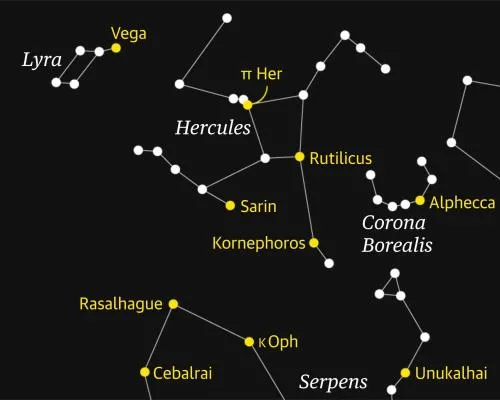
Hercules, the hero, is a jewel of the summer skies but one that requires a little bit of sleuthing to track down. The chart shows the view looking high in the southern sky from London at 11pm on Monday. The view, however, remains essentially unchanged all week. The easiest way to locate Hercules is to identify the bright star Vega in Lyra, the lyre, and orange Arcturus in Boötes, the herdsman. Hercules lies between these beacons. Look for the four modest stars that form a lop-sided square: this is the keystone asterism, marking the body of Hercules. From there, you can trace the hero’s arms and legs, and realise just how big the constellation is. Of the 88 modern constellations recognised by the International Astronomical Union, Hercules is the fifth largest by area. In Greek mythology, Heracles – the name Hercules is the Roman equivalent – was the son of Zeus and the mortal Alcmene. In an attempt to tame his volatile nature, he was set 12 labours by King Eurystheus. These tasks took him to distant lands and the underworld. Hercules was one of the 48 constellations listed by Ptolemy in the second century. From the southern hemisphere, it can be seen low in the northern sky during the evening.
Source: The Guardian

Science Daily
52 posts
-
 Can you solve it? Dotty data and silly sentences
When numbers and sounds are not what they seem
-
 Pointless words that litter our language are, like, so unnecessary
Letters: Readers reflect on Louis de Bernières’s dislike of imprecise and redundant speech
-
 Graham Clarke obituary
Other lives: Academic and author who specialised in the works of the psychoanalyst Ronald Fairbairn
-
 ‘It’s a scam’: Americans express unease over SpaceX’s influence on retirement savings
Guardian readers in the US share concerns about how the SpaceX IPO and AI boom affect their retirement accounts
-
 SpaceX makes largest ever stock market debut, making Elon Musk world’s first trillionaire
Initial public offering for aerospace and AI company made Musk the world’s first trillionaire as share prices jumped
-
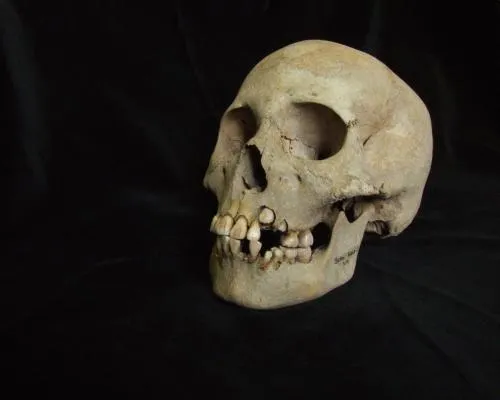 Ancient DNA provides evidence of earliest known plague outbreak
Discovery in Siberia suggests bacterium from raw marmots devastated hunter-gatherer tribes about 5,500 years ago
-
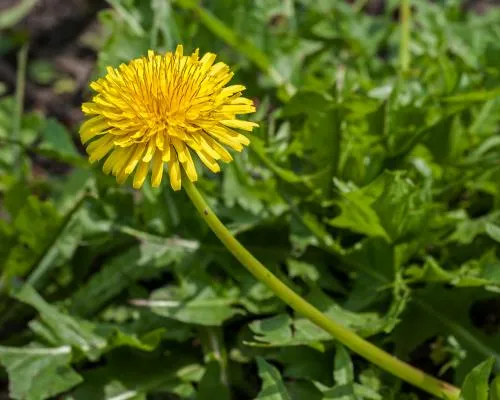 Plantwatch: Russian dandelion offers solution to global rubber shortage
Scientists are returning to a wartime solution that may be more sustainable than the traditional rubber tree
-
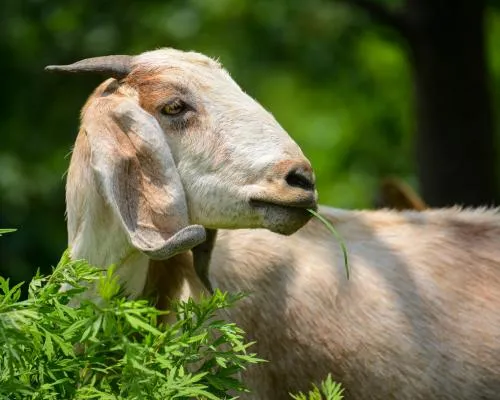 Goats can find food by following a human voice, study finds
Experiments show 29 animals moved towards a treat-filled bucket 60% of the time when guided by a researcher
-
 SpaceX to buy AI coding firm Anysphere for $60bn and passes Amazon valuation
Elon Musk firm adds startup behind Cursor app to its portfolio with xAI and reaches $2.8tn market capitalisation
-
 Raphaël Dubois knew why we walk anticlockwise
Letters: Readers respond to an report on experiments that have shown a left-turn bias among humans


