By Richard Luscombe in Miami • June 11, 2026 • US news
Robert Dillon was arrested at home in Florida despite living 300 miles away from where a crime was committed
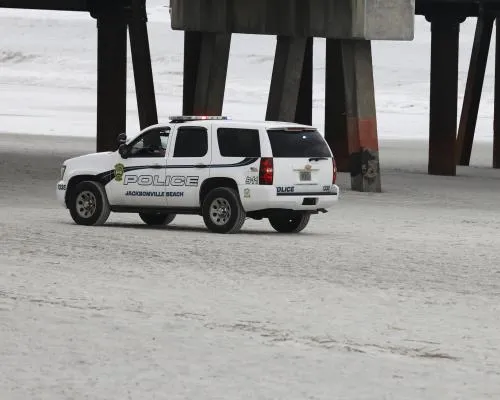
A Florida man is suing several law enforcement agencies for his arrest and prosecution for allegedly luring a child after he was wrongly identified using faulty AI facial recognition software. According to the Jacksonville Beach police department, an algorithm returned a 93% probability that Robert Dillon was the man caught on security cameras at a McDonald’s in the town attempting to persuade an unaccompanied girl, aged younger than 12, to leave with him. Dillon, however, lives in Fort Myers, more than 300 miles and a five-hour drive away, and told detectives he had never been to Jacksonville Beach in his life. The case was dismissed and charges dropped last year over the August 2024 incident. Now the 52-year-old has filed a lawsuit against the police department, the Jacksonville sheriff’s office, and Bob Gualtieri, the sheriff of Pinellas county, whose agency maintains and operates the Faces (Face Analysis Comparison and Examination) system and leases it to other law enforcement. “[The] investigation resulted in the wrongful arrest and prosecution of an innocent man,” the American Civil Liberties Union (ACLU) said in a lawsuit filed on Dillon’s behalf on Tuesday in district court in Fort Myers. “Mr Dillon was arrested at his home in front of his wife. He was accused of attempting to lure a child, a charge carrying devastating social stigma and permanent reputational destruction. He was subjected to months of criminal prosecution, and publicly branded with a mugshot that remains accessible online, long after the charges were dropped. “He no longer feels comfortable being friendly to children. No law enforcement agency has ever apologized or acknowledged the error.” The lawsuit further alleges that Dillon’s case is at least the 15th nationally to have involved a person being charged or arrested after a false identification. A Guardian investigation last month found that oversight of AI facial recognition systems was woefully inadequate, in the UK and elsewhere, and that advances in the technology were far outpacing authorities’ ability to regulate it. “Rather than test the machine’s answer against the evidence that would have cleared him, the officers built a case to confirm it,” Dillon’s lawsuit said. It identified Scott O’Connell, JBPD’s lead investigator on the case, as having deliberately omitted “multiple categories of readily verifiable exculpatory evidence” from the arrest affidavit. The court document said license plate readers showed none of Dillon’s vehicles were ever near the restaurant. It also alleged O’Connell withheld from the arrest warrant’s issuing magistrate that the photograph run through the Faces software of the suspect was a low-definition, poor-quality screen grab of security footage taken on an officer’s cellphone, not a digital upload from the recording itself. Additionally, the lawsuit states, O’Connell did not challenge the assertion of a McDonald’s employee – who picked out Dillon from a photo line-up of six similar faces – that the suspect was a “regular customer” at her restaurant who had visited multiple times in previous weeks. O’Connell was aware Dillon lived hundreds of miles away, the lawsuit said, and knew that would have been impossible. “These Florida police departments owe it to Mr Dillon to make amends and to take serious steps to make sure this doesn’t happen to anyone else,” Nate Freed Wessler, deputy director of the ACLU’s speech, privacy, and technology project, said in a statement. “Police across the country are on notice: Unreliable face recognition technology is hurting people, and we will keep fighting to hold them accountable for these abuses.” In a separate but similar case reported earlier this month, Jalil Richardson, of Charlotte, North Carolina, said he was extradited to Jacksonville and spent almost three months in jail after automated facial recognition placed him at the scene of a car theft. Timecards showed he was at work 400 miles away when the theft occurred. Dillon, meanwhile, said he remained traumatized by his experience. “Over a year later, I’m still picking up the pieces of my life, all because the police relied on this dangerous technology instead of doing their jobs and actually investigating,” he said. “Florida police must implement safeguards and ensure this never happens to anyone else, because until they do, nobody is safe.” The Guardian has contacted the Jacksonville Beach police department for comment.
Source: The Guardian

World News Today
79 posts
-
 Tuyên bố 'UAV Iran bắn rơi trực thăng Apache Mỹ' gây hoài nghi
UAV Shahed của Iran khó lòng bắn hạ trực thăng vũ trang Mỹ, sự việc gần eo biển Hormuz nhiều khả năng là tai nạn, theo chuyên gia.
-
 House panel to seek testimony from Alan Dershowitz about Jeffrey Epstein
Republican who chairs House panel says he based decision on testimony of Epstein’s longtime assistant Lesley Groff
-
 Crowds turn out in Barcelona for pope blessing Sagrada Família’s final tower
As completion of 144-year basilica nears, questions swirl over resemblance of church to architect’s original plans
-
 UN snub to Germany may well prove costly
Letter: If the UN has no need of Germany’s voice or influence, it may have no need of its large funding contribution either, writes Michael Pfeiffer
-
 Ông Trump tuyên bố sắp nối lại chiến dịch không kích Iran
Tổng thống Trump tuyên bố Mỹ sẽ nối lại chiến dịch nhằm vào Iran, cho rằng các nhà đàm phán của Tehran đang biến Washington thành kẻ ngốc.
-
 ‘It was so terrifying’: care workers tell how they were trapped at home by Belfast mob
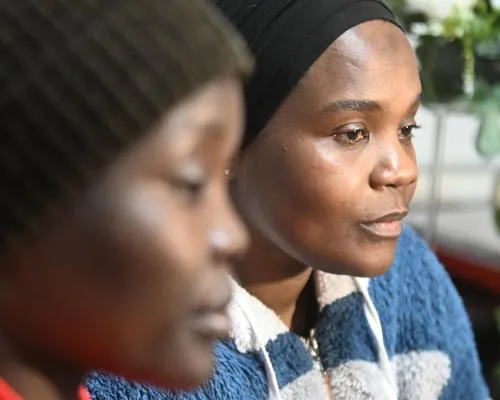
Sumayah Nakazibwe and Stella Ariokot were frightened they would be next as fires took hold on neighbouring houses and rioters set cars alight
-
 Cuộc chạy đua đưa World Cup 2026 đến Bắc Mỹ
Để đưa World Cup 2026 đến Bắc Mỹ, ba quốc gia chủ nhà đã bước vào chiến dịch vận động toàn cầu với những ngày tháng gần như không có điểm dừng.
-
 US measles cases pass 2,000 as outbreak nears worst in decades
Outbreak driven by falling vaccination and misinformation as federal public health cuts hamper state response
-
 Rainfall and landslides last year in Indonesia killed 7% of world’s rarest great apes – study
Critically endangered Tapanuli orangutan population falls after extreme weather – fuelled by climate crisis – in North Sumatra
-
 UFC champion says he has been banned from White House fight over criticisms of Trump
Sean Strickland claims he was not cleared to attend the UFC event because he ‘made fun of Israel and Epstein’


