By Steven Morris • June 20, 2026 • UK news
Arrests after explosion and caravan fires heighten controversy in town over number of people living in vehicles
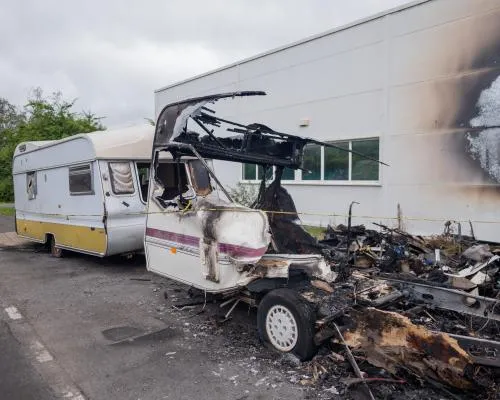
Jan Johnston was tucked up in the van she calls home when she was rocked by the explosion. “I heard this massive boom,” she said. “I came out and there was thick, black, billowing smoke. It was like a bomb had gone off.” It turned out not to be a bomb, but a suspected arson attack on one of the many caravans, motorhomes and converted vehicles tucked away in side roads and industrial estates around the town of Glastonbury in Somerset. The fire spread and three caravans a few metres from Johnston’s vehicle suffered damaged. The charred remains of clothes, books and tin cans can still be seen among the wreckage. For decades, people like Johnston, 71, have parked up in Glastonbury, famed for its alternative, spiritual, peaceful ways, and lived – for the most part – harmoniously, with “bricks and mortar” townsfolk. But the mood has changed, apparently because of a combination of a sharp increase in the numbers living at the roadside and a general decline in people’s willingness to rub along together. The motive for the attack is not known but it has made people uneasy. “I’ve been coming here for 47 years,” said Johnston, a teacher. “I’m a bit of a pilgrim and it’s always been a mellow kind of place but I’m not staying any more. I’m packing up. I’ve got family on the Isle of Wight and I’m heading there.” The attack happened on Saturday night. Fire crews from Glastonbury, Wells and Street attended. Luckily, nobody was in the caravans that were gutted. “It feels like a hate crime,” said John, 62, who lives in another caravan nearby. “If the wind had been blowing the other way, more vans could have gone up and people could have been killed. Horrendous.” Some people choose to live in caravans or vehicles but John said he was not one of them. “I was working in Europe as a carer. I had to come back when Brexit happened and haven’t been able to find a permanent place to live.” Hazel, who also lives in a nearby caravan, said she would prefer to live in a conventional home. “I have had trauma in my life and feel very vulnerable,” she said. “I’d like a flat or house, even a room but they just aren’t available.” She lives with her dog, Okami, a cross between a Czechoslovakian wolfdog and an akita inu. “I wouldn’t feel safe without Okami,” she said. Not all “bricks and mortar” residents were sympathetic when news of the fire broke. Some suggested the blaze was probably caused by a barbecue lit by the dwellers. Many others said they should not have been there in the first place. One person living in a house near the site of the fire, who asked not to be named, said they were glad nobody was hurt. “But if it makes them move away, then so be it. Some are nice and friendly, work and pay their taxes. But too many of them are trouble-causers and make the place look a mess.” Avon and Somerset police said two people – a man in his 40s, and a woman in her 20s – were arrested on suspicion of arson, arson with intent to endanger life and assault of an emergency worker. They have been released on conditional police bail while the investigation continues. It is a pressing political topic in the town. Earlier this year, the Liberal Democrat MP for Glastonbury and Somerton, Sarah Dyke, has raised it in the House of Commons, making the point that the availability of affordable housing in Somerset had plummeted and rents had risen, forcing people into vans and vehicles. A Glastonbury Conservative councillor, Susannah Hart, called for Somerset council to declare a “state of emergency”. The numbers tend to rise in the summer. When the vans and vehicles were counted in February, there were 131. By the end of May – the latest figures – there were 157. There is money available that could help ease the problem. Glastonbury has secured £23.6m of funding for a range of regeneration projects, including a project to help roadside dwellers. Work began to create regulated site in the area of the town where the fire happened but this was halted when it flooded. A second site has been earmarked and the process to secure planning permission is under way but it will have fewer than 20 spots. Councillor Liz Leyshon, the deputy leader of Somerset council, who was born in Glastonbury, said the town had been a place of pilgrimage for centuries. “You’ve got a massive pull and a huge attraction to a tiny town.” She said there tended to be “waves” of “non-bricks and mortar dwellers”. There was a spike during Covid and another this year after Bristol city council moved dwellers on. Somerset council had been working with Bristol with a view to copying its use of “meanwhile sites”, often plots of land about to be developed. “I think Glastonbury would respond to a number of smaller meanwhile sites while we worked on trying to get permanent off-road sites,” Leyshon said. In Somerset, as in so much of the UK, an acute housing shortage is exacerbating the issue. There are 13,000 households on its “homefinder” list looking for social housing. Leyshon also said a general dip in open-mindedness in society was not helping the situation. “People have become intolerant. You see that when you stand for election.” Chris Black used to let artists and performers live at his Zig Zag former factory building in Glastonbury, some in vans, until Somerset council took enforcement action to move them on. He doubts local authorities can resolve the issue because they are hamstrung by bureaucracy. “Glastonbury has long been a place to offer sanctuary to all sort of people,” he said. “It’s a shame if that gets lost.” In another corner of the town, vans are parked next to the River Brue. Legend has it that in the days of King Arthur the river overflowed at this spot and created the lake that his sword, Excaliber, was hurled into. There are signs in several of the caravan windows reminding passersby that people live here. “This caravan is our home of joy,” says one. “Please respect our space.” One caravan dweller, who asked not to be named, said neighbouring vans were homes to a DJ and an artist. She herself was a herbalist. “There are a lot of gentle, interesting people here,” she said. “Most are the best sort – resourceful and able to live lightly. To be fair, most Glastonbury people accept us. It’s only a few that don’t. Everyone should find a way to live together peacefully.”
Source: The Guardian

Uk News Feed
155 posts
-
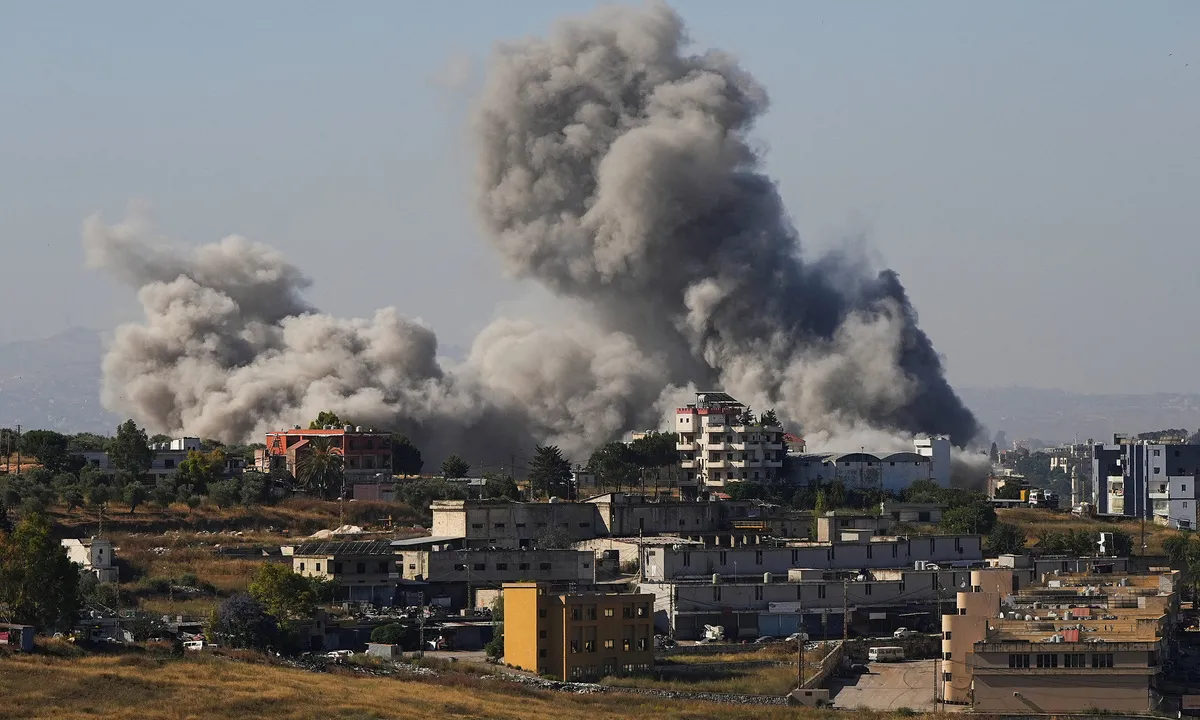 Israel và Hezbollah tiếp tục giao tranh bất chấp thỏa thuận ngừng bắn
Israel và Hezbollah tiếp tục giao tranh bất chấp thỏa thuận ngừng bắn
-
 Hồ Phản chiếu tại Mỹ: Dự án cải tạo 14 triệu USD gặp vấn đề
Dự án cải tạo Hồ Phản chiếu tại Washington gặp vấn đề về sơn bong tróc và tảo xanh
-
 Căng thẳng Ukraine - Ba Lan: Huân chương bị thu hồi
Căng thẳng giữa Ukraine và Ba Lan gia tăng sau khi Tổng thống Zelensky đặt tên đơn vị quân đội là 'Những anh hùng UPA', dẫn đến việc thu hồi huân chương.
-
 Ghost of far-right paramilitaries hovers over Colombia’s presidential runoff vote
Colombians will choose on Sunday between two men whose lives have been very differently shaped by the militias, and whose visions for the country are poles apart
-
 How do people in the US describe customer service in 2026? ‘Debilitating, depressing, enraging. Ugh’
We asked people in the US about their customer service battles and hundreds responded on the financial and emotional costs
-
 What lessons will Iran’s new leadership draw from the 110-day war?
Now fighting is over, the question is how Iran’s government will behave. Early clues point to more authoritarianism and prioritising relations with China
-
 What Democrats want: New York congressional race showcases fight over party’s future
In NY-12, four Democrats, including one Kennedy, are vying to replace Jerry Nadler – and potentially shake things up
-
 Motorway traffic drones are coming to UK roads, but will they drive us to distraction?
National Highways agency uses virtual reality test to see if drivers are distracted by introduction of low-flying drones
-
 Trump’s DC makeover frenzy bewilders locals and visitors: ‘It’s like we’re under occupation’
From East Wing demolition and ‘restoration’ of reflecting pool to bridge and fountain renovations, US capital is ‘a different city right now’
-
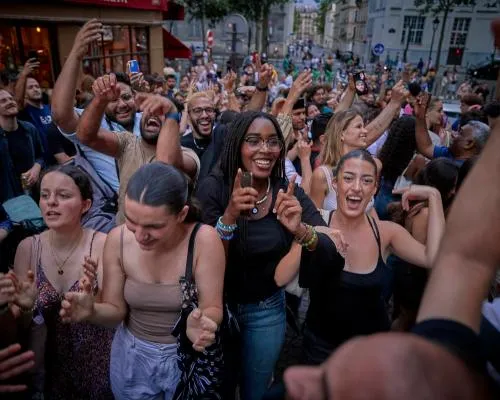 ‘A kind of massive rave’: Paris braces for 2m revellers as Fête de la Musique returns amid heatwave warnings
Officials expand safety measures as French capital prepares for huge street celebration


