Motorway traffic drones are coming to UK roads, but will they drive us to distraction?

By Raphael Boyd • June 20, 2026 • UK news
National Highways agency uses virtual reality test to see if drivers are distracted by introduction of low-flying drones
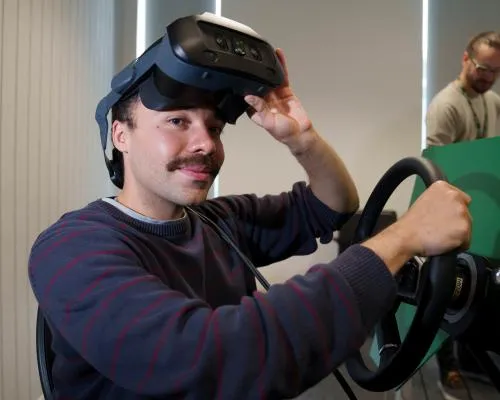
I’m barrelling down the motorway at 70mph, swerving from lane to lane, with cars speeding past me. There’s just one problem, I don’t have a driving licence. Or at least it would be a problem were this a real road test. But despite the life-like surroundings, I am in fact trialling a complex simulation created by virtual reality company MXT on behalf of National Highways, the government-owned agency responsible for the UK’s major roads. Its purpose, beyond being fun, is to see if drivers are likely to be distracted or disturbed by the introduction of low-flying drones deployed to monitor the state of the country’s 4,500 miles of motorways and A-roads. Human-operated drones have already been used by the National Highways since 2020, in collaboration with engineering company Arup, but the agency is hoping to roll out even smaller drones that can get closer to sites of possible road maintenance, with the hope of having them in the air above motorways by early 2027. National Highways say smaller drones flying at a lower altitude of between 10 and 20 metres will be able to pick up more details than larger drones, which are only allowed to fly about 50 metres above the road’s surface. The smaller drones are also about 10 times cheaper. The simulation examines how feasible this is. The tests, which have taken place in London, Manchester and Birmingham over the course of a month, are described to participants as a standard road safety simulation, with drones only being mentioned after they are finished. Participants are then asked if they had noticed how much – if at all – they felt the drones affected their driving. On top of their testimony, the test also measures several metrics during the simulation, including the participant’s heart rate, pupil dilation and the amount of time they spend not looking directly ahead, as well as factors such as speed and steer control. It’s a surprisingly nervy experience and one that is not likely to boost my confidence behind the wheel. Still, while the simulated driving undertaken to write this story was described as “not great”, the administrator did point out that it wasn’t the worst they had seen, adding “at least you didn’t crash”. Ewan Murdoch, a senior consultant at Arup, said that the results of the test could lead to drones being used for highway maintenance around the world. “We’ve had some interest from colleagues in Australia who are looking potentially to do some of their things to their road authorities,” said Murdoch. “And in the US as well, they’re looking at opportunities for this, but this kind of methodology is quite interesting and novel, so I think it’s something that globally we’re seeing a strong interest in.” The tests have been conducted with 120 regular drivers, as well as 19 heavy goods vehicle drivers to see if they were more affected driving large vehicles. While about half of participants said they noticed the drones during the test, significantly fewer drivers said they considered them to be “hazardous” or “dangerous” during the simulation. Callum Brown, senior adviser on airspace standards at National Highways, described the tests as “cutting edge” and said smaller drones would be the safest and most efficient way to survey roads and buildings in the future. “They did some tests similar to this in Massachusetts,” said Brown. “But in terms of trying to apply this nationally, this is a world first. We’re at the cutting edge for this and it’s something we’ve been building to for about six years now.” One participant, Kevin McKeown, 49, enjoyed the experience and, while he found the VR aspect “a bit jarring” at first, did not believe the drones caused him any problems. “It was a bit surreal like a video game, but if it increases health and safety and takes away an element of risk then I’m all for it,” he said. “And if you can get distracted by a drone flying 10 metres overhead then I think you’ve got bigger issues than just a drone, and I’m not too sure you should be driving a car in the first place.”
Source: The Guardian
Uk News Feed
154 posts
-
 What Democrats want: New York congressional race showcases fight over party’s future
In NY-12, four Democrats, including one Kennedy, are vying to replace Jerry Nadler – and potentially shake things up
-
 Trump’s DC makeover frenzy bewilders locals and visitors: ‘It’s like we’re under occupation’
From East Wing demolition and ‘restoration’ of reflecting pool to bridge and fountain renovations, US capital is ‘a different city right now’
-
 ‘A kind of massive rave’: Paris braces for 2m revellers as Fête de la Musique returns amid heatwave warnings
Officials expand safety measures as French capital prepares for huge street celebration
-
 Beyond the beach: Spain pushes offbeat regions as tourist numbers nudge 100m
Exclusive: Tourism minister says another likely record year of visitor growth is not a worry amid move to welcome tourists out of season and market less frequented areas
-
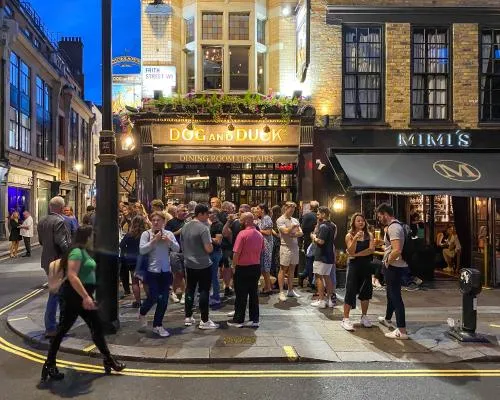 Bedtime blues: London ‘killing off nightlife’ as UK city with strictest licensing rules
Manchester, Birmingham and Leeds are experiencing after-hours boom as a result of more lenient rules
-
 SUV buyers undeterred by warnings of risk to pedestrians, UK study finds
Exclusive: Research suggests financial penalties necessary if number of large vehicles on roads is to be reduced
-
 ‘It’s a big mistake’: Israelis feel betrayed and angry after Iran peace deal
In ‘middle Israel’ there are fears Iran could rebuild stronger – and there is particular ire for Donald Trump
-
 Boats, bankers and borders: five symbols that sum up Brexit a decade on
What do the touchstones of the referendum debate tell us about the complex legacy of Britain leaving the EU?
-
 Obama Center opening stirs pride and unease for Chicago’s South Side amid displacement fears
South Siders voice concerns about gentrification, housing and affordability as they celebrate opening of the Obama Presidential Center
-
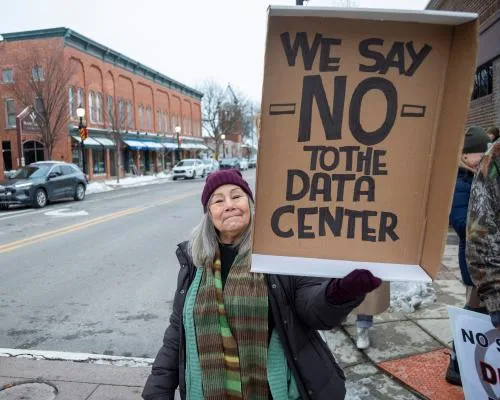 Datacenters driving US clean energy growth while still threatening climate
As datacenters’ connections to electric grids are held up, big tech is forced to throw money at producing its own power


