‘I’ve finally found God without all the extras’: behind the surge in people converting to Progressive Judaism

By Aamna Mohdin Community affairs correspondent • June 20, 2026 • World news
Despite an increase in antisemitism and anti-Jewish feeling in the UK, adult conversions are on the rise
For Elizabeth Arif-Fear, there was no single moment when she realised she wanted to be Jewish. “It was just a journey over time,” she says. The 37-year-old interfaith activist was born Christian, then converted to Islam and was Muslim for 14 years, before realising that that faith was also not the right fit. Eventually, she found the answer she had been searching for in Judaism. “I feel I’ve finally found God without all the extras,” she says. “Without Jesus, without Muhammad.” Arif-Fear is part of a “surge” in the number of people converting to Progressive Judaism, a movement that represents about a third of British Jews. Figures shared with the Guardian show adult conversions rose from 78 in 2020 to 183 in 2025. “There has been a lot of antisemitism and anti-Jewish feeling in the last three or four years. So you would have thought this is the last time that people would want to identify with the Jewish community, and yet, we’ve had a surge,” says Rabbi Jonathan Romain, convener of the Reform Beit Din, the rabbinic court for Progressive Judaism, and former rabbi of Maidenhead synagogue. Romain says that, until recently, most converts did so for “romantic reasons”: they had Jewish partners and wanted to unify family life. But he believes the recent rise has been driven by three additional factors: the Covid-19 pandemic, the expansion of religious education in schools and DNA tests. “We’ve found several times people have said to me, ‘Somebody gave me a DNA test as a Christmas present and it turned out I was Jewish,’” he says. “For some people, that’s just a matter of information. But other people, it intrigues them, or maybe it even answers something deep inside them.” For Arif-Fear, what drew her towards Judaism was its progressive elements, and a culture in which questioning and debate were encouraged. “What really inspired me was the diversity and the pluralism in it,” she says. “I learned that you could be atheist and Jewish, and then they had Orthodox, Conservative, Reform, Liberal, and that was really intriguing and inspiring for me.” She adds: “So that inclusivity, that kind of dialogue, that questioning. It was just a really welcoming space. It’s LGBT-friendly, there are female rabbis, all of that. And people that were really proud of their faith but also felt very British at the same time.” Romain says converts are increasingly coming from more diverse backgrounds. “Whereas beforehand it was largely white British, now because Britain is so multicultural, it’s very common to have people, who may have come from Romania or Portugal or Korea,” he says. There are also notable numbers of LGBT people converting as Progressive Jewish communities can be more welcoming than other religious spaces. For Debbie Collings, 65, conversion was about reclaiming something she had been born into. She had been raised Jewish until she was 16, but later left the faith. She found herself moving back towards it after caring for her ill father, who asked if she would be able to find the graves of his great-grandparents. Collings found the gravesites, overgrown with grass, on a rainy day. “I just stood and looked at the graves and I went, ‘Oh my God’,” she says. Her great-grandparents had fled pogroms in Russia, she adds, and they and their children went on to make a huge contribution to Britain. “And now we – our generation – have rejected it.” She left wanting to find out more about her family and Judaism. Like other converts and returnees, she spent a year in classes learning more about the religion and community, before having an interview with Romain and others on the rabbinic court and receiving confirmation that she was Jewish. She describes stepping back into synagogue as a return to her roots. “I go in there and for me it’s like this peace just comes over me,” she says. “And it sort of fills a big gap that I didn’t really realise was missing until I started to explore it again.” And, she adds, “if I die tomorrow, I know I can be buried in a Jewish cemetery”. Amanda, who did not wish to give her last name, grew up in a Christian family and was a devout follower of the gospel before she began to question it. She felt people had failed to answer her growing issues with the New Testament, and the more she got to know people within Judaism, the more she felt she belonged. She had often heard adults who converted to Christianity say, “‘I felt full of the Holy Spirit’,” but she did not feel that when converting to Judaism. “It just felt normal, like it should have been. Like it always was, if that makes sense,” Amanda says. Her daily life hasn’t changed much: she never ate pork or shellfish, she says. The biggest change is “having gone from Sunday to Saturday,” she says. “Now, I forget that the world carries on on the Saturday.” She particularly enjoys preparing for shabbat. “At the end of the day, when you light your candles and you just collapse on the settee, you think, ‘Oh, phew.’” Romain says that sense of community is one of Judaism’s strongest draws. “There’s an enormous sense of camaraderie. In this world that is becoming increasingly polarised and lonely, because the local pubs are closing, high streets have collapsed, you can’t go to a post office anymore, you order everything online and you work from home, there’s that sense of human kindness and human contact,” he says. “That’s something religions in general can offer, but Judaism in particular is very good at.” The numbers of converts remain modest, in part because Judaism is not a proselytising faith. But Romain says that is central to its outlook. “There is a Jewish saying – this time I can quote – which says that if anyone tells you he loves God but he doesn’t love his neighbour, then you know he’s lying,” he says. “It’s all very well keeping kosher, or saying Hail Marys, or genuflecting, and fasting. But it’s no good if you’re then unpleasant to the person standing next to you.”
Source: The Guardian
Guardian News World
256 posts
-
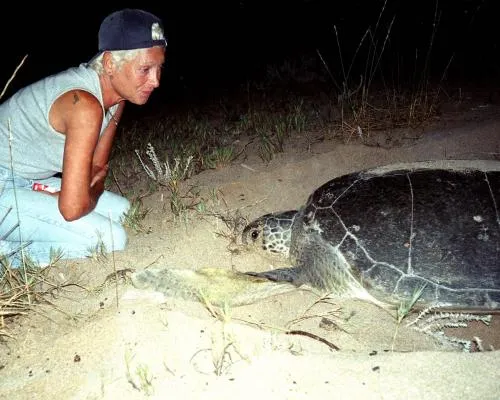 Israeli attack kills famed turtle sanctuary ecologist in Lebanon
Mona Khalil led decades-long effort to protect nesting site for turtles near her home in south of the country
-
 Hội nghị G7: Những cuộc trao đổi bên lề gây chú ý
Vì sao các cuộc trao đổi bên lề của các lãnh đạo G7 lại gây được sự chú ý của công chúng và truyền thông?
Trong hội nghị G7 tại Evian-les-Bains… -
 ‘They have all the power’: investigation finds that 93% of ICE arrests targeted Latinos
430 ICE street arrests filed over a five-month period were clustered in predominantly Latino communities across New Jersey and New York
-
 Israeli strikes kill at least 16 in Lebanon despite reports of renewed ceasefire
Outbreak of fighting between Hezbollah and Israel has forced mediators to cancel US-Iran talks in Switzerland
-
 US treasury chief urged Trump not to host ‘Mr Bean on crack’ Zelenskyy, book says
Suggestion that Scott Bessent so described a world leader included in Regime Change, by New York Times reporters
-
 Ghost of far-right paramilitaries hovers over Colombia’s presidential runoff vote
Colombians will choose on Sunday between two men whose lives have been very differently shaped by the militias, and whose visions for the country are poles apart
-
 ‘Like a bomb had gone off’: suspected arson attack fuels Glastonbury unease
Arrests after explosion and caravan fires heighten controversy in town over number of people living in vehicles
-
 How do people in the US describe customer service in 2026? ‘Debilitating, depressing, enraging. Ugh’
We asked people in the US about their customer service battles and hundreds responded on the financial and emotional costs
-
 What lessons will Iran’s new leadership draw from the 110-day war?
Now fighting is over, the question is how Iran’s government will behave. Early clues point to more authoritarianism and prioritising relations with China
-
 What Democrats want: New York congressional race showcases fight over party’s future
In NY-12, four Democrats, including one Kennedy, are vying to replace Jerry Nadler – and potentially shake things up


