‘If Ukraine burns, your Moscow will burn,’ Zelenskyy warns after overnight strikes in Russia – Europe live

By Jakub Krupa • June 18, 2026 • World news
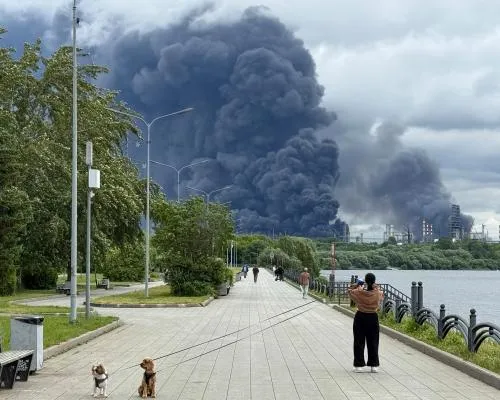
Ukraine’s president ramps up rhetoric after overnight drone strikes on Russian capital
Rutte gets challenged on the extent of the US commitment given Hegseth left the meeting very early. He replies by saying he was there for nearly two hours, and listened to contributions from “many allies,” so it’s all fine. He says he knew Hegseth would have to leave because of other commitments. Rutte now gets asked about Hegseth’s suggestion that the US could pay less, if other allies don’t meet their targets. He again says he is “not going to comment on everything that has been said.” He says that “more generally, … we are working very hard” to meet targets. “When you look at the individual countries, there are still some who need to do more,” he says. In contrast, he praises Poland and the Baltic countries for being “really ahead.” Rutte gets pushed a bit on Hegseth’s comments earlier calling Nato “a paper tiger.” He essentially says “I’m not going to comment on every word every ally is saying; I never do that.” Rutte gets asked about his repeated praise for European allies stepping up and how it compares with Hegseth’s criticism. He says that the spending increases are “historic,” but there are still some that are “holding back a little bit,” and Hegseth is right to “keep the pressure on.” He says that Nato “is going through a massive transformation, probably the biggest transfomation in its history.” “Obviously that means also there are some rough waters, it is a rocky phase. You will have these debates, these discussions, and that’s good.” Rutte gets asked if there will be “a significantly depleted US presence” after the proposed review, and if countries get punished for their position on Iran. His answer does not even anywhere get close to the original question. He eventually says the US review will be “a structured process somewhere over the next six month.” Rutte gets asked about the changes to the Nato Force Model, the alliance’s readiness force. He says he cannot confirm anything on what is in the plan and how it’s changing – despite some media reports - as “we do not want to make Russians any wiser.” He says it’s for planning purposes, but the US can always provide more, too. He says changes make the plans “more realistic and therefore stronger, because there was an overreliance on the US.” Rutte says the ministers will shortly take part in the Ukraine Defence Contact Group, joined by Ukraine’s Zelenskyy. “Ukraine is changing the dynamic on the battlefield and inflicting usual huge losses on Russia, but it can only keep doing this if we step up our support,” he says. Rutte begins by hailing the progress made so far, saying more and more allies are confirming plans to meet their increased defence spending target of 5% GDP by 2035. “Some allies will already get there this year, way ahead of schedule,” he says. But he says that while “cash is crucial, you cannot stop a missile or a tank with a dollar or a euro.” “We need to turn the cash into combat-ready capabilities, and fast.” He says the priority for next month’s Ankara summit is to get more forces, more resources, and a stronger industrial base. He says the US “expressed strong commitment to Nato very clear today,” while also expressing the need to achieve “a more equitable distribution of labour” in the alliance. He acknowledges the US decision to review its troops presence. He says there is a “broad agreement” among allies to “step up as the US adjusts its pledges to the Nato Force Model.” Rutte is here. You can watch along below, but I will bring you all the key lines here, too. Back to Brussels, we are going to hear from Nato’s secretary general, Mark Rutte soon, as he is expected to face the media after today’s Nato ministerial in Brussels. Expect him to get asked about Hegseth’s comments this morning. We will bring you his press conference live, obviously. Meanwhile, local authorities in Moscow said that the supply of petroleum products to Moscow and the operation of petrol stations in the Russian capital is “proceeding as normal” after a major Ukrainian drone attack, Reuters reported. Separately, Kremlin aide Yuri Ushakov was quoted by Interfax as saying that the latest strikes set back the prospect of any direct contacts between Russia’s Putin and Ukraine’s Zelenskyy. on the Ukraine-Belarus border Russian spy drones flying into Ukraine from Belarusian airspace have sharply increased since the beginning of the year, as senior officials in Kyiv express mounting concern over Belarus’s involvement in the war. Ukraine has stepped up by reinforcing fortifications on its northern border, including anti-tank ditches, concrete “dragons’ teeth” obstacles to block armoured vehicles and new areas of barbed wire. Troops operating along the border say they have noted a jump of about 20% in Russian intelligence drones since January. The increase in drone sightings comes in parallel with reports that Russia has constructed five new drone bases near its shared border with Belarus as part of its efforts to use Minsk’s airspace to attack Ukraine. Ukrainian officials, including the president, Volodymyr Zelenskyy, have spoken of “unusual activity” on the Belarus border, amid concern that Moscow is seeking to draw its ally further into the conflict, and warnings that have been given to Minsk. Meanwhile, Ukraine’s president Volodymyr Zelenskyy warned that “if Ukraine burns, your Moscow will burn” as he ramped up his rhetoric after overnight drone strikes on the Russian capital. Scores of drones targeted Moscow overnight, hitting the Russian capital’s oil refinery for the second time this week, Reuters reported. “We don’t want this war, we never did, and everyone knows it, and our partners know it,” Zelenskyy said in a voice message sent to reporters on a WhatsApp group, quoted by Reuters. But if Ukraine burns, your Moscow will burn. Zelenskyy also called on Europe and the United States to increase pressure on Russia through sanctions on Russia’s defence and energy sectors and broader economy to force president Vladimir Putin into ending the war. US defence secretary Pete Hegseth has also offered his view on the relationship with the UK, after meeting Britain’s new defence minister Dan Jarvis. His predecessor resigned in protest against low government spending on defence. Hegseth said it was “a good meeting,” stressing that “the US-British defence alliance is an important one.” He praised Jarvis for having first-hand experience of serving in a combat zone. But he said “the message was the same: hey, we need you guys to step up and do even more, spend even more.” He added: “If we need access and basing, whether it’s in the UK or say at Diego Garcia, we can’t live in a world where other countries are standing at the end of a runway with a clipboard trying to decide what flies and what doesn’t. It’s not gonna, it’s not gonna work for us. It’s not good in contingencies, and I don’t think it’s what he wants either.” He continued saying that “the more the UK spends on defence, the stronger Nato is going to be, the stronger western civilization is, and that’s a good thing.” “I think [it was] a good start to a relationship that we need to renew even more,” Hegseth said. We are now again hearing from US defence secretary Pete Hegseth again, as he’s speaking with reporters after his explosive speech at the Nato ministerial in Brussels this morning. Just as I argued (10:15), he tells them that the message is not new, with many countries already stepping up – but not all of them. “We will be clear with them, and as we do this review, we’ll change how we look at the continent as a result,” he says. Separately, speaking on Iran, he also notes that a number of European countries are “prepared to step up” to help with the strait of Hormuz. “It’s an international water bill, and frankly, European countries and Asian countries use it a lot more than we do,” he says. Peter Beaumont in Pavlograd and Warren Murray Ukrainian drones have hit several locations across Moscow, including setting an oil refinery on fire, sending out flames and towering plumes of smoke over the city and forcing the capital’s airports to suspend flights. The scale of the long-range attack, apparently designed to shut down operations at the key oil refinery in the Kapotno area, caught most Muscovites by surprise in a city that does not typically warn residents with air raid alarms, and prompted panicked messages on social media. Footage posted online showed three plumes of smoke rising from the refinery. The strike was the second in two days on the facility, in what the Ukrainian president, Volodymyr Zelenskyy, then called “a just response to Russian strikes”. “Air defence forces are continuing to repel a large-scale attack. Several drones managed to reach the [Moscow oil refinery],” said Sergei Sobyanin, Moscow’s mayor, adding that a shopping centre was also damaged. He claimed about 180 drones heading for the capital had been downed. Sobyanin said emergency crews were working at the site and also reported “damage” to Sadovod shopping centre in the south-eastern part of the city. At least seven drones appear to have beaten Russia’s air defences to strike targets in the city. Traffic was halted on Moscow’s ring road near the refinery, the broadcaster RIA cited the interior ministry as saying, while air traffic was disrupted at Vnukovo, Sheremetyevo, and Zhukovsky airports. Let’s get a bit more on these Ukrainian drone strikes on Moscow. Meanwhile, the Kremlin has offered its take on yesterday’s G7 summit – including a supportive statement on Ukraine (Europe Live, Wednesday) – saying that the US president, Donald Trump, was “pumped with” harmful ideas by the EU. The US had no contacts with Moscow after the meeting, Kremlin adviser Yuri Ushakov was quoted by Interfax and Reuters as saying. Ushakov also disputed the EU’s assumption that the battlefield situation was changing in Ukraine’s favour. Separately, Nato has agreed to modernise its nuclear capabilities and strengthen its nuclear planning capacity, the alliance’s senior body for nuclear deterrence said in a statement quoted by Reuters. All Nato allies except France are members of the Nuclear Planning Group, which serves as a forum for consultation and decision-making on nuclear deterrence. Defence ministers taking part in the meeting “recalled that the strategic nuclear forces of the Alliance remain the supreme guarantee of Allied security and underpin Nato’s extended deterrence architecture,” the statement said. None of this is really new new – Hegseth largely repeats the US’s main frustrations and grievances with the alliance, repeatedly expressed by Trump – but the tone of the delivery is still very, very striking. Hegseth has laid into Nato allies for not helping enough with bases and overflights during its early Iran operations – and once he did not name any countries, it’s likely targeted at the likes of Spain, Italy, Portugal. In other parts, it is just a broader criticism of what the US sees as “free riding” from the allies, as they do not move quickly enough on spending. Coming just weeks before the Nato summit in Ankara, it is clearly intented to serve as a warning to several of the allies that still don’t spend enough and don’t seem to act with the urgency the US is expecting them to increase that spending – or even offer a credible path towards it. The proposed posture review – and explicit threat that some of them will fail it – and the suggestion the US could reduce its contributions if others do not pay enough, will make some think twice about their plans in the next few weeks. As Hegseth ends his remarks, Rutte says “there’s much to discuss and decide today.” You bet it’s going to be lively. Hegseth says “our direction of travel is and has been clear.” “This is the right thing to do by the American people. It’s the right thing to do by this alliance. Europe can and must take primary responsibility for its conventional defence as it pledged at The Hague Summit, and in the process safeguarding Europe’s defence for generations to come, we know our allies can do it, and it’s time.” Hegseth makes it clear that the review will not be just a box-ticking exercise. “It’s a review that some countries will fail and others will pass with flying colours. In the end, the review is intended to both improve US force posture and basing and strengthen Nato 3.0.” Hegseth says the US will be “doubling down” on its efforts to get allies to spend what they need to spend. He says his department will conduct a six-month review of US forces in Europe. He says it will look at actual benefits of having US military in Europe – and will be a real review. “It will be designed to ensure that Nato is moving fast and irreversibly toward Europe leading, stepping up to take primary responsibility for the defence of Europe.” He then goes further to say that the US dues to the Nato budget will be contingent on other countries meeting their defence spending targets. “Where other allies do not spend with urgency, our dues, contributions will go down. Nato will be a two-way street.” He adds: “America cannot care for or pay more for Europe’s defence than our allies do.” Hegseth says that “some of Nato’s largest economies, some of our richest countries, allies that are happiest to go on about the rules-based international order and middle powers banding together still think the era of free riding is here.” He says Trump disagrees. “This is not what any reasonable person would expect, and it’s not going to cut it any more.” (He may be thinking of, among others, Spain, which has long been the target of US criticism, and has clashed with it in recent months.) Hegseth makes it very clear how the US is annoyed about the perceived lack of support on Iran. “The United States has defended Europe for generations, and the President said all he said was that our jets would need to take off from bases in Europe or our ships from ports to strike targets in the Middle East, Iranian targets that threaten European interests even more directly than they threaten us. But too many of our allies said no, or tried to drown us in arcane legal debates, or criticised us publicly for doing what they aren’t prepared or able to do themselves. It was shameful. These allies, they put America’s sons and daughters, our sons and daughters, at risk by denying them the predictable access facing an overflight that never should have been in question at all.” Hegseth now goes hard on some Nato countries that are still paying below the expected levels. He says “for all of our clarity, too many allied capitals seem to still miss something in translation” and “too many allies still do not recognise the historic need … to forge a relevant, powerful military alliance.” He says the US “gave our allies a test to support America when we asked for their help and too many failed it.” Hegseth says that Trump is clear about his intention to increase defence spending so the US leads and shows others “it’s not do as I say, it’s do as we do.” He says he believes the US approach has been validated on Ukraine, with allies taking more responsibility for Ukraine’s defence – and this approach actually yielding positive results. “It is happening, and it’s a validation of President Trump’s approach, an approach that will set the table for peace.” But he says that “for all these early steps in the right direction, there have also been real setbacks that we cannot ignore.” Hegseth continues by saying that Nato 2.0 was “an era of distraction, de-industrialisation and demilitarisation,” with “an era of free riding.” “Those were lost years that we are not going back to.” He says that’s why his department is “so clear and so candid” about the need to “restore Nato’s core military role and character” and why it’s returned US troop levels to pre-2022. He says the alliance needs to return to its roots to be as strong as required and “if need be, make good on Article Five.” He says some countries “got the message and stepped up,” but others are still failing. Hegseth seems to praise spending commitments adopted at last year’s Nato summit in The Hague, saying they were “all about transforming Nato back into a real military alliance that is focused on hard power and real deterrence.” But in another eye-catching quote, he goes on to say: “Europe was not supposed to be a dependency of the United States. That’s not what Winston Churchill or Charles de Gaulle or Konrad Adenauer wanted or expected. No, Europe was supposed to be a military power, allied with a strong America.” He goes back in Nato history to 1951, quoting Eisehower comments that “if in 10 years all American troops stationed in Europe for national defence purposes have not been returned to the US, then this whole process will have failed.” But he says that Nato 2.0 in the following decades increasingly focused on “gender equality and climate change” instead of “tanks and fighters and air defences.” “Europe’s borders flew wide open, welfare states expanded, defence budgets cratered, along with Europe’s belief in itself and its civilization. Nato lost its way.” Ouch, again. US secretary of defence Pete Hegseth has asked to speak at the beginning of the Nato ministerial in Brussels, and it very much looks like his comments will set the tone for the day. He begins by saying that Trump “has said again and again … our allies must step up.” “Nato has been a paper tiger and a one-way street. No more.” Ouch. Ukraine hit an oil refinery near Moscow and other targets in Russia overnight in what president Volodymyr Zelenskyy called “a justified response” to recent strikes on Ukraine. Russian officials were quoted as saying that the attack forced commercial flights and airports to be suspended for safety reasons and caused a temporary halt on Moscow’s ring road, after some 180 drones were shot down over the Russian capital. “This is a fully justified response to Russian attacks on our cities and communities, and another important result of our warriors’ work against facilities that sustain Russia’s war machine,” Zelenskyy said. The strikes come on the day of a Nato ministerial meeting in Brussels, the last before next month’s summit in Ankara. Nato allies are expected to discuss the latest on their defence spending plans, with the US pressing Europe to take more responsibility for the defence of the continent. Later on, the ministers will also take part in the Ukraine Defence Contact Group meeting, a key forum to coordinate on support for Ukraine, which is expected to be attended by Zelenskyy. The main event comes fairly late in the day, as EU leaders are expected to gather for the European Council meeting on Ukraine and the Middle East. It’s a two-day summit, likely to go late into the night. Lots for us to cover. It’s Thursday, 18 June 2026, it’s Jakub Krupa here, and this is Europe Live. Good morning.
Source: The Guardian
Guardian News World
225 posts
-
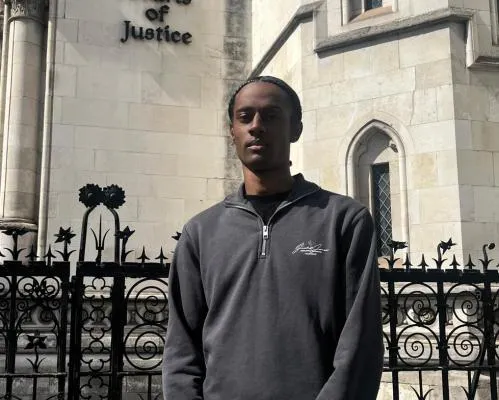 Teenager wrongly arrested wins race discrimination claim against the Met
Daryl McLune was 16 when he was held for 23 hours on suspicion of attempting to murder his mother after she tried to take her own life
-
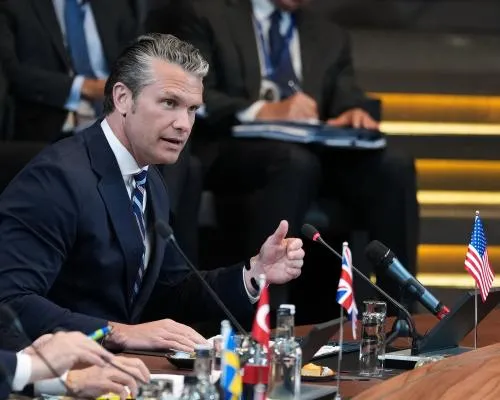 Pete Hegseth accuses Nato countries of ‘free riding’ in combative address
US defence secretary addresses allies in latest attempt to get Europe to raise military budgets
-
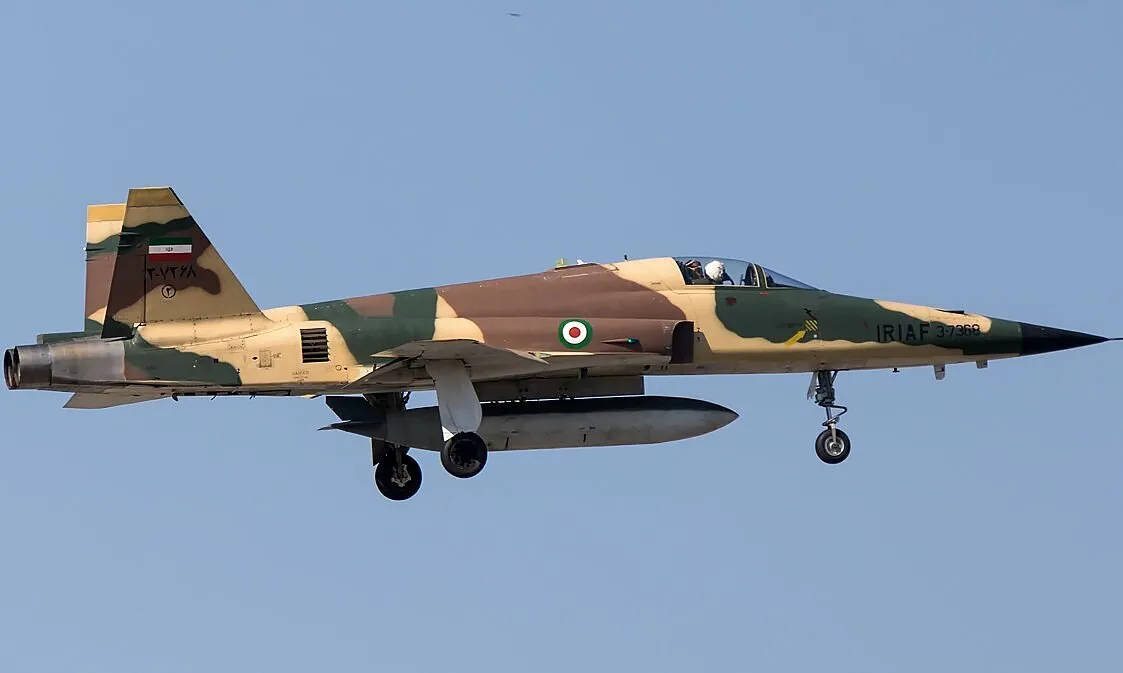 Phi công Iran hé lộ chiến dịch 'vượt lưới Patriot, ném bom căn cứ Mỹ'
Phi công Iran phải bay cách mặt biển chưa tới 15 m để tránh radar khi tham gia chiến dịch tấn công căn cứ Mỹ tại Kuwait hồi tháng 3.
-
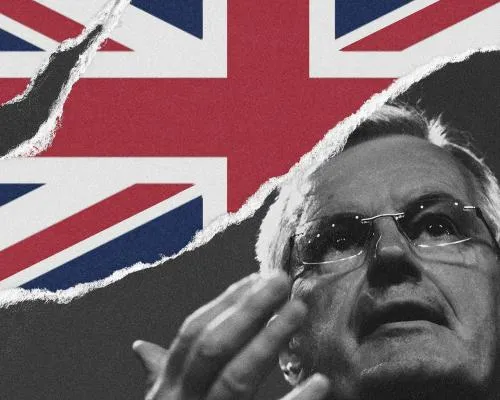 ‘Cynical to get power’: Michel Barnier on Boris Johnson, Brexit and the EU’s future
Former negotiator believes in an unstable world, it is ‘perfectly possible’ the UK can rejoin the EU with old opt-outs
-
 Social media ban: saving kids or punishing them?
Letters: Dr Rory Conn says the ban is long overdue to protect children from harm, but 16-year-old Clara O‘Grady says social media is not an isolated section of teenagers’ lives that can easily be removed. Plus letters from Dr Peter Jarrett and Tony Side
-
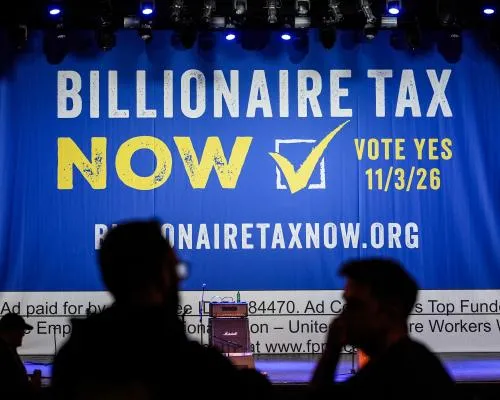 California ‘billionaire tax’ makes ballot despite opposition from tech moguls
Wealth tax criticized by billionaires and Gavin Newsom would levy a one-time 5% tax on residents worth over $1bn
-
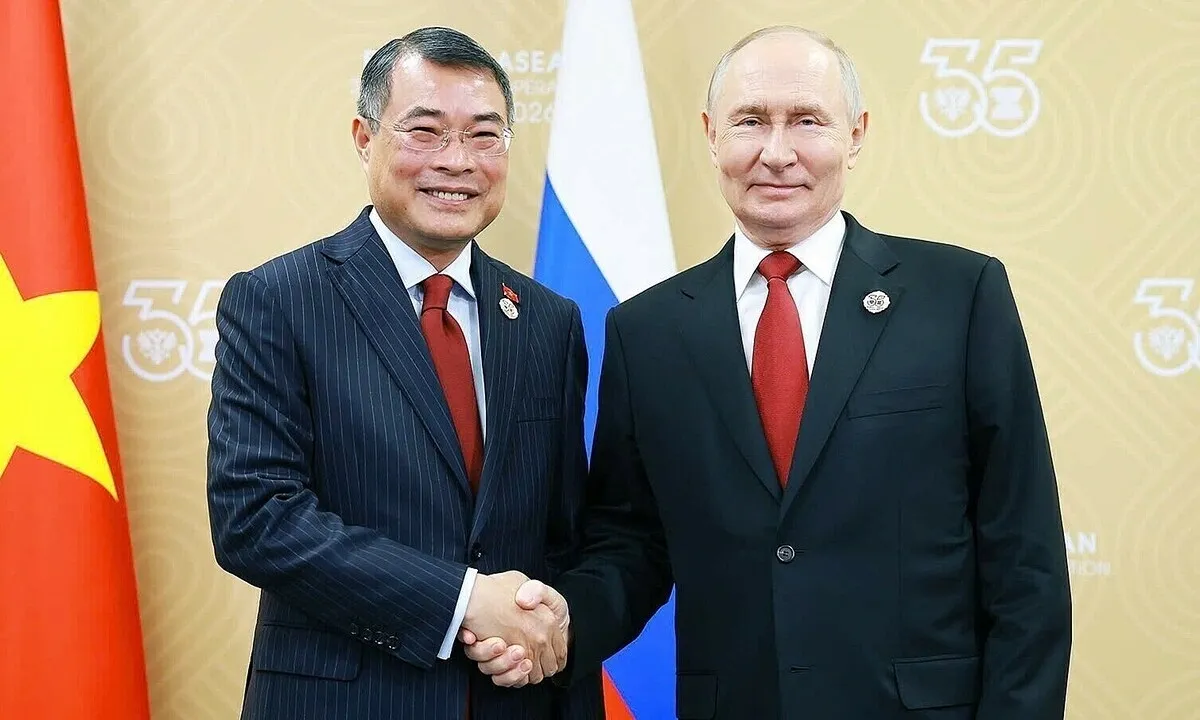 Việt - Nga nhất trí thúc đẩy đàm phán xây dựng nhà máy điện hạt nhân
Thủ tướng Lê Minh Hưng và Tổng thống Vladimir Putin nhất trí thúc đẩy đàm phán, sớm triển khai xây dựng nhà máy điện hạt nhân Ninh Thuận 1.
-
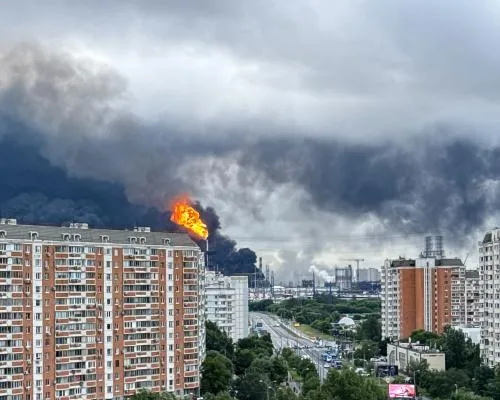 What did Ukraine target in Moscow and how significant was the drone attack?
Mass drone strike on capital brought the war to Russians, but Ukrainians will be braced for Kremlin’s response
-
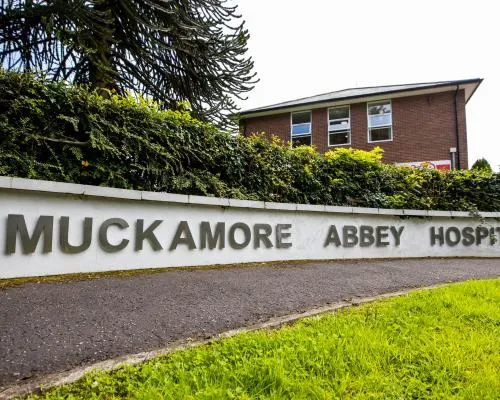 ‘Mistreatment became normality’ at Muckamore Abbey hospital, inquiry finds
Vulnerable adults suffered broken bones and severe neglect in Northern Irish hospital at centre of police investigation
-
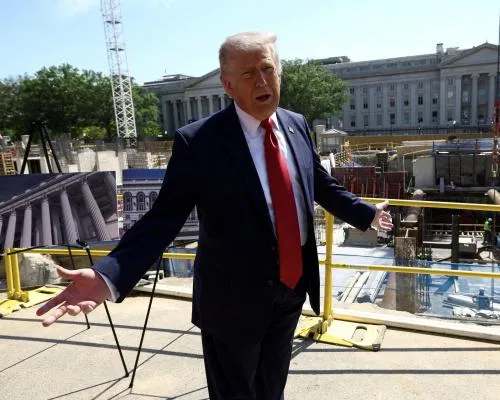 Trump administration quietly shifts $352m in federal funds for White House ballroom
Funds meant for Secret Service were transferred to project president promised would be financed by private donations
-
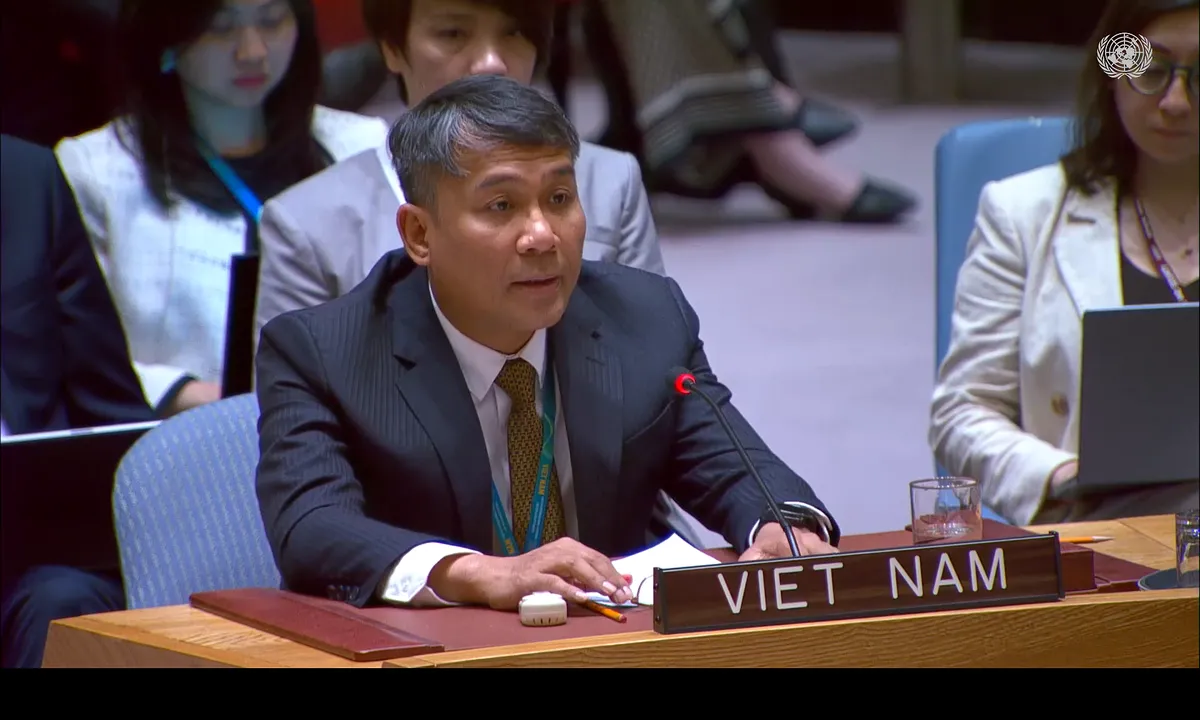 Việt Nam ủng hộ tăng cường vai trò phụ nữ trong xây dựng hòa bình bền vững
Việt Nam kêu gọi quốc tế thúc đẩy sự tham gia đầy đủ, bình đẳng của phụ nữ trong tiến trình hòa bình tại phiên thảo luận mở của Hội đồng Bảo an.


