Trump administration quietly shifts $352m in federal funds for White House ballroom


By Joseph Gedeon in Washington • June 18, 2026 • US news
Funds meant for Secret Service were transferred to project president promised would be financed by private donations
Donald Trump’s administration has quietly redirected $352m in federal funds designated for the Secret Service toward the president’s controversial White House ballroom project, despite repeated promises by Trump that the construction would be financed by private donations The funds were drawn from the One Big Beautiful Bill Act, Trump’s signature tax legislation passed last summer on Republican-only votes. The law stipulates the money may only be spent on Secret Service personnel, training facilities, technology and related costs, not construction. About $340.8m of the funding was placed into an account labeled “Procurement, Construction, and Improvements” on 12 June, according to the office of management and budget (OMB) database. Another account labeled “Operations and Support” was also approved the same day, adding another $10.75m to the budget. The move came after Congress explicitly refused to provide $1bn in funds for the “East Wing Modernization Project”, the Trump administration’s official name for a 90,000-sq-ft ballroom being built on the site of the White House’s demolished East Wing. The administration argued the funds were needed for legitimate security upgrades, pointing to recent threats against Trump, including an alleged plot to attack Sunday’s UFC Freedom 250 event on the White House south lawn. “The East Wing Modernization Project is inextricably tied to the security of the president, the White House grounds and the certain security infrastructure assets,” White House spokesperson Davis Ingle said. “President Trump and generous American patriots are funding the ballroom to the tune of approximately $400m, which will be a secure and appropriate venue for presidents for generations to come.” Those disrupted attacks, Ingle said, “proves exactly why” the project is needed for events at the White House, which include “drone-proof structures and drone ports among other critical security enhancements”. Senior legislators were unconvinced. “That’s a big problem,” Senator Thom Tillis, a Republican from North Carolina who is retiring at the end of the year, told Notus. “That sounds like a different way to fund the East Wing project. On its face it doesn’t sound right.” Brian Schatz, a Democratic senator from Hawaii on the appropriations committee, also told the outlet: “I don’t know whether it’s the ballroom, but it sounds like the ballroom.” The row is the latest chapter in a widening controversy over who is actually paying for the project. When the ballroom was announced in July 2025 at an estimated cost of $200m, Trump described it as “a private thing”, before the East Wing was destroyed in October. In late March, with estimates doubling to $400m, Trump insisted: “This is taxpayer-free. We have no taxpayer putting up 10 cents.” But those assurances have since frayed. Internal records obtained by the Washington Post from Clark Construction, the firm leading the project, show plans calling for $155m from Secret Service funds, $149m from the White House military office and $3m from the executive residence, all of which is public money, alongside private contributions. The Washington Post has reported total costs could reach $600m. The private fundraising side has drawn its own scrutiny. Watchdogs including the Campaign Legal Center have warned that donations from major corporations such as Meta, Coinbase and Lockheed Martin, all of whom have significant interests before the US federal government, create a substantial risk of corruption. Construction, meanwhile, remains subject to ongoing legal challenges, after a federal judge ruled in March that the administration had probably exceeded its authority in demolishing the East Wing without congressional approval.
Source: The Guardian
World News Today
221 posts
-
 Social media ban: saving kids or punishing them?
Letters: Dr Rory Conn says the ban is long overdue to protect children from harm, but 16-year-old Clara O‘Grady says social media is not an isolated section of teenagers’ lives that can easily be removed. Plus letters from Dr Peter Jarrett and Tony Side
-
 California ‘billionaire tax’ makes ballot despite opposition from tech moguls
Wealth tax criticized by billionaires and Gavin Newsom would levy a one-time 5% tax on residents worth over $1bn
-
 Việt - Nga nhất trí thúc đẩy đàm phán xây dựng nhà máy điện hạt nhân
Thủ tướng Lê Minh Hưng và Tổng thống Vladimir Putin nhất trí thúc đẩy đàm phán, sớm triển khai xây dựng nhà máy điện hạt nhân Ninh Thuận 1.
-
 What did Ukraine target in Moscow and how significant was the drone attack?
Mass drone strike on capital brought the war to Russians, but Ukrainians will be braced for Kremlin’s response
-
 ‘Mistreatment became normality’ at Muckamore Abbey hospital, inquiry finds
Vulnerable adults suffered broken bones and severe neglect in Northern Irish hospital at centre of police investigation
-
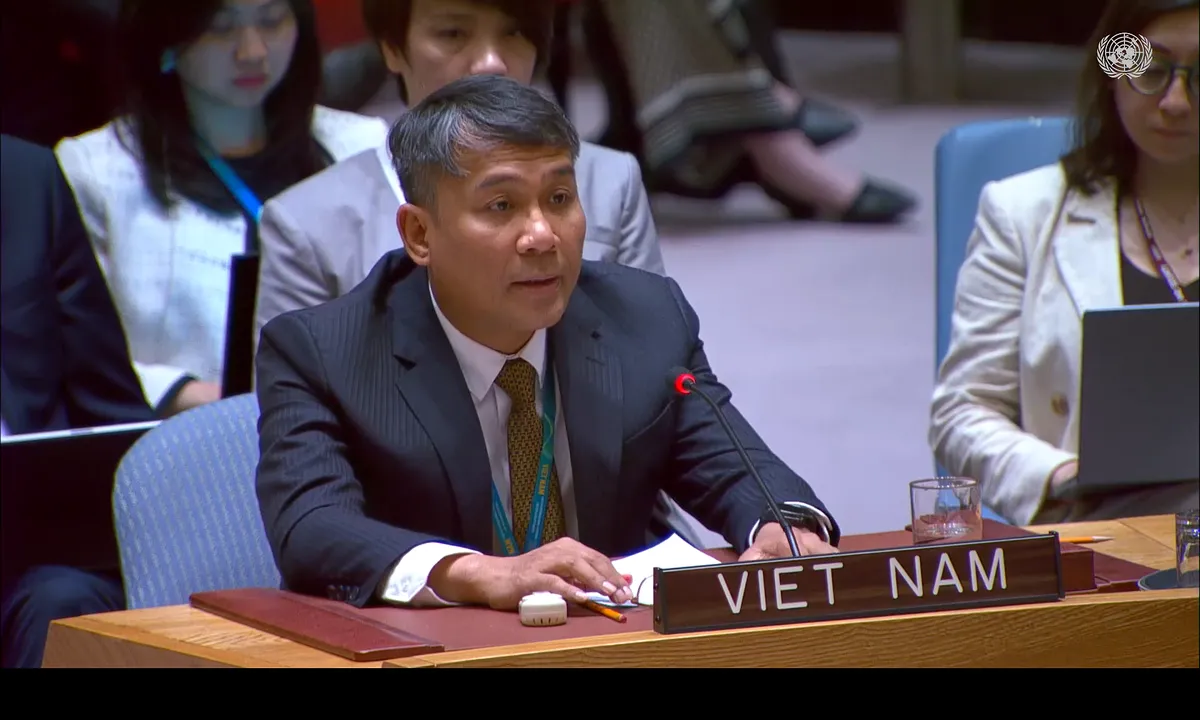 Việt Nam ủng hộ tăng cường vai trò phụ nữ trong xây dựng hòa bình bền vững
Việt Nam kêu gọi quốc tế thúc đẩy sự tham gia đầy đủ, bình đẳng của phụ nữ trong tiến trình hòa bình tại phiên thảo luận mở của Hội đồng Bảo an.
-
 Iran peace deal makes clear how far US has been forced to retreat since 2025
Plan is admission US could not achieve what it sought through war as red line after red line has been erased
-
 ‘I had sewage in my bath’: row erupts over lock on Huddersfield narrow canal
Boaters say low water levels cause them to run aground, while residents say the lock needs to be drained to prevent waste running into their properties
-
 Tropical Storm Arthur downgraded from cyclone as it makes landfall in Texas
Several inches of rain expected in south-eastern US as forecasters expect storm to cause life-threatening flooding
-
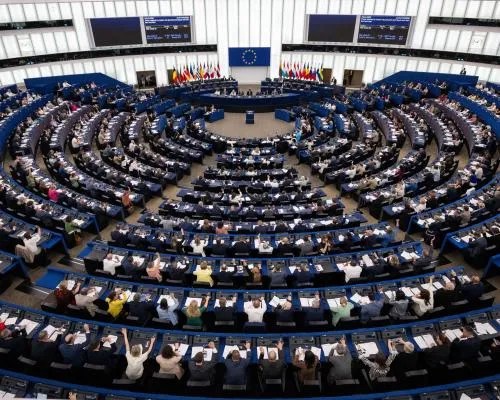 Anger at ‘send them back’ chants by rightwing MEPs after EU migration law vote
Other lawmakers respond with ‘shame on you’ in heated confrontation over passing of plan to increase deportations


