By Sanya Mansoor • June 13, 2026 • Technology
He’s now the world’s first trillionaire, after his rocket and AI company broke IPO records on its way to a $2.1tn valuation
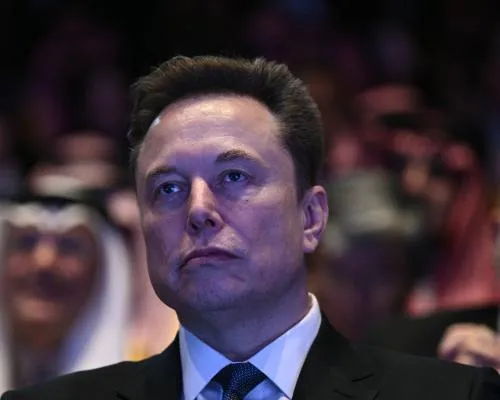
Elon Musk is now the world’s first trillionaire. SpaceX’s historic debut on the stock market on Friday launched the CEO to unprecedented levels of wealth; his personal fortune now amounts to $1.1tn, an increase of more than $62bn since the previous day, according to Forbes. The rocket, satellite and AI company raised $75bn from its record-breaking initial public offering (IPO), and is now valued at $2.1tn after its first day of public trading. Musk was already the world’s wealthiest person. In the days before SpaceX officially went public, his net worth hit $782bn, dropping by $50bn in one month due to a decline in Tesla’s share price, according to Forbes. However, the figure represents a huge leap from a decade ago, when the tech executive’s net worth hovered around $14bn – and an even bigger jump compared with 15 years earlier, when he was worth just $680m, according to Forbes. It can be hard to conceptualize such exorbitant wealth. To drive home just how much money $1.1tn is: only about 21 countries’ yearly economic output exceeds $1tn. Even Musk’s birthplace isn’t part of that elite club; South Africa’s output of goods and service is closer to $480bn. A trillion dollars is enough to buy 243bn gallons of gasoline. (That’s more than the nearly 137bn gallons Americans used last year.) SpaceX’s stock soared after its debut. At market close, at 4pm ET, its share price was $161, up 19% from its initial price of $135 per share. SpaceX had opened at $150 a share before peaking at $176 at midday. The vast majority of Musk’s money is tied up in stocks and equity, and isn’t available as cash he can quickly spend. His portfolio of companies includes Tesla, the electric car maker, and xAI, the AI startup that was folded into SpaceX earlier this year. Musk’s fortune is unprecedented, not just for its size but the speed at which it grew. “If you look at a graph, it looks like a hockey stick. It’s only in 2020 that his personal net worth truly went bonkers,” says Quinn Slobodian, a history professor at Boston University and the author of Muskism: A Guide for the Perplexed. Around 2020 was when Musk first became the world’s wealthiest person and Tesla the world’s most valuable car company. “Musk has a proven track record in creating sectors out of nothing,” Slobodian says. There’s a sense to “never bet against Elon – he’ll always make you money”, he adds. Musk’s AI gamble A few months before SpaceX’s stock market debut, Musk wrapped his AI startup, xAI, into SpaceX in a record-breaking deal. SpaceX has proposed launching up to 1m datacenters into space, as part of its ultimate goal of establishing colonies on the moon and Mars. This lean into AI is what’s allowed Musk to claim such high valuation for SpaceX – because many investors now believe “AI is such a once-in-a-millennium opportunity that it merits these extravagant expectations”, says Mihir Desai, a professor at Harvard Business School. Desai says the space business alone wouldn’t have generated such excitement. SpaceX is running up billions of dollars in losses, and its prospectus warns it may never become profitable. Many great businesses start off losing money but “the real question is how people come to believe that the future is so, so bright that those losses will not just turn into profits, but will turn into really massive profits”, Desai says. “That’s a story about not just SpaceX, but really about AI.” Musk’s strong track record Musk has won investor confidence through the stratospheric success of his previous endeavors, which faced serious doubts. (A $10,000 investment in Tesla on the day of its IPO, in 2010, would be worth more than $2m this year.) Desai describes Musk’s most loyal investors as belonging to a “financial cult” – and argues they believe he is “so damn brilliant that he’ll make it work even if the current product is crap and he has to spend a lot to get there”. The AI portion of SpaceX lost $6.4bn last year – in part due to the cost of higher computing expenses for building and operating AI models. But investors may fear missing out more than they fear losses: “You don’t want to sit on the sidelines. And so even if you think it’s crazy, you have to play,” Desai says. Musk is also able to consolidate his wealth through his continuing influence. He is not selling any of his shares in the SpaceX offering and will retain more than 82% of the company’s voting shares. That means it will be almost impossible to unseat him from the company, and he will be relatively insulated from shareholder pressure. SpaceX’s IPO comes amid recent announcements by OpenAI and Anthropic that they are going public, although it’s unclear when exactly they will do so. All three companies’ fates are tied up with AI. If the AI gamble doesn’t work out, “people are going to start to get cold feet and withdraw their investments”, Slobodian says. “This is not an ironclad fortune. We may see the world’s first trillionaire be the world’s first former trillionaire in a pretty short duration.”
Source: The Guardian

Technology News Feed
33 posts
-
 Creating Engaging Videos Without Editing Skills
Create engaging videos without editing skills using AI tools, automation, and smart templates. Learn easy video creation tips and explore trends with AI News Updates.
-
 Healthcare Marketing Frisco Texas
Healthcare Marketing Frisco Texas guide for clinics and providers. Learn local SEO, patient-focused branding, content strategy, and paid ads to grow appointments and build trust.
-
 Why Every Modern Business Wins Faster With a Website Chatbot Service
Why Every Modern Business Wins Faster With a Website Chatbot Service
-
 The Ultimate Guide to Choosing the Best Salesforce Consultant in Philadelphia
Choosing the right Salesforce consultant can make or break your CRM success—especially in a competitive business environment like Philadelphia.
-
 The Ultimate Guide to Building a High-Performance Ecommerce Development Abu Dhabi Store
Build a powerful online store with the best Ecommerce Development Abu Dhabi services. Learn how DigitalGraphiks delivers top-notch ecommerce solutions.
-
 Fugazi Clothing | Fugazi Official Website | Sale UpTo 40% off
Fugazi Clothing | Fugazi Official Website | Sale UpTo 40% off
-
 Create a Dynamic Online Presence with Top-Notch Website Design Agency in Singapore
Create a Dynamic Online Presence with Top-Notch Website Design Agency in Singapore
-
 How Spot Welding Shapes Modern Manufacturing
In the world of modern manufacturing, where speed, accuracy, and consistency define success, spot welding stands out as one of the most reliable and efficient metal-joining methods.
-
 Emergency Plumber Los Angeles: 24/7 Fast & Trusted Plumbing Solutions by Hi Tech Plumbing Services
Reliable 24/7 emergency plumber in Los Angeles. Hi Tech Plumbing Services provides fast, professional repairs and plumbing solutions for all needs.
-
 Houston Animation Studio: Creative Excellence Motion Graphics and Storytelling
Houston has rapidly become a hub for animation studios , drawing in creative talent, businesses, and organizations that seek innovative visual solutions.
-
 Golf Cart Soundbar with Subwoofer – Transform Your Ride with Premium Audio
For golf cart owners who want the best combination of convenience, durability, and sound quality, investing in a soundbar with subwoofer is a no-brainer.


