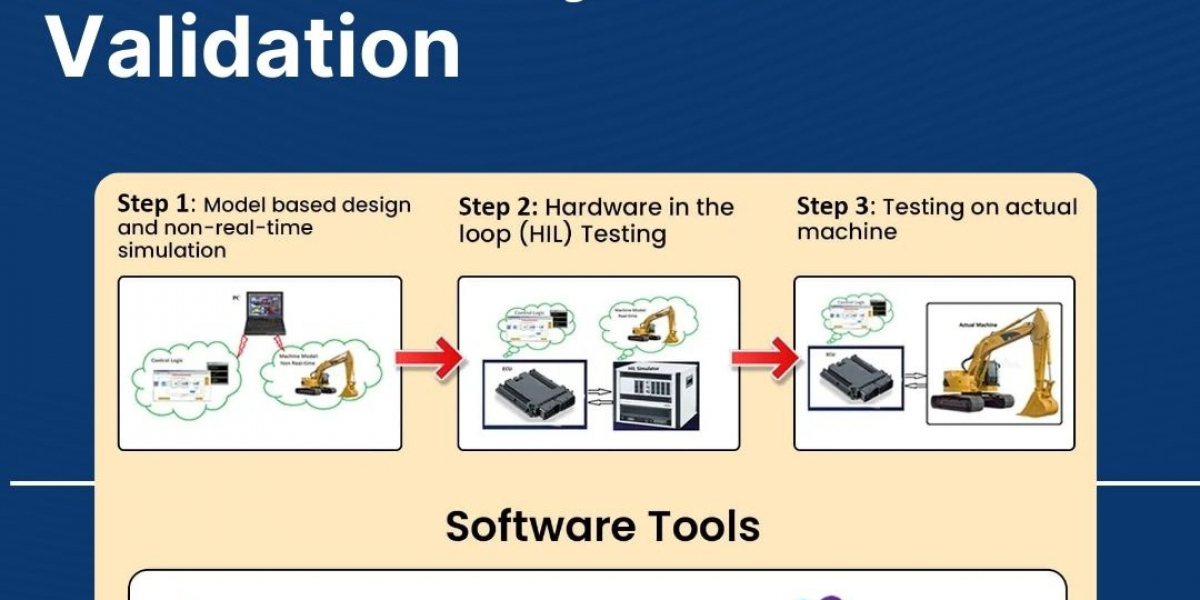
In the modern era of technological advancements, testing plays a crucial role in product development. One such innovative method is Hardware-in-the-Loop (HIL) Testing. It is a process where real-time simulation meets hardware to validate the performance of complex systems. But why is HIL Testing becoming so popular? Let’s dive in to find out!
HIL Testing, or Hardware-in-the-Loop Testing, is a technique used to validate the performance of embedded systems by simulating real-world scenarios. Think of it as a dress rehearsal before the actual performance, where you test every component in a controlled environment to ensure everything works perfectly in the real world.
Ever wondered why products fail even after extensive testing? Traditional testing methods may not capture all real-world scenarios. HIL Testing bridges this gap by mimicking real-world conditions, allowing for comprehensive validation. This not only reduces the risk of failures but also accelerates the development process.
HIL Testing integrates a simulation model with real hardware components. The simulated environment mimics real-world inputs like speed, temperature, and load, which interact with the actual system. This process helps identify issues early on, preventing costly fixes down the line.
To understand HIL Testing better, let's look at its core components:
The advantages of HIL Testing are numerous:
In the automotive sector, HIL Testing has become a game-changer. It helps in testing Advanced Driver Assistance Systems (ADAS), electric vehicle controllers, and various safety features. Imagine being able to test a car’s braking system without putting it on the road—HIL Testing makes it possible!
While HIL Testing offers many benefits, it comes with its own set of challenges:
To make the most of HIL Testing, follow these best practices:
The future of HIL Testing looks promising, with advancements in AI, machine learning, and cloud-based simulations. These technologies are expected to enhance the accuracy and speed of HIL Testing, making it even more integral to product development processes.
HIL Testing is revolutionizing how we approach product validation and software testing. By providing a realistic testing environment, it ensures systems are robust, reliable, and ready for real-world applications. Companies like Servotech are at the forefront of offering expert HIL Testing services, ensuring your products meet the highest standards of quality and performance.

Linh King
28 posts
-
 Jeff Bezos’s Blue Origin says it will fly again this year after explosion. Nasa needs it to
The company’s response to the launchpad blast has become a key test for Artemis III
-
 Share your views on SpaceX’s stock market debut
Americans’ financial futures are about to tied to the fortunes of Elon Musk with the world’s largest ever stock market debut. How do you feel about this?
-
 SpaceX to list on US stock market at $1.77tn valuation in largest ever debut
IPO for Elon Musk’s company comes in what is predicted to be a banner year for public offerings of AI companies
-
 Lupus patients in England in remission after pioneering NHS trial of GM therapy
Doctors say therapy that genetically modifies person’s T-cells could offer cure for chronic autoimmune disease
-
 Subterranean fungi networks more than 100 quadrillion km in length, study finds
First ever global mapping of arbuscular mycorrhizal fungi shows scale of hyphal systems that sustain plant life
-
 Scientists reveal surprising mechanism behind Venus flytrap’s rapid snap
Intricate tests show hair-trigger detection causes cells on outer surface of leaf to soften, prompting closure
-
 SpaceX heads for record $1.78tn float amid fears it is overvalued
Analysts say IPO that could make Elon Musk the world’s first trillionaire has a ‘major disconnect’ on price
-
 Wegovy weight-loss pills to be available for patients in UK to buy
Regulator approval means patients who meet criteria will be able to purchase tablets with private prescription
-
 UK’s stem cell transplant system may be putting lives at risk, report by MPs finds
System not fit for purpose due to poor infrastructure and planning, with minority groups particularly at risk, MPs say
-
 Humans prefer to walk anticlockwise, scientists find – but reason is unclear
From Spain to Japan, experiments have repeatedly shown a left-turn bias, but exact mechanic ‘is still an open question’
-
 ‘Earth’s first starfleet’: Nasa reveals Artemis III crew and project’s next steps
Luca Parmitano to pilot all-male crew of four paving way for planned first human landing on Artemis IV in 2028


