
By Hannah Devlin Science correspondent • June 12, 2026 • Science
Intricate tests show hair-trigger detection causes cells on outer surface of leaf to soften, prompting closure
The Venus flytrap is one of nature’s most impressive predators, luring insects with the intoxicating scent of nectar before capturing them with a snap of its jaw-like leaves. Now, scientists have revealed the mechanism that allows the carnivorous plant to react with lightning speed, resolving a problem that stumped Charles Darwin and many researchers after him. In an intricate series of experiments, scientists found that a hair-trigger detection causes the cells on the outer surface of the leaf to soften. This prompts the flytrap to flip into a closed position within a second of a bug landing on the leaf. “When Darwin saw these plants move so fast, he was convinced that the plant had a muscle inside, but plants do not have muscles and they do not have nerves,” said Dr Yoël Forterre, a physicist at the French National Centre for Scientific Research (CNRS) and Aix-Marseille University and senior author of the research. “For more than a century there have been many hypotheses. It’s very surprising that plant cell walls can tune their mechanical properties so fast.” A key challenge, Forterre said, was making physical measurements of such a finely tuned system that moves incredibly quickly. “As soon as you perturb it, it closes,” he said. “If you close it accidentally with a drop of water, it will close and then reopen the next day. If it catches an insect, it has to digest it and dissolve the skeleton, which will take several weeks.” Forterre and colleagues performed a series of experiments in which the plant’s leaves were carefully immobilised using dental glue, meaning the trap could be triggered to shut but remained stationary. Venus flytraps typically have three trigger hairs on each lobe of their trapping leaves, and previous work has shown that bending the hairs prompts an electrical signal to spread across both sides of the trap within one-tenth of a second. The latest research used a device called a nanoindenter, a metal tip, to poke the outer surface of the leaf to measure its pressure. “It gives you the same feeling of stiffness as if you poke a balloon with your finger,” Forterre said. This showed that the leaf’s outer surface softened immediately after the trap was activated. Measurements of the leaf’s topology showed that this was due to the cells becoming more flexible rather than them deflating due to the movement of water within the leaf, which had previously been the leading hypothesis. The mechanism is similar to how a dome-shaped rubber popper toy spontaneously flips when placed on a surface. “I’m not aware of any other plants with this kind of very rapid change of mechanical properties of the cells,” Forterre said. Forterre first became intrigued by the mechanics of Venus flytraps when a former colleague brought one into the lab. “As a physicist, I thought we should understand the motor, the forces,” he said. “I’ve been obsessed by this for 20 years.” He added: “Plants are just amazing. It makes you realise how all plants can sense their surroundings, transport information, react, defend themselves, feed.” The findings are published in the journal Science.
Source: The Guardian

Science Daily
34 posts
-
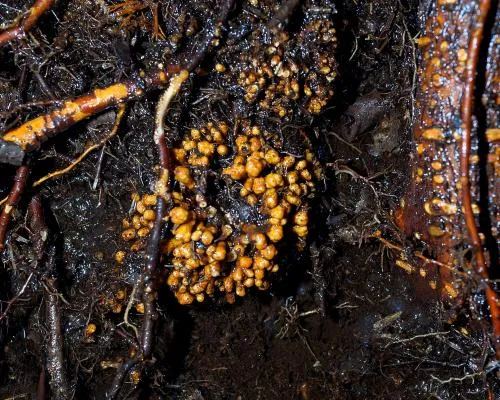 Subterranean fungi networks more than 100 quadrillion km in length, study finds
First ever global mapping of arbuscular mycorrhizal fungi shows scale of hyphal systems that sustain plant life
-
 SpaceX heads for record $1.78tn float amid fears it is overvalued
Analysts say IPO that could make Elon Musk the world’s first trillionaire has a ‘major disconnect’ on price
-
 Wegovy weight-loss pills to be available for patients in UK to buy
Regulator approval means patients who meet criteria will be able to purchase tablets with private prescription
-
 UK’s stem cell transplant system may be putting lives at risk, report by MPs finds
System not fit for purpose due to poor infrastructure and planning, with minority groups particularly at risk, MPs say
-
 Humans prefer to walk anticlockwise, scientists find – but reason is unclear
From Spain to Japan, experiments have repeatedly shown a left-turn bias, but exact mechanic ‘is still an open question’
-
 ‘Earth’s first starfleet’: Nasa reveals Artemis III crew and project’s next steps
Luca Parmitano to pilot all-male crew of four paving way for planned first human landing on Artemis IV in 2028
-
 Challenges of treating and living with a brain injury
Letters: Readers respond to an article by Ian Sample on how early intensive rehabilitation after a stroke or head injury is crucial for recovery
-
 Letter: Dame Bridget Ogilvie obituary
Mary Rice writes: Bridget Ogilvie had a wicked sense of humour
-
 Did you solve it? Do you have a snout for numbers?
The answer to today’s puzzle
-
 Muscle growth drug ‘could reduce loss of lean tissue’ when using slimming jabs
Trial suggests monoclonal antibody can help retain lean body mass when losing weight with GLP-1 medicines


