By Vikram Dodd Police and crime correspondent • June 15, 2026 • UK news
Solicitor general asks for Vickrum Digwa’s 21-year minimum jail term to be reviewed under ‘unduly lenient sentence’ scheme
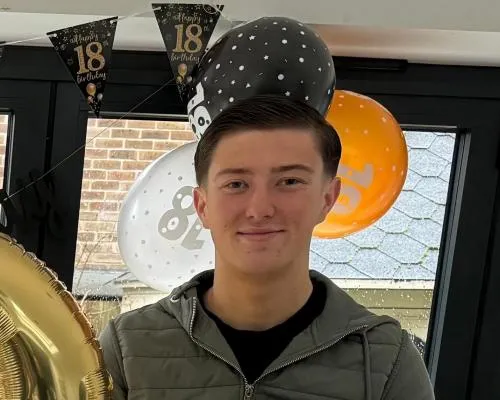
The court of appeal will be asked to increase the 21-year minimum sentence on Vickrum Digwa for murdering Henry Nowak, government law officers have decided. The solicitor general, Ellie Reeves, made the announcement on Monday that she was referring the case to the court of appeal under the unduly lenient sentence scheme. Nowak, 18, died in December last year after Digwa stabbed him in Southampton. Digwa falsely told police he had been the victim of a racist attack, which led officers to handcuff Nowak and treat him as a suspect, despite his claims to have been stabbed and pleas that he could not breathe. Digwa watched Nowak struggling and did not alert police that he was seriously injured, instead maintaining his lie after having repeatedly stabbed the student with a 21cm blade. The mandatory sentence for murder is life. The issue the court of appeal judges will be asked to decide is the minimum time Digwa, 23, must remain in jail before he can be considered for parole and release under life licence. The solicitor general did not state the grounds for the appeal against the sentence. But the chambers of Digwa’s defence barrister, spelled out how he argued for a lower sentence than the prosecution wanted, after a jury had reached a guilty verdict at Southampton crown court. Under a listing for Jeremy Wainwright KC, the website says: “At the sentencing hearing on 1 June, the prosecution argued for a 25-year starting point for the minimum tariff on the basis that the defendant had the knife with him to use as a weapon. “This could have resulted in a minimum of over 30 years once other aggravating features had been taken into consideration. “Jeremy Wainwright KC was successful in persuading the judge that the starting point should be 15 years as Vickrum had a genuine belief that the additional Kirpan he carried was part of his religious beliefs. This resulted in a tariff of 21 years.” During sentencing Wainwright told the court: “He carried that knife in the same way that he does every day in his life: as part of his religion.” Reeves said: “This case horrified me, and I know that feeling is shared by the British public. It is right that difficult questions need to be answered about the way the police handled Henry’s Nowak’s murder, while my role is to review Digwa’s sentence for his crimes. “After careful consideration, I have taken the decision to refer this case to the court of appeal. “No sentence can ever undo the devastation that Henry’s family have suffered, or fill the void left by his loss. But I hope this referral goes some way towards bringing them the justice they deserve.” The trial judge, William Mousley KC, said: “The murder did not involve taking a knife to the scene with the purpose to use it to commit an offence or to have it available to do so. It is possible that you had a good legal reason for having the dagger when you met Henry although, considering the jury’s verdict, that reason must have come to an end after you removed it from its sheath.” His starting point for deciding the minimum Digwa must spend in jail was 15 years, which was then increased because of aggravating factors. The details of the case, such as video showing Nowak being disbelieved by police and handcuffed, led to widespread outrage. The far right seized on the event, claiming it was because of anti-white bias, and protests over the case led to violence with police being attacked. The Independent Office for Police Conduct is investigating the case, and so far is treating officers involved as witnesses.
Source: The Guardian

Uk News Feed
103 posts
-
 Alaska rules Dan Sullivan cannot run against Dan Sullivan in key Senate race
Elections chief says bid by ex-teacher to challenge senator with same name was filed ‘to confuse or mislead’ voters
-
 Canada eliminates human rights watchdog that oversees companies operating abroad
Mark Carney says Canadian Ombudsperson for Responsible Enterprise office hasn’t been ‘effective’ since its 2019 setup
-
 Gavin Newsom says Trump directed DoJ to investigate him and his wife
California governor says Trump is ‘coming after me because I am considering running for president’
-
 Trump declares US-Iran peace deal ‘all signed’ as G7 leaders battle to tie up loose ends
US president says strait of Hormuz will be open from Friday but questions remain over waterway fees and Israeli breaches of ceasefire in Lebanon
-
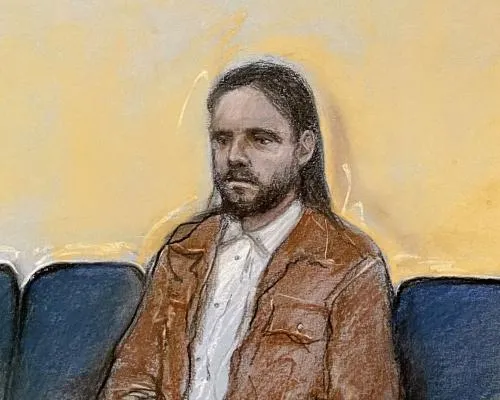 Behind the facade of Jamie Varley, the ‘wicked, arrogant liar’ who abused and murdered his baby son
Varley presented himself in court as a doting dad to Preston Davey but prosecution said he used adopted boy as a sexual ‘plaything’
-
 King tides along California coast prompt advisories following two deaths
A five-year-old girl was swept away and a woman was pulled into the water, prompting authorities to urge precaution
-
 Trump hails Iran deal that fixes nothing except a problem his war caused
Deal will leave things almost exactly as they were before feckless war of choice started
-
 Handler with ties to Russia appears to have directed arson attacks on Starmer-linked property
Roman Lavrynovych and Stanislav Carpiuc appear to have operated under instruction of online handler ‘El Money’
-
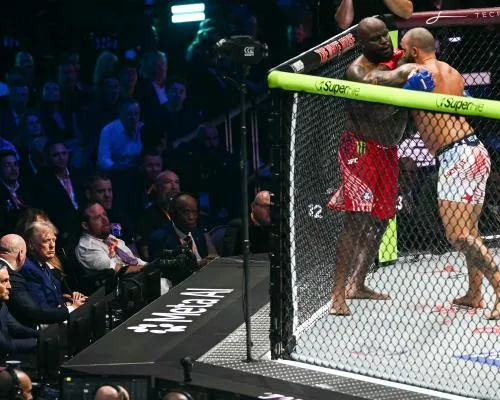 Controversy and a corporate spectacle under the Claw: Trump’s birthday fight night at the White House
Despite a last-ditch legal bid to block the event, the White House spent the night as a marketing department for the private fighting company
-
 US-Iran ceasefire offers welcome respite but true peace looks distant as ever
Analysts say lengthy, painstaking negotiations over region’s root tensions are required to make ceasefire stick


