US student debt repayment system is being overhauled – here’s what to know

By Gaya Gupta • June 16, 2026 • Business
Borrowers face stricter payment timelines after Biden-era Save repayment plan was ended by Donald Trump
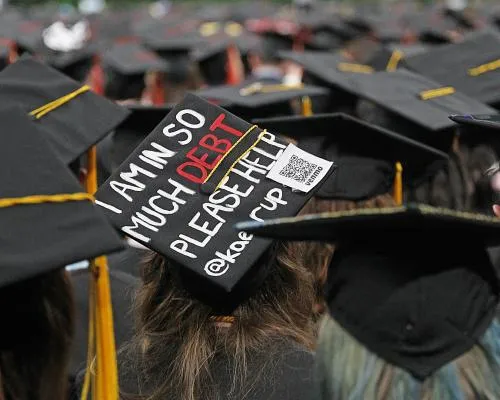
The American student loan repayment system is set to undergo a significant overhaul next month, changing the way millions of borrowers pay off their debt. The series of changes, which take effect 1 July, are a result of the Trump administration’s One Big Beautiful Bill Act that was signed last summer and a recent court ruling that ordered the end of the Biden-era Save repayment plan. Borrowers will be facing stricter payment timelines and less forgiveness, what will be the latest in a series of massive changes to the student loan system in just a few years. “This is impacting, in my opinion, every single student loan borrower in one way or another – even if you don’t have to make a change in your loans, just the confusion alone,” said Natalia Abrams, the president of the Student Debt Crisis Center. “I’ve worked in this space for more than 15 years, and I’ve never seen it this bad, and I’ve never seen it change this much, this frequently.” Here’s a rundown of how the repayment system is changing and how it is affecting students. What’s changing? More than 7 million Americans are enrolled in the Save plan, an income-based repayment plan launched in 2023 by the Biden administration. The program was created with the goal of drastically reducing undergraduate loans, eliminating monthly payments for some, and offering early forgiveness for borrowers with low-balances. After a federal appeals court ruling in March, the Save plan will be official dismantled 1 July. The ruling came after Republican attorneys general across the country challenged the plan, putting monthly repayments on hold for years. On 1 July, monthly repayments will start again and Save borrowers will soon have to apply for a different payment plan. What repayment options will borrowers have? Once the Save plan officially ends, borrowers will have 90 days tochoose a different repayment plan. Borrowers with loans issued before 1 July 2026 – and who do not plan to take out more loans – will retain access to several existing income-driven payment and fixed-income plans. Compared to plans offered under the Biden administration, these plans push borrowers to pay back their loans more quickly and include less forgiveness options. Borrowers will have access to existing income-driven payment plans – which are based on a borrower’s discretionary income – including the income-based repayment (IBR), pay as you earn (Paye) and income contingent repayment (ICR) plans, which offer loan forgiveness between 20 to 25 years after payments. The latter two options, however, will also be dismantled by the summer of 2028. Meanwhile, anyone enrolled in the Save plan who does not apply for another payment program will automatically be enrolled into a fixed-income plan, which are typically not eligible for loan forgiveness. The monthly payments under a standard fixed-payment plan are generally higher than the income-based plans because the fixed amounts are set to ensure loans are paid off within 10 years. Two other fixed payment plans offer lower or gradually increasing monthly payments made over a longer period of time. Why is this happening now? The Department of Education has said the upcoming overhaul simplifies the student debt system. In a statement earlier this year, Nicholas Kent, the under-secretary of education, said: “For years, borrowers have been caught in a confusing cycle of uncertainty, but the Trump administration’s policy is simple: if you take out a loan, you must pay it back.” It’s a U-turn from how the Biden administration approached student loans including, at one point, attempting to cancel $430bn worth of student debt before it was blocked by the supreme court in 2023. Experts say the new plans offered by the Trump administration are less forgiving than previous programs, what they say will make college more prohibitive for future generations. “We have an affordability crisis in our country, and having more expensive repayment plans is just going to affect the money that people have in their pockets,” said Abrams of the Student Debt Crisis Center. It feels like this has been designed by people that do not understand the student loan system,” she said. William Elliott, the founding director of the University of Michigan’s Center on Assets Education and Inclusion, said student debt has shaped a generation, changing how Americans view the value of an education. “I ended up with debt for over 20 years. And every day you get up, you think about that debt. I mean, it’s just an albatross around your neck,” he said. “It affects your ability to begin to build wealth like you want. It is just something that is constantly there, destroying the sense of a return on degree for you.” Are there any new options for borrowers? Any borrower who plans to take out new loans after 1 July – even if they have existing loans – will have access to two new repayment plans: the repayment assistance plan, or RAP, and the tiered standard plan. Under RAP, monthly payments are calculated based on a borrower’s adjusted gross income (AGI), rather than their discretionary income. If a borrower has an AGI above $10,000, monthly payments range from 1% to 10% of that amount. For those below that threshold, the monthly payment is $10. Loans are forgiven after 30 years. The tiered standard plan is a fixed-payment plan where payments last between 10 to 25 years depending on the initial balance and are at least $50 a month. Some borrowers may be automatically enrolled in this program if they are entering repayment and haven’t chosen another eligible plan. How are students reacting? Recent college graduates are bracing for the overhaul, with many unsure if they will be able to take out loans in the future under the new payment system. Ryan Coryea, a 21-year-old senior at the University of California, San Diego, said she is planning to move back home to Texas after graduation because she can’t afford to make her student debt payments on top of rising housing and food costs. Though she is considering getting a law or master’s degree in public policy, the new payment plans may make it prohibitive. “For me as well as for a lot of my friends, it’s really making us reconsider how we’re going to pay for grad school, and also if we’re going to go at all,” said Coryea, who is also an intern at the Student Debt Crisis Center. Cassie Urbenz, who graduated this spring with a masters degree from the University of Florida, is about to start paying off the $20,000 she took out in loans she took out for her undergraduate degree. She recently landed a job as a union organizer for the Florida Education Association and will soon start making monthly payments just over $200. “It’s really disappointing that I’m going to be having a lot of extra pressure to pay it off early” under the new repayment plan, she said. “It’s going to delay my own accumulation of wealth and set me back in that sense.”
Source: The Guardian
Business Daily
99 posts
-
 Ông Nguyễn Văn Thanh thôi làm Tổng giám đốc Green SM
Sau hơn 3 năm, ông Nguyễn Văn Thanh, sinh năm 1992, thôi làm Tổng giám đốc Green SM (Xanh SM).
-
 Kingsmill owner cleared to create UK’s biggest bread brand with Hovis takeover
ABF’s bakeries arm would be likely to exit the market entirely if the deal did not proceed, CMA finds
-
 Kalevi Kiviniemen perintö suomalaiselle musiikkikulttuurille – miten hänen vaikutuksensa näkyy tänään?
Hänen vaikutuksensa ei rajoitu pelkästään esityksiin, vaan ulottuu myös urkumusiikin arvostukseen, esityskäytäntöihin ja nuorten muusikoiden inspiraatioon. Hänen kansainvälinen uransa, laaja levytysproduktion ja esiintymiset maailman merkittävimmissä konserttipaikoissa loivat p
-
 Bộ Tài chính đề xuất gia hạn 125.000 tỷ đồng tiền thuế, thuê đất
Bộ Tài chính đề xuất gia hạn nộp thuế và tiền thuê đất năm 2026 để hỗ trợ sản xuất kinh doanh, khoảng 125.000 tỷ đồng.
-
 Kalevi Kiviniemen perintö suomalaiselle musiikkikulttuurille – miten hänen vaikutuksensa näkyy tänään?
Kalevi Kiviniemi oli yksi merkittävimmistä suomalaisista konserttiurkureista, jonka ura ja taiteellinen työ jättivät pysyvän jäljen sekä kotimaiseen että kansainväliseen musiikkikulttuuriin.
-
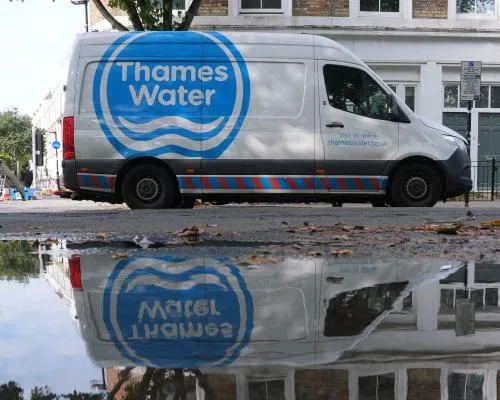 Thames Water nationalisation moves closer as government ‘objects to rescue deal’
Environment secretary reportedly raised concerns that customers would face ‘undue burden’ from £10bn plan
-
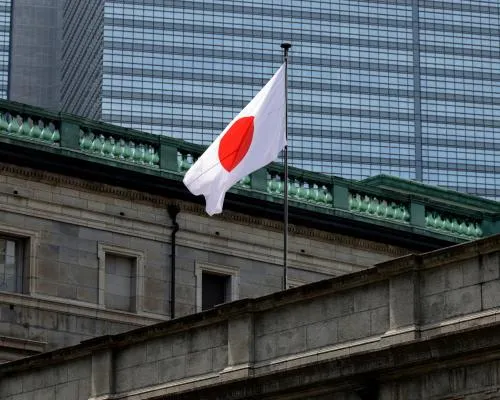 Japan hikes interest rates to highest since 1995 to fight inflation from Iran war; Thames Water rescue in doubt – busine
Rolling coverage of the latest economic and financial news
-
 Lãi suất tại Nhật Bản lên cao nhất 31 năm
Ngày 16/6, Ngân hàng Trung ương Nhật Bản (BOJ) nâng lãi suất tham chiếu ngắn hạn từ 0,75% lên 1%.
-
 EV prices in UK and EU not likely to dive due to Chinese rivalry, says Xpeng boss
Brian Gu says he sees Chinese car firms competing on quality rather than launching price war as at home
-
 Elon Musk có thêm hơn 160 tỷ USD một ngày
Cổ phiếu SpaceX tăng gần 20%, kéo tài sản của người giàu nhất hành tinh tăng 165 tỷ USD chỉ trong một phiên.


