The gaming industry is rapidly evolving from closed, developer-controlled systems into open, player-driven economies powered by blockchain technology. At the center of this shift is tokenized gaming economy development, which introduces a structured financial layer inside gaming platforms using cryptocurrencies, NFTs, and smart contracts. This transformation is not just changing how games are played, but fundamentally redefining how value is created, distributed, and sustained within digital ecosystems.
A tokenized gaming economy refers to a system where in-game assets, rewards, and transactions are represented using blockchain-based tokens. These tokens function as the backbone of the entire ecosystem, enabling players to earn rewards, purchase assets, participate in governance, and trade value across decentralized marketplaces. Unlike traditional gaming currencies that exist only within a single game, blockchain-based tokens have real-world value and can be exchanged on external platforms.
In traditional gaming models, economic systems are tightly controlled by developers. Players spend money to purchase in-game items, but they rarely gain any financial return. Tokenized gaming economies completely change this structure by allowing players to participate in value creation. Every action within the game—whether completing missions, winning battles, or contributing to the ecosystem—can generate token-based rewards that hold real economic value.
A well-designed tokenized gaming economy relies heavily on tokenomics, which is the science of structuring supply, demand, and utility within a blockchain ecosystem. Developers must carefully balance token distribution to ensure long-term sustainability. If too many tokens are released too quickly, inflation can occur, reducing the value of rewards. On the other hand, well-managed token scarcity can increase demand and stabilize the in-game economy over time.
Smart contracts play a critical role in managing tokenized gaming economies. These self-executing programs automate reward distribution, staking mechanisms, marketplace transactions, and governance processes. Because smart contracts operate on decentralized blockchain networks, they ensure transparency, fairness, and immutability. Every transaction is recorded permanently, eliminating the possibility of manipulation or centralized control.
Another important component of tokenized gaming ecosystems is staking and yield mechanisms. Players can lock their tokens or NFTs into smart contracts to earn passive rewards over time. This introduces financial incentives that encourage long-term engagement and ecosystem stability. It also creates additional utility for tokens beyond simple in-game spending.
Tokenized gaming economies also support decentralized governance systems. In many Web3 gaming platforms, players are given voting rights through governance tokens. These tokens allow users to participate in key decisions such as game updates, reward structures, and economic adjustments. This creates a community-driven ecosystem where players have a direct influence on the future of the game.
NFTs are deeply integrated into tokenized gaming economies as well. While tokens represent currency and utility, NFTs represent ownership of unique digital assets such as characters, weapons, skins, and virtual land. These NFTs can be traded in decentralized marketplaces, adding another layer of economic interaction within the ecosystem. Together, tokens and NFTs form a dual-layer economy that powers Web3 gaming platforms.
Despite its advantages, tokenized gaming economy development faces several challenges. One of the biggest issues is economic instability caused by poor token design. If rewards are not properly balanced, the system can suffer from inflation or rapid token devaluation. Scalability is another challenge, as blockchain networks must handle large volumes of transactions efficiently without increasing costs or delays.
User onboarding is also a major barrier. Many players are unfamiliar with blockchain concepts such as wallets, private keys, and token transactions. This complexity can slow adoption and limit mainstream success. However, improvements in wallet technology, gasless transactions, and simplified user interfaces are gradually reducing these barriers.
The future of tokenized gaming economies is closely tied to advancements in artificial intelligence, metaverse environments, and decentralized finance. AI systems will help optimize in-game economies in real time by adjusting reward structures and predicting market behavior. Metaverse integration will expand token utility across multiple virtual worlds, while DeFi mechanisms will introduce more advanced financial models within gaming ecosystems.
Companies specializing in blockchain gaming development services are essential in designing and implementing these tokenized economies. They create the infrastructure needed to support secure, scalable, and sustainable gaming ecosystems.
For example, Intelisync contributes to Web3 gaming innovation by building blockchain-based platforms, NFT systems, and decentralized applications that support next-generation digital economies.
In conclusion, tokenized gaming economy development is revolutionizing blockchain gaming platforms by introducing real-world value, decentralized ownership, and player-driven financial systems. By combining smart contracts, NFTs, and tokenomics, it creates a self-sustaining digital economy where players are active participants rather than passive users. As Web3 gaming continues to evolve, tokenized economies will become the foundation of the next-generation gaming industry.

Javed Khan
11 posts
-
 Web3 & Crypto Growth Marketing Solutions for Modern Businesses
Accelerate business growth with Web3 and crypto marketing solutions. Increase brand awareness, community engagement, user acquisition, and platform adoption through data-driven growth marketing strategies.
-
 Web3 AI Chatbot Development: Conversational AI Solutions for dApps & Communities
Web3 AI chatbot development is becoming one of the most important technologies for improving user experience in decentralized applications (dApps) and blockchain-based communities.
-
 The Rise of RWA Platforms: Everything You Need to Know in 2026
The year 2026 marks a significant milestone in the evolution of blockchain technology, as Real World Asset tokenization platforms continue to gain momentum across industries.
-
 How Blockchain Development is Transforming Digital Industries in 2026
Blockchain development has emerged as one of the most transformative technologies of the digital era, and by 2026, its impact is clearly visible across multiple industries.
-
 Elevate Your Crypto Project with Professional PR Campaigns
The blockchain industry is expanding rapidly as decentralized technologies continue influencing industries such as finance, NFTs, gaming, healthcare, metaverse ecosystems, and enterprise infrastructure.
-
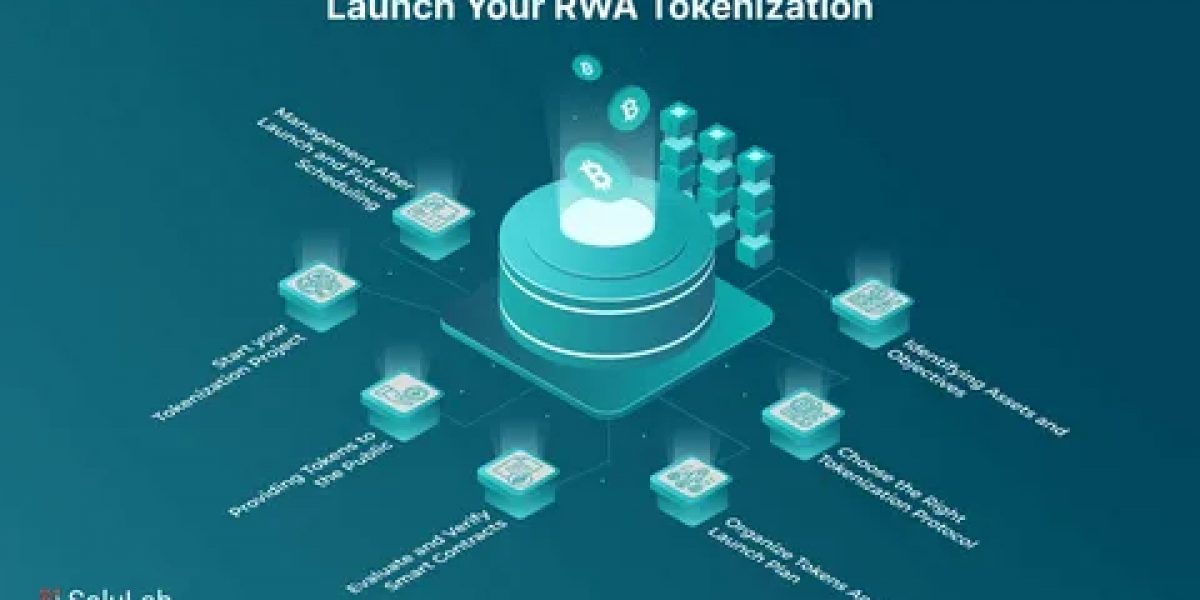 Real World Asset Tokenization: The Future of Investment is Here
The investment landscape is undergoing a profound transformation in 2026, driven by the emergence of Real World Asset tokenization
-
 Key Elements of a High-Impact Brand Strategy for Online Businesses
In today’s highly competitive digital ecosystem, building a high-impact brand strategy is essential for online businesses aiming to establish a strong presence and achieve long-term success.
-
 Why Businesses Rely on Intelisync for Blockchain Development Solutions
One of the most revolutionary technologies enabling these transformations is blockchain.
-
 IRCTC Bike Parcel Service – Complete Guide for Safe & Affordable Bike Transport
Transporting your bike across cities in India can be stressful, especially if you plan to ride it yourself. Long-distance travel increases fuel costs, causes wear and tear, and can be time-consuming.
-
 From Small Cash to Big Chances: The Power of Asset Tokenization
Asset tokenization development is unlocking big opportunities for people who only have small amounts to invest. This new digital ownership system makes wealth-building more accessible, transparent, and future-ready for everyone.


