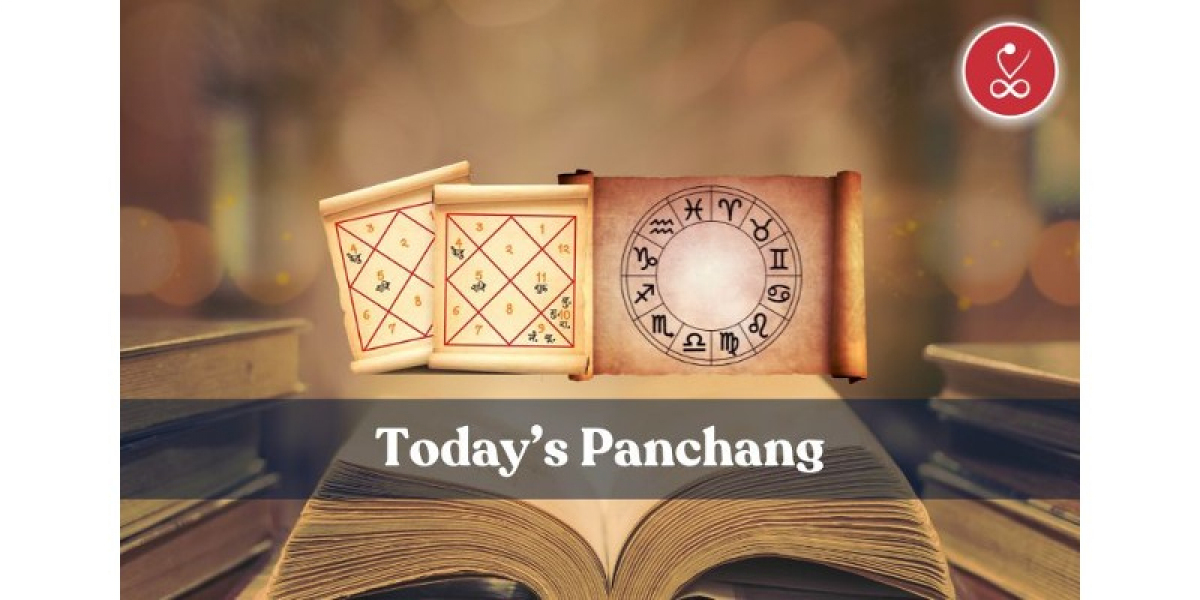
Panchang, often referred to as the Hindu calendar or almanac, is a detailed tool used to understand various aspects of time astrology. It consists of helping calculate auspicious moments, inauspicious timings, and the cosmic energies surrounding a particular day.
Today's Panchang has been the go-to guide for spiritual seekers, astrologers, and even ordinary individuals. It serves as a cosmic timetable, telling you not just the time of sunrise or sunset, but also auspicious timings for rituals, ceremonies, and day-to-day activities like starting a new job or making important decisions.
The word "Panchang" comes from Sanskrit, where "Pancha" means five and "Ang" means parts. The Panchang is divided into five parts:
Tithi is the lunar day. Each month is divided into 30 Tithis, and these are used to decide important events like fasts and festivals.
The Nakshatra is the star or constellation the moon is passing through at a specific time. There are 27 Nakshatras, and each holds significance in determining personality traits and favorable timings.
Yoga is a particular calculation based on the position of the sun and the moon. It influences well-being, health, and prosperity.
A Karana is half of a Tithi and determines the smaller aspects of time. It is mainly used to calculate specific rituals and auspicious moments.
Var represents the seven days of the week, each ruled by a particular planet, impacting energy, actions, and success during that day.
The Tithi you're born under or the Tithi of a particular day plays a role in determining what activities are best undertaken. Certain Tithis are considered auspicious for spiritual activities, while others are perfect for material endeavors.
Nakshatras are deeply connected to Vedic astrology. Depending on which Nakshatra the moon is in, the day will either support mental clarity or emotional challenges. Each Nakshatra has unique traits that affect daily life and long-term events.
Certain Yogas are considered highly auspicious and are great for achieving wealth and success. Others might warn of obstacles and suggest taking precautions.
Karana splits the Tithi into two and helps astrologers pinpoint the best timings for short-term activities like travel or meetings. They're critical in determining the finer details of daily rituals.
Each day of the week holds its planetary energy. For example, Wednesday is ruled by Mercury, ideal for communication and intellectual tasks, while Saturday, ruled by Saturn, is better for discipline and reflection.
Today's Panchang can easily be found online or in traditional Hindu calendars. Start by highlighting the Tithi , followed by the Nakshatra , Yoga , and Karana . Pay attention to the sunrise and sunset times as well, as these mark the beginning and end of each day's astrological phases.
The exact timings of sunrise and sunset are crucial in Hindu rituals and spiritual practices. Many rituals are best performed at sunrise, while some specific practices are reserved for the evening.
Rahu Kaal is considered an inauspicious time during each day, when the shadow planet Rahu’s energy is thought to disrupt success. It’s essential to avoid important tasks during this period.
The Panchang provides daily Shubh Muhurats or auspicious timings to begin new tasks, whether it’s starting a business, signing a contract, or planning a wedding. Today’s Panchang will offer these precise moments based on the planetary positions.
Astrologers use the Panchang to predict the success of future endeavours, suggest remedies, and understand the energies of any given day. By analyzing the Tithi, Nakshatra, and other factors, they can provide personalized insights.
Festivals, fasts, and rituals are planned based on the Panchang. Whether it’s Diwali or a small puja at home, you’ll consult the Panchang to ensure it’s happening at the right time, according to the cosmic calendar.
Today’s Panchang is not just limited to spiritual activities. People use it for planning travel, starting new ventures, or even setting up meetings, all to harness the day’s most positive energy.
Panchang helps align your daily tasks with the cosmic flow, ensuring that you are in harmony with nature’s rhythm. Whether you’re spiritual or not, using Panchang can help maximize productivity and success.
Gone are the days when you had to rely on traditional calendars. Now, online Panchang calculators are widely available, offering instant access to all the astrological details you need.
Many people perform daily spiritual practices like lighting a lamp, offering prayers, or meditating based on the day's Panchang. It adds structure and discipline, creating a balanced life.
In conclusion, Panchang is a powerful tool that connects you with the cosmic energies at play each day. Whether you’re planning a major life event or just want to know how the stars align for your daily tasks, today’s Panchang offers invaluable guidance. Start your day with these insights and see the difference!
Panchang determines auspicious timings for rituals, festivals, and day-to-day activities.
You can find Shubh Muhurat in today’s Panchang in traditional calendars or online platforms.
While it doesn’t predict the future, Panchang helps identify favorable and unfavorable times.
Absolutely! Many people still use Panchang to align their activities with cosmic energies for success and balance.
Panchang calculations are based on precise planetary movements, making them highly accurate for determining auspicious timings.

Mudit Jain
12 posts
-
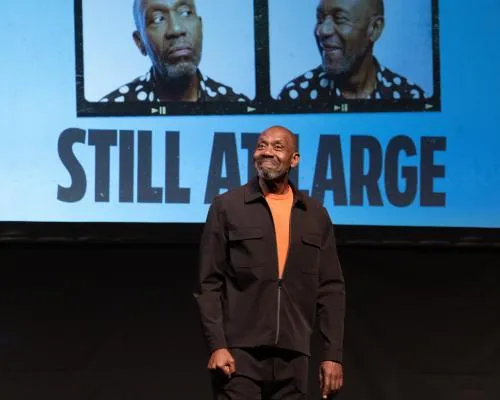 Lenny Henry says racism in UK ‘still at large’ as he tours standup comeback
Comedian is doing first tour in more than 15 years and says many issues he talked about in 1980s are still alive today
-
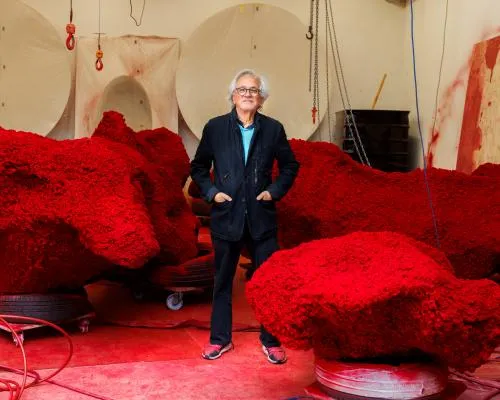 ‘I have a naughty schoolboy attitude’: Anish Kapoor reveals his latest epic creations
As he opens a career-spanning show in London, the Turner prize-winning artist gives us a private view of his giant studio and talks controversy censorship and why disobedience is central to making great art
-
 Lydia Lunch: ‘There won’t be a funeral. You’ll never find my body’
The Teenage Jesus and the Jerks frontwoman shares her hatred of sandwiches and pop culture, plus her wish to evaporate and return to ‘the ether’
-
 The Guide #246: Does World Cup fever leave you in a cold sweat? Here’s how to escape the footie
Are you indifferent to office sweepstakes and bored by endless stats? Fear not – there’s a bounty of film, TV and music being released this summer to take your mind off the on-pitch action
-
 From Olivia Rodrigo to The Fall of Sir Douglas Weatherford: your complete entertainment guide to the week ahead
The multiple Grammy-winner muses tunefully on love’s ups and downs, while Peter Mullan stars as a local historian in a new comedy drama
-
 Meyers on Trump saying he loves inflation: ‘Can’t think of a more tone-deaf thing for a president to say’
Late-night hosts discussed Trump’s controversial response to rising inflation and his upcoming UFC birthday party
-
 Seth Meyers on Republicans claiming rigged elections: ‘You’re the ones undermining voter integrity’
Late-night hosts discussed Trump getting booed at a Knicks game and Republican attempts to undermine US elections
-
 The best games of 2026 so far
If you fancy roaring around Japan’s open roads, scaling impossible mountains and playing with post-apocalyptic Pokémon, this year’s highlights mean you can do so without leaving your chair
-
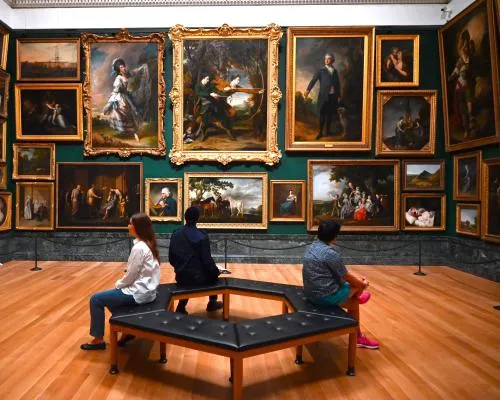 Don’t lose sight of the big picture in art galleries
Letters: Dr Penelope Jackson, Sue Lewis and Fiona Willan respond to an article and letters on art overload
-
 Jimmy Kimmel on Trump at NBA finals: ‘He shut down a city so he could take a nap’
Late night hosts weighed in on the president’s combative words about Netanyahu, his failing Iran peace talks and plans for a new Trump Promenade
-
 Jimmy Kimmel on Trump: ‘About as popular in New York as pineapple on pizza’
Late-night hosts discussed the president attending a key Knicks game after he threw a ‘hissy fit’ during an interview


