Thirsty and power hungry: Australia is in the middle of a datacentre boom – but not everyone is convinced

By Patrick Commins Economics editor • June 21, 2026 • Technology
They’re a key part of the digital and AI economy, but they come at a high environmental cost and offer few operational jobs
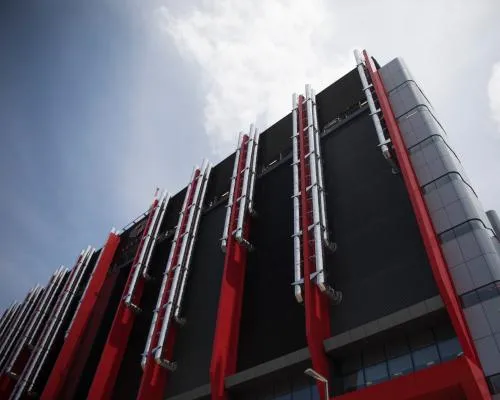
On Mamre Road, in Sydney’s outer western suburbs, there are plans to build a “hyperscale” datacentre that will be one of the biggest in the world. If approved, the 52-hectare site will include six four-storey buildings that stretch 40 metres high, alongside 936 cooling units and 852 diesel backup power generators. The Mamre Road project is part of an estimated $155bn investment pipeline over the coming decade, amid a worldwide rush to build the infrastructure enabling the artificial intelligence revolution. There are about 160 datacentres operating in the country now, with another 90 proposed, according to the Climate Council. Australia is in the middle of a sudden and enormous datacentre boom and not everyone is convinced it’s good for the country. Alex Hooper, the head of climate and energy economics at Oxford Economics Australia, says the global appetite to invest in datacentres is so large that “in theory we could have any size of datacentre industry we want”. Sign up for the Breaking News Australia email “There are huge opportunities, but we need to be smart. There is some level of datacentre investment that is good for Australia. The question is: how much?” Hooper says. “Once we have that level of investment here, the next thing we need to ask is what role datacentres can play in our economic growth and prosperity. The productivity argument is there to be made, but it’s not a given.” These are questions that are now preoccupying experts, policymakers and governments at all levels. Most immediately, the answer revolves around how much power and water Australia can affordably and sustainably provide, and what the nation receives in return. Datacentres are a key part of the digital economy. They are essentially large, climate-controlled warehouses full of racks of servers and other IT equipment that store and process the vast amounts of data that keep websites, cloud services and artificial intelligence running smoothly. The Mamre Road datacentre, once operational, would become the country’s single biggest energy user, consuming more power than the Tomago aluminium smelter. That’s a big reason why Penrith council says it does not want the project to go ahead. Hooper calculates that datacentres now account for 2.8% of the electricity consumption on Australia’s east coast. “By 2030 we expect that to be 7%, rising to above 10% by the mid-2030s. There is also significant upside risk to that outlook given the strength of the project pipeline,” she says. The Climate Council estimates wholesale electricity prices on the east coast could be 20% higher by 2035 if the potential extra datacentre demand is not offset by additional renewable energy sources. Datacentres also consume a large amount of water for the evaporative cooling that prevents overheating servers, and require big tracts of land – with most located in cities and sometimes too near to homes. And for all that, they are not big job creators. Studies in the US show it typically takes thousands of workers in the construction phase, but only hundreds once operational. Which raises the question: why do we want them at all? Beth Webster, an economics professor at Melbourne University who specialises in advanced manufacturing, is optimistic that Australia can avoid the pitfalls that have given datacentres a bad name overseas. “America has revealed all the problems,” Webster says, including not requiring developers to deliver additional energy and water to feed the centres, and placing them too close to where people live. “I think it’s going to be a win. Foreign direct investment is a very important source of knowledge exchange, and I can’t see too many downsides as long as they have rules around it.” Pat Bustamante, a senior economist at Westpac, says there is “absolutely no question” that the datacentre boom is good for the economy. “It’s laying the foundation for the next wave of productivity growth. We saw this during the PC and IT revolution during the late 90s, and this is going to be bigger than that,” Bustamante says. “It’s during that production and usage phase of the datacentres that you get that productivity boost, and that is going to come next. Once this high-speed computing power is in place, that’s where we expect to see that productivity boost.” To a large degree, scepticism around whether datacentres will be a boon or a burden for Australia is rooted in broader and deeper community angst about AI. As Sally Auld, chief economist at NAB, says: “People and society have big question marks around where AI will take us? “So are we just sowing the seeds of our own destruction by building these things?” Auld doesn’t believe so. Her research suggests the new technology will augment rather than replace most jobs. “But it’s hard to know what the net effect of that will be.” Hooper says policymakers need to develop a proper overarching industrial policy to make sure datacentres are something that works for us, rather than just happens to us. “We have a lot of interest here to make sure the public sees the benefit, and for that we will need to have a vision of the future,” she says. “I think there are huge opportunities, but we have to be smart.”
Source: The Guardian
Technology News Feed
51 posts
-
 Brands using AI-generated influencers to promote products on social media
Investigation finds AI content that purports to show genuine customers, prompting calls for greater transparency
-
 Key Trump allies and Musk on leaked list for secretive Peter Thiel retreat
Figures including Jared Kushner and Scott Bessent named in directory of Dialog participants that was exposed online
-
 A viral doomsday scenario aims to shake Europe out of its AI complacency
A speculative thought-experiment warns the continent could pay a heavy price for lagging behind the US
-
 Derbyshire police officer investigated over AI-generated ‘evidential material’
Unidentified officer removed from frontline duties in the first known case of its kind in the UK
-
 The Rev Michael Humphreys obituary
Other lives: Expert on temperature control in buildings who was also a pastor in the Baptist church
-
 Việt Nam - Nga thúc đẩy hợp tác về AI, lượng tử và công nghệ vũ trụ
Việt Nam đề xuất mở rộng hợp tác với Nga trong các công nghệ chiến lược như trí tuệ nhân tạo, lượng tử, công nghệ vũ trụ và vệ tinh quỹ đạo thấp.
-
 Amazon Web Services lần đầu đặt hạ tầng đám mây tại Việt Nam
Amazon Web Services (AWS) vận hành Local Zone tại Hà Nội, đánh dấu lần đầu hạ tầng đám mây do hãng trực tiếp quản lý hiện diện ở Việt Nam.
-
 Zalo rà soát tài khoản đăng ký bằng số điện thoại bị thu hồi
Zalo cho biết đang phối hợp với nhà mạng rà soát các tài khoản đăng ký bằng số điện thoại đã bị thu hồi và yêu cầu người dùng cập nhật thông tin.
-
 Tổng thống Trump: Apple bắt tay Intel sản xuất chip tại Mỹ
Tổng thống Mỹ Donald Trump cho biết trên mạng xã hội Truth Social rằng Apple đã đồng ý hợp tác với Intel để thiết kế và sản xuất chip ở Mỹ.
-
 Cuộc chiến chống sa mạc hóa của Trung Quốc
Trung Quốc đã dành hàng thập kỷ, ứng dụng nhiều công nghệ nhằm đẩy lùi sa mạc xâm lấn, mang lại lợi ích sinh thái cũng như sinh kế cho người dân.


