New Trump book’s authors detail how they pried loose White House secrets: ‘We nearly killed ourselves’

By Martin Pengelly in Washington • June 23, 2026 • US news
Maggie Haberman and Jonathan Swan, the reporters behind Regime Change, were up against an administration that is ‘very good at keeping secrets’
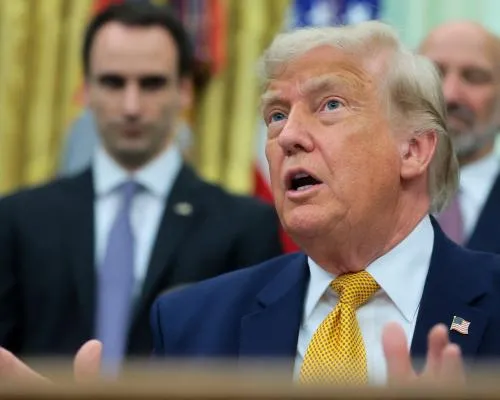
They cracked the White House situation room, unearthing secrets from the heart of a secretive administration. But the reporters behind Regime Change, a blockbuster new book on Donald Trump’s second term, ran up against a wall when reporting on one issue surrounding the 80-year-old US president: his fitness for office. “His health has always been a very specific lockbox for him, going back decades,” Maggie Haberman, co-author with Jonathan Swan, said in an interview. “Illness freaks him out; he perceives illness as weakness, usually, and he certainly perceives any sense that he is having an issue as a projection of weakness, and his advisers are very, very attuned to that. “So the number of people who actually know what is happening with his health … they’ve provided less and less information, except for saying things like, ‘He saw 22 specialists,’ but they won’t say who the specialists are at Walter Reed [National Military Medical Center], and it has been on just a sliding scale since term one. Frankly, 2018, I think, was the last time we got real information. Remember, they were not honest at all about how sick he was during Covid in 2020, and so we’ve never really known the extent of that, or any after-effects. “Will we know before the end of his term if there is something more significant? Doesn’t seem likely on that trajectory. I don’t want to make predictions.” Trump’s health is an example of how this administration is “very good at keeping secrets”, added Haberman. “That is one, and always has been.” As Trump slurs his words, shuffles down steps and sleeps in meetings while his hands are bruised and ankles are swollen, his every slowing move is scrutinized around the world. On the page, Haberman and Swan – who both report for The New York Times – describe sleep-ins after social media all-nighters; documents hoarded in chaotic, garbage-strewn quarters; and a mania for remodeling his surroundings that extends to the president being found in the Oval Office, trying to glue gold appliques over the fire. But if aides don’t dish on their boss, the boss can’t help but dish on himself. In the set-piece interview that concludes Regime Change, Trump told the authors, “a historian” – it turned out to be golfer Gary Player’s caddie – compared him to Alexander the Great, the Caesars, William the Conqueror, Genghis Khan, Attila the Hun, Tamerlane, Napoleon Bonaparte, Adolf Hitler, Mao Zedong and Joseph Stalin. “There’s a reason that there hasn’t been a ton of inside-the-room reporting since last year,” Swan said of the administration. “It’s because it’s really fucking hard. This is a tiny group of people running the government, and there’s this canard that Trump puts out that, ‘I’m the most transparent president ever.’ It’s complete nonsense. They’re actually … incredibly good at keeping secrets.” Some can be prised loose. Regime Change describes Situation Room discussions about botched attempts to contain the scandal surrounding the late financier Jeffrey Epstein, his sexual abuse of underage girls, and his links to powerful figures – including Trump. After the Times published an excerpt, reporters swimming in Swan and Haberman’s wake revealed White House’s worries about how such material was obtained. Naturally, the pair are not about to reveal their sourcing. But they did describe how hard they had to work. “I’ll give you a recent example,” Swan said, pointing to the Memorandum of Understanding with Iran, signed last week. “One of the most important documents you could possibly imagine, to end the war,” he said. “What were the terms? Almost no one inside the US government had seen that document until it was publicly announced. “The tiniest inner circle had seen it … very senior people in the White House hadn’t seen it. Very senior people in the state department and the Pentagon hadn’t seen it … there are parts of the intelligence community … almost monitoring these talks like it’s a foreign government, you know. They have no idea what’s being said in the room, how these things are coming together.” And yet, Regime Change reports on how Trump chose to take the US to war with Iran, both in bombing nuclear facilities last summer and in joining Israel in all-out air assault this year. “Just think about this for a second,” Swan said. “The two people in the government that would have to handle the biggest energy shock in world history, Scott Bessent, the treasury secretary, Chris Wright, the energy secretary, weren’t in the room for the meetings that led up to this war. They found out about the war the day before … in the Situation Room.” Swan and Haberman are uncomfortable with comparisons to Bob Woodward and Carl Bernstein, the Washington Post pair who took down Richard Nixon. Regime Change feels like a first draft of history under the second Trump administration. “We really nearly killed ourselves during this book,” Haberman said. “We are enormously proud of it. It does not mean, obviously, that it’s perfect, and it does not mean that there is not going to be more to tell about this period of time, but what we were trying to do was capture something deeper and richer than can be done in the day-to-day swirl.” A lot of material didn’t make the cut, for lack of confirmation. The focus, Haberman said, was a specific throughline: Trump’s return, an“unprecedented-in-our-lifetime” use of presidential power, “and how he and a small group of people prepared for it, the events that drove it”. All this was “fairly effective” for a time, she noted. “Now you are seeing obviously less so.” Trump is deeply unpopular. Iran talks grind on. America is deeply fractured. The president’s attempts to plaster his name across the capital, increasingly absurd, remain mired in scandal. Swan is a Washington DC reporter. Haberman is out of New York City. Her experience reporting on Trump in that city, the foundation of her book on his first term, Confidence Man, was invaluable in writing the second. Regarding the origins of Trump’s mania for rebuilding – the ballroom, the arch, the reflecting pool fiasco – she makes a telling point. “It’s interesting watching him talking about the reflecting pool constantly, because … this is like the grander version of the Wollman Rink,” she said, referring to the ice rink that Trump finished in Central Park in 1986, after taking over a stalled public project. “He has woven that into his origin story in New York. It was really a relatively small project, but [now] he’s planning to build this arch, he’s still trying to build this ballroom, he put his name on the Kennedy Center … he never really got over the fact that [in the first term] his name was being torn off of buildings in New York.” Regime Change is out now
Source: The Guardian
World News Today
300 posts
-
 Murder inquiry after body found in search for missing girl, 14, in south Wales
Formal identification yet to take place but family of Lilly, who was reported missing on Saturday, have been informed
-
 Two people killed and child injured in northern California library shooting
Suspect in incident at Chico branch of Butte county library arrested, police say, but no known motive
-
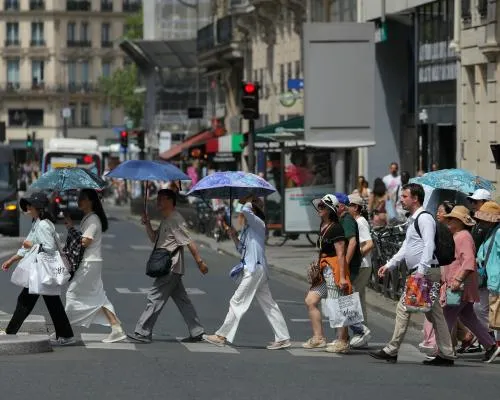 Forty drown across France in heatwave and parts of Spain above 30C at night
France has its hottest night on record, 15 Italian cities under red heat alert and UN chief says London is ‘cooking’
-
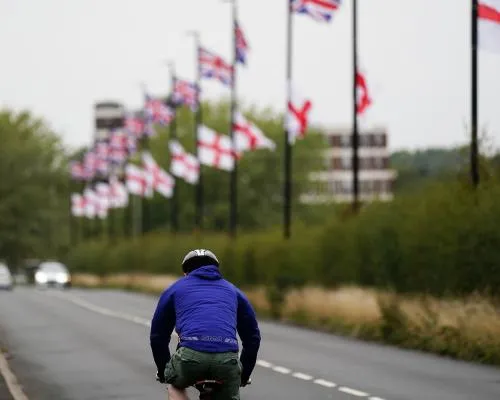 Nationalist group leaders agree to stop hoisting St George’s flags in Oxfordshire
Representatives of Raise the Colours appeared in court after local council accused them of intimidating staff
-
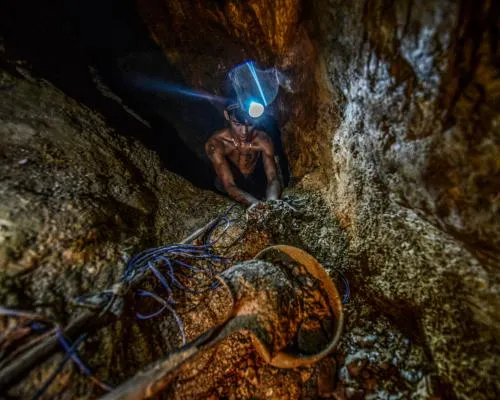 Mystery of hit on Tren de Aragua leader: is it linked to US mining plans in Venezuela?
Trump boasted of assassinating Héctor Guerrero Flores but details are scarce and experts doubt it will harm drug trade
-
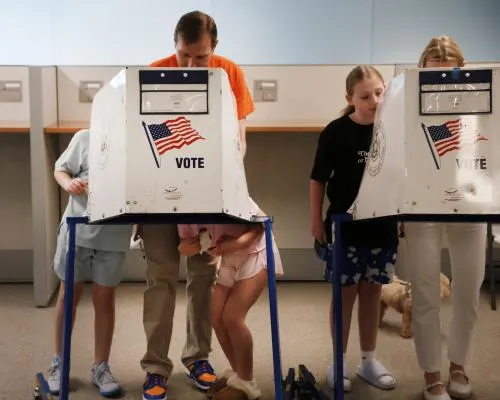 Primary voting begins in New York, Maryland and Utah – US politics live
In New York, Mamdani has thrown support behind three congressional candidates and Super Pacs have been pouring money into a single race
-
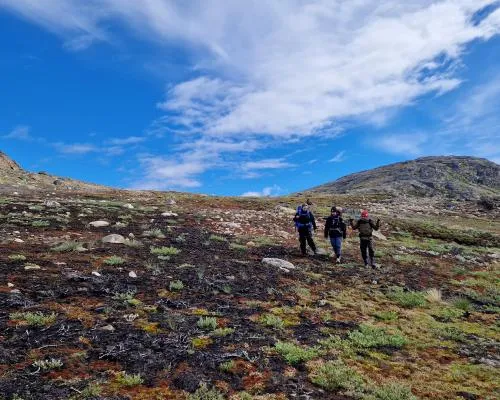 Scientists alarmed after two wildfires hit Greenland within a week
Researchers say it is ‘quite wild’ to see fires at such high northern latitudes happen so early in the year
-
 South Yorkshire police investigate video of officers appearing to shove teenage girls
Force describes footage of police response to incident in Rotherham as ‘nothing short of shocking’
-
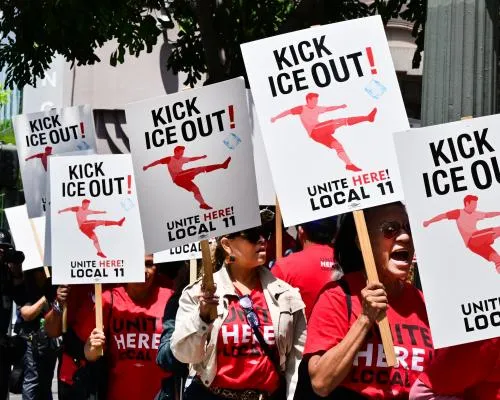 First Thing: Judge thwarts Trump administration attempt to overthrow LA ‘sanctuary city’ policy
Central California US district court rejected claim policy was ‘unconstitutional’
-
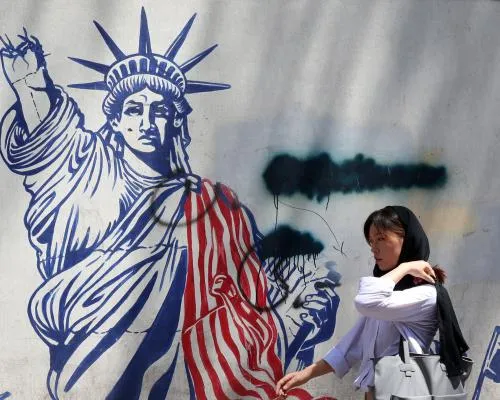 Middle East crisis live: Iranian ambassador warns it will respond to any Israeli attack in Lebanon
The Iranian ambassador to the UN in Geneva described Israeli attacks on Lebanon as a red line in negotiations


