‘Native children belong in Native communities’: tribes decry New Mexico drug-exposed newborn rule

By Cecilia Nowell • June 21, 2026 • US news
Groups say new directive fails to respect Native sovereignty amid complicated history of Indigenous child removals
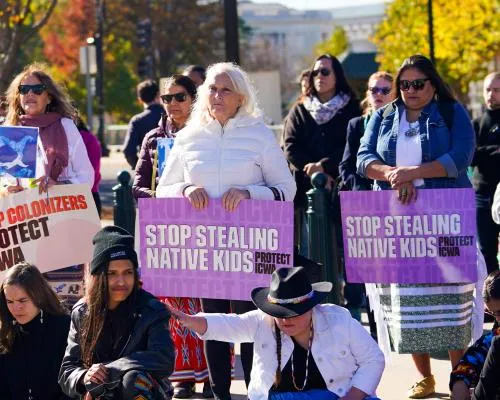
One morning early last July, Micha Bitsinnie arrived at work to an onslaught of messages from confused families. New Mexico’s governor Michelle Lujan Grisham had just issued a directive mandating the state’s child welfare department seek custody of all newborns who had been exposed to drugs and alcohol in utero. Some parents wondered whether medications that they were taking for addiction recovery, such as methadone, would flag their cases. Healthcare providers wondered whether the fentanyl in an epidural counted as a drug exposure. Bitsinnie supports families as a policy manager at the non-profit organization Bold Futures, which advocates for policies that keep families together. Research shows that children prenatally exposed to substances do best when they can remain in their families and receive supportive services to treat any withdrawal symptoms they experience. Bitsinnie is also a member of the Navajo nation, and she immediately noticed that the new directive appeared to be in tension with laws protecting the sovereignty of New Mexico’s Native tribes. Those laws stipulate that tribes must be immediately notified about a child welfare case involving a Native child so that they can take jurisdiction of cases involving their citizens. “How are we notifying families, tribes, nations, pueblos?” she wondered “The directive erodes important procedural safeguards for Indian families,” the ACLU wrote in an emergency petition it filed with New Mexico’s supreme court last month, noting that it “makes no reference to specific procedures and safeguards for Indian children and families established in state and federal law”. Nine tribes signed on to the lawsuit. Although the state supreme court declined to pause the governor’s mandate in early June, it will allow arguments on the case to proceed. The new directive also directly contradicted a law the state legislature had passed only months prior, directing the state’s healthcare authority – rather than its child welfare agency – to develop new rules for treating drug use during pregnancy. As states across the country have navigated the fallout of the opioid epidemic, they have struggled with how best to serve babies exposed to drugs during pregnancy. Medical professionals advocate keeping families together to prevent the stress of a traumatic separation and encourage parents to seek care rather than fearing punishment. Lawmakers, on the other hand, motivated by stories of kids being harmed, have moved to take children into state custody. This dilemma is particularly acute when it comes to Native families, given the complicated history of Indigenous children being removed from their homes. The federal Indian Child Welfare Act requires states make efforts to keep Native children in Native communities. A growing number of states, including New Mexico, have adopted state laws to strengthen their compliance with ICWA. But in New Mexico, at least 25 Native children have been flagged by child welfare since the governor’s directive went into effect – with tribes taking jurisdiction in only 10 of those cases. New Mexico is navigating a new policy that has brought the issue back into the spotlight, but advocates say states across the country have long implemented the law haphazardly. “I don’t think there’s any state that is in what I would call really substantive compliance with the Indian Child Welfare Act. And New Mexico’s no different,” said David Simmons, director of government affairs and advocacy at the National Indian Child Welfare Association. ‘There were no resources’ Tribes are still fighting to fund culturally grounded child welfare programs a decade after Congress passed the Comprehensive Addiction and Recovery Act, the leading federal response to the opioid epidemic, which included guidelines for supporting families whose children had been exposed to drugs during pregnancy. Under Cara, state child welfare agencies were directed to support families by developing voluntary “plans of safe care” connecting parents to resources to support newborns exposed to substances. The law also required states to abide by the 1978 Indian Child Welfare Act, passed in the aftermath of the mass separation of Native American families in the 19th and 20th centuries, which gives tribal governments jurisdiction over child welfare cases involving Native children. But Cara is approaching its 10th anniversary in July and addiction and overdose rates across the country remain high. Although overdose deaths have fallen from their 2022 peak of more than 100,000, they remained high at nearly 80,000 in 2024 – the most recent year for which data is available. And Native Americans continue to be disproportionately affected – recording the highest overdose rate by race at 51.6 per 100,000 in 2024, more than double the overdose rate of all other races combined. Across the country, tribes have won millions in opioid settlements, alleging that the drug manufacturers targeted their communities with especially aggressive advertising. New Mexico has consistently reported among the highest rates of substance-exposed newborns in the nation – more than one-third of infants born in the state between 2016 and 2019 were found to be exposed to drugs, alcohol or tobacco. Yet advocates say Cara has never been properly implemented to address the problem. When New Mexico implemented a state version of the federal law that year, it did not allocate any state funds to the policy change, and remains grossly understaffed on public mental health services. “Even if families were accepting plans of care, there were no resources,” said Bitsinnie. Ten years later, it’s difficult to quantify how successful Cara was – in no small part due to the surge in opioid overdose deaths spurred by the Covid pandemic and the continuing nationwide shortage of mental health providers. After two young children in New Mexico died after substance exposure, political pressure mounted, ultimately prompting Lujan Grisham’s July 2025 directive, which disposed of the voluntary protocol. (Newborn deaths related to substance exposure are rare. In a review of its child welfare case registry, Delaware found that 0.82% of children given a plan of safe care sustained a serious or fatal injury.) As of last month, 137 newborns had been taken into state custody under the governor’s directive, according to New Mexico CYFD spokesperson Jake Thompson. “While the Navajo nation supports the intent of the Comprehensive Addiction and Recovery Act to provide supportive, family-centered services, we have significant concerns that the proposed rule does not align with federal and state protections, including the Indian Child Welfare Act and the New Mexico Indian Family Protection Act,” Navajo nation president Buu Nygren wrote in an April letter. “Additionally, the rule raises serious issues related to tribal sovereignty, jurisdiction, and the potential for unnecessary child welfare system involvement.” Donalyn Lorenzo – who is from Acoma Pueblo and previously directed the office of tribal affairs at the state’s children, youth and families department – worries the policy was written without consulting tribal nations. “Child welfare would do well to learn from the values of our tribes,” said Lorenzo, who noted the wide community of state, tribal and child welfare advocates who joined consultations on drafting the state’s ICWA law, passed in 2022. “Safe children are created within safe communities.” Cynthia Chavers, a member of the Lumbee tribe, previously served as the field deputy director for New Mexico’s Protective Services Division and the tribal liaison for CYFD. She says the governor’s directive harkens back to a time before ICWA, when Native children were separated from their families en masse. Between 1860 and the mid-1970s, hundreds of thousands of Native American children were sent to residential boarding schools, intended to assimilate them, where at least 1,000 children died. In the 1950s and 60s, the US government implemented a second program called the Indian Adoption Project, which placed hundreds of Indigenous children in white families. “I feel very strongly about stopping the genocide of our people by the continuous stealing of our children,” said Chavers. “Native children belong in Native communities.”
Source: The Guardian
World News Today
271 posts
-
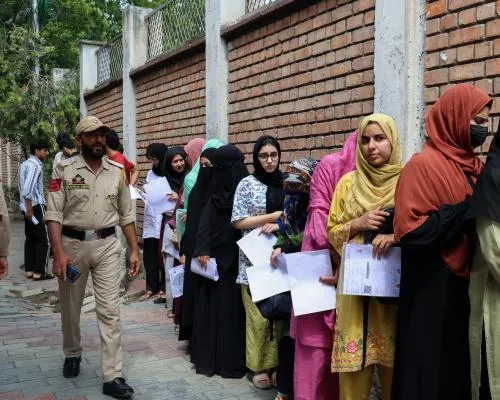 More than 2m Indian students resit medical entrance exam after alleged leak
Applicants forced to retake one of the world’s toughest admission tests after claims questions sold on Telegram
-
 Vụ hỏa hoạn tại nhà kho đông lạnh ở Los Angeles: Tình trạng khẩn cấp được ban bố
Vụ hỏa hoạn tại nhà kho đông lạnh ở Los Angeles đã trở thành một sự kiện đáng chú ý khi thị trưởng thành phố Karen Bass ban bố tình trạng khẩn cấp để đối phó…
-
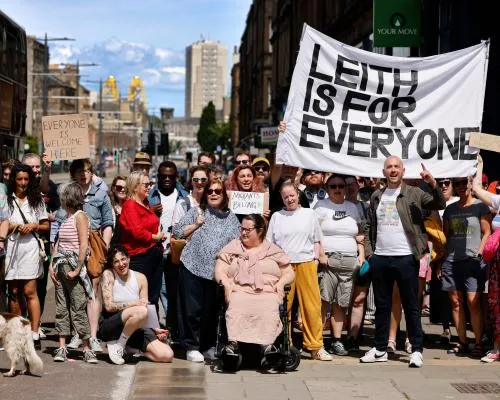 Taxi and Uber rider targeted in suspected anti-Muslim attacks in Edinburgh, say witnesses
White Scottish man, 38, charged after five men were injured in spate of attacks in city on Friday night
-
 Newsom declares state of emergency for LA as firefighters battle warehouse blaze
Crews struggle to contain stubborn fire that has raged for days and continues to spew smoke across the metro area
-
 Mỹ và Iran bắt đầu đối thoại tại Thụy Sĩ
Vụ việc Mỹ và Iran bắt đầu đàm phán tại Thụy Sĩ là một sự kiện quan trọng trong quan hệ giữa hai nước. Đây là lần đầu tiên các nhà đàm phán của hai nước gặp…
-
 Secret correspondence claims suggest tensions at top of Iranian government
Former negotiating team member gives shock interview claiming supreme leader’s instructions were not followed
-
 Major disruption after Bedford train crash to continue for at least a week
Engineers need to create access for cranes to lift carriages from site before track can be assessed and repaired
-
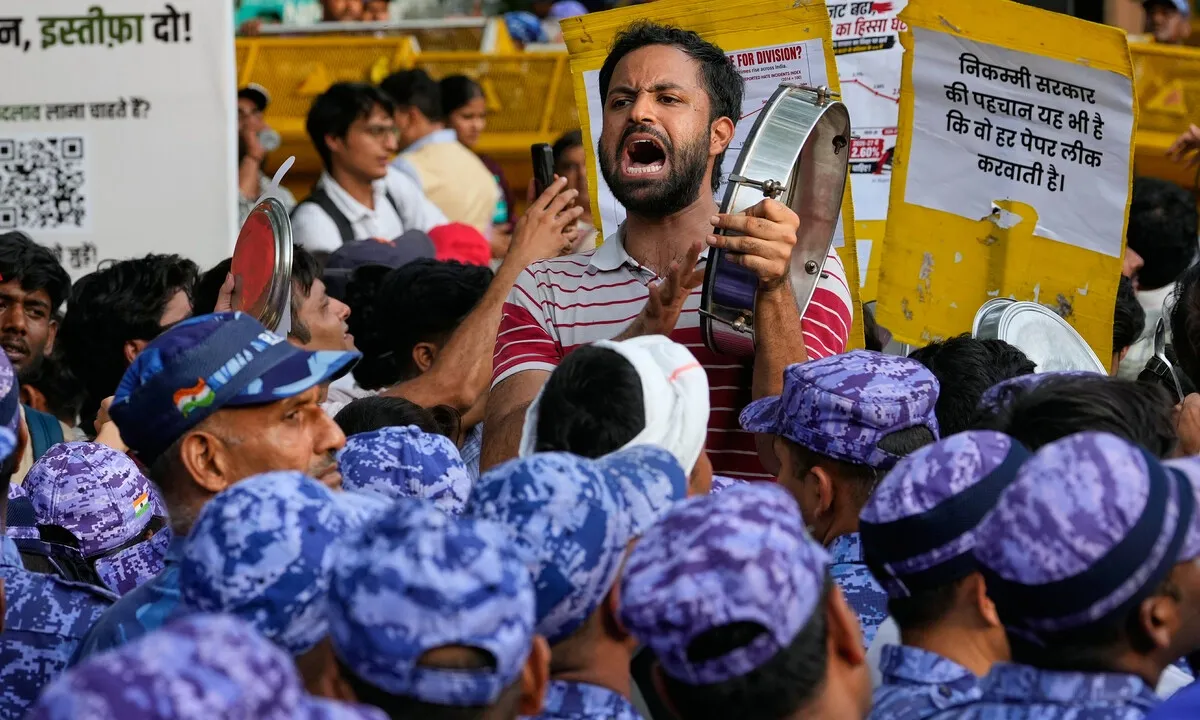 Ấn Độ: Biểu tình đòi Bộ trưởng Giáo dục từ chức sau bê bối lộ đề thi
Vào ngày 20/6, những người ủng hộ đảng Gián (CJP) đã tổ chức biểu tình gần tòa nhà quốc hội ở New Delhi, nhằm gây áp lực đòi Bộ trưởng Giáo dục Dharmendra…
-
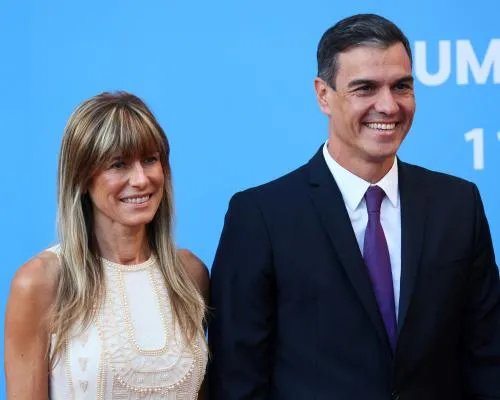 Spanish PM’s wife to stand trial on corruption charges and banned from leaving country
Begoña Gómez has also been banned from leaving the country as her husband, Pedro Sánchez, says the case is politically motivated
-
 Does Bedford train crash raise wider questions about safety?
It is not yet clear what could have allowed the two trains to collide despite multiple failsafes in today’s railways


