Millions of stars light up largest and most detailed shot of Milky Way’s centre

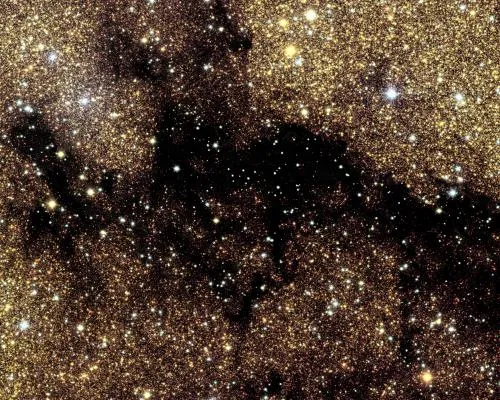
By Ian Sample Science editor • June 24, 2026 • Science
The glittering image, taken by the European Space Agency’s Euclid telescope, heralds a new age of planetary discovery
The dazzling sight of more than 60m stars at the heart of Earth’s galaxy has been captured by a space telescope designed to reveal the mysterious dark forces that shape the universe. Astronomers used the European Space Agency’s Euclid telescope to capture the largest, most detailed image ever taken of the visible light pouring from the centre of the Milky Way. The telescope’s camera is rare in being sensitive enough to separate individual stars in the crowded region known as the galactic bulge. The enormous image marked the start of a new age of discovery of planets outside Earth’s solar system, researchers said. The number of known worlds is expected to rocket beyond the thousands already spotted around faraway stars. Dr Eamonn Kerins, an astrophysicist at the University of Manchester’s Jodrell Bank Centre for Astrophysics, said of the Euclid telescope: “It was never built with this science in mind, but it has proved to be a superb facility for the work. “This data fires the starting pistol in a new age of exoplanet discovery, where we go from knowing about 6,000 exoplanets to finding more than 100,000 across the galaxy.” The €1bn (£862m) telescope launched in 2023 to construct the most accurate 3D map of the cosmos and shed fresh light on the mysterious dark forces that shape it. According to the most popular model of the universe, only 5% is made from ordinary matter. About 70% is said to be dark energy, the force that accelerates the expansion of the universe. A further 25% is called dark matter, an invisible substance that appears to clump around galaxies. Astronomers took the snapshot of the stars in March last year after pointing Euclid at the centre of the Milky Way for 26 hours of observations. The image is a mosaic of nine “pointings” taken with the probe’s visible light camera. Each pointing covers an area of the sky larger than the full moon. Beyond its visual appeal, the image will boost the hunt for exoplanets, or worlds that form outside the solar system. One way to spot an exoplanet is to observe its parent star as it moves in front of a faraway star. Through a process called microlensing, the nearer star’s gravity bends the light from the more distant star, making it appear brighter. When a planet orbits the nearer star, its additional gravity can create a spike in the brightening. In August Nasa plans to launch its Nancy Grace Roman space telescope, named after Nasa’s first chief of astronomy, who died in 2018. Astronomers expect it to find about 1,500 microlensing exoplanets. The Euclid image will transform that work because it shows the same stars before they overlap. This allows astronomers to measure how fast they move and to confirm the existence of the planet and its mass. “The Euclid snapshot will improve those measurements possibly by up to a factor of three, which for a single image is quite something,” said Kerins. The Roman telescope aims to spot a further 100,000 exoplanets as they move across the face of their parent stars, causing a slight, momentary dimming of the starlight. The Euclid data will help astronomers to confirm they are transiting planets and not objects such as binary star systems, where two stars orbit one another, which can produce similar signals.
Source: The Guardian
Science Daily
57 posts
-
 Vivino Clone Script: Launch Your Own Wine Discovery & Marketplace Platform
Vivino Clone by Miracuves is a comprehensive wine discovery and marketplace platform that connects wine enthusiasts, wineries, retailers, and distributors in one ecosystem. Users can scan wine labels, explore ratings and reviews, receive personalized recommendations, discover food pairings
-
 Vivino Clone Script: Launch Your Own Wine Discovery & Marketplace Platform
Vivino Clone Script: Launch Your Own Wine Discovery & Marketplace Platform
-
 Could mountains be key to unlocking hydrogen’s potential?
Researchers assessed likelihood gas was produced during creation of Alps, Pyrenees and Baetic mountains
-
 SpaceX overtakes Amazon to become world’s fifth most valuable company
Elon Musk’s firm briefly reached $2.97tn valuation days after its IPO following purchase of AI coding startup Cursor
-
 Is Cerner EMR or athenaone the Best Tool for Future Clinics?
Choosing Cerner EMR and athenaone? Codatis reviews top EHR tools, comparing hospital scalability vs cloud agility for your clinic.
-
 How to Launch a Taxi Startup Using an Uber Clone
The technology to start a ride-hailing business is no longer the hard part — getting a real rider into a real car is.
-
 Tinder Clone App Development: Build a Modern Dating Platform That Users Love
Launch your own dating platform with Miracuves' Tinder Clone. Offer swipe-based matching, real-time chat, profile verification, location-based discovery, and premium memberships. Build a scalable dating app with advanced monetization features, complete source code ownership, and a se
-
 Paraquat will continue to be used in Australia despite 70 countries banning weedkiller over Parkinson’s disease fears
Herbicide manufacturer Sygenta had reservations dating back to 1970s but regulator says tighter controls, including phasing out backpack sprayers, can protect workers
-
 Did you solve it? Dotty data and silly sentences
The solutions to today’s puzzles – and the winner of the Anguish Languish contest
-
 Can you solve it? Dotty data and silly sentences
When numbers and sounds are not what they seem


