‘I don’t like being stuck in an office’: the young people helping plant a ring of trees around London

By Isaaq Tomkins • June 17, 2026 • Environment
London Tree Ring project aims to create corridors of plant and animal life around the city to strengthen its biodiversity
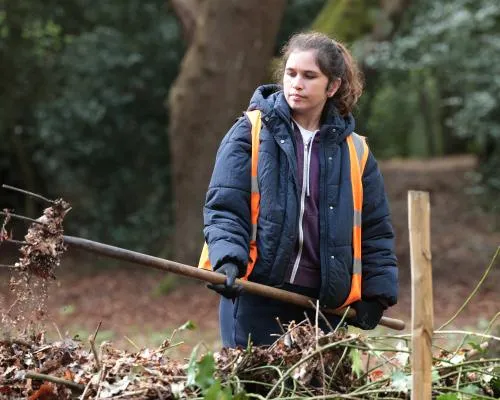
Harry Ewing is heaping branches and foliage from the forest floor on to a dead hedge, reinforcing the protective circle around his newly planted trees in Hadley Wood, north London. He is in a glade created by a fallen oak that was previously overrun with thick bramble. “I feel very happy – the trees are growing already. It’s really nice seeing it when it starts,” says Ewing. The 20-year-old is part of a group of young adults with learning disabilities who are transforming their environment and breaking into green sector jobs. They are working on a section of the London Tree Ring, an ambitious project to create corridors of plant and animal life around the capital. In this section, new willow, hornbeam and hazelnut will diversify the age structure of the forest, and strengthen its biodiversity. Having strimmed away the bramble and planted the younger trees, Ewing and his co-workers are experimenting with different ways to protect them from deer. “I don’t like being stuck in offices the whole time,” says Josh Limb, as he carries a wheelbarrow full of debris from the forest floor, “I love being outdoors – I can breathe.” They are trainees with the Harington Scheme, a charity supporting young adults with learning disabilities and/or difficulties to find employment, which is helping the London Tree Ring project achieve its mission to encircle the capital with an unbroken ring of nature. The London Tree Ring project started out in 2023 as an attempt from the countryside charity CPRE London to create an “M25 for nature”. Since starting work two years ago, it has worked with dozens of groups like Harington, as well as landowners, councils and volunteers, to plant showcase sites that improve the capital’s biodiversity. Over 25 years, the project will work with hundreds more groups to create flourishing wildlife corridors that give nature a chance at recovery, and in the process reconnect a new generation with their environment. Saman Shahabi, the Harington Gardeners operations manager, says training young adults in conservation will future proof their skillset as the UK’s economy becomes more green. He adds that people with disabilities often face greater barriers in accessing nature, and this is part of the solution: “It’s amazing that the Harington Gardeners team are part of bridging that gap, and people with disabilities or learning difficulties being part of that change.” In two decades’ time, their trees in Hadley Wood will be fully grown and will join up with some of the other tree ring projects started since 2024. In Hounslow a community tree nursery has been created with the environmental education charity Let’s Go Outside and Learn; in Sutton a micro forest has been planted with students from Glenthorne high school; in Chessington, disease-resistant elm have been planted into the local network of farm hedges. “We want to have bigger habitats [that are] better connected and more diverse. Those are the secrets in halting nature decline,” says Phil Paulo, the director of London Tree Ring. Despite its name, the philosophy of the London Tree Ring is not to plaster over urban sprawl with a line of trees. It is about considering ways to restore various ecosystems that exist alongside us by developing brownfield sites and improving existing ecosystems, says Paulo. Making such a broad project work relies on being able to connect different groups of people who are eager to create change, he adds. At Hadley Wood, the three Harington trainees are joined by volunteers from the Monken Hadley Common Trust. Local people from the common have been looking after the woodland since 1777, when it was created by an act of parliament. Linden Reilly, 67, a retired university lecturer, discovered through ancient land documents that the age of her cottage in Hadley entitles her to be a commoner. This means she is technically entitled to her own strip of land to graze cattle. Instead, she decided to join the trust and look after the land. As she works she points out all of the features an unobservant eye would miss: acid grassland, badger dens, yellow meadow ants. Roger De La Mare, the curator of the common, says it is great to have a younger crowd helping their work. “It’s good fun working with them, because a couple of the days were really miserable [weather-wise] and both groups were spurring each other on,” he said. As the London Tree Ring enters its next phase, CPRE London is hoping to collaborate with even more people. Every patch of land the charity works on has a different owner, different interest groups, and different communities who can benefit. With more investment it hopes to procure new sites for habitat creation, and so provide “training and employment support for young people involved with the project”, says Paulo. Ewing feels the initiative has worked for him. “It’s nice to do something like this for a change,” he says. “We do have fun. I’ve enjoyed this.”
Source: The Guardian
Green News
82 posts
-
 Campaigner threatened with prosecution by Environment Agency after waterway cleanup
Paul Powlesland told he acted illegally after organising volunteers to remove litter, weed and silt from River Roding
-
 Country diary: Everybody loves to hate the stinging nettle – don’t they?
Frome, Somerset: This much-maligned midsummer menace has few friends among humans, but look closely and you might find an orgy of eating and mating
-
 As an ocean swimmer, I try not to think of sharks, but we all know that this is their territory
It used to be easier to say that the chances of a shark attack were slim. Now I feel as though that pretence of safety has been shattered
-
 Half of all fatal shark attacks happen in Australia. How can you protect yourself – and do electronic deterrents work?
From shark bite-resistant wetsuits to wearable devices, experts say there are ways to reduce your risk in the ocean
-
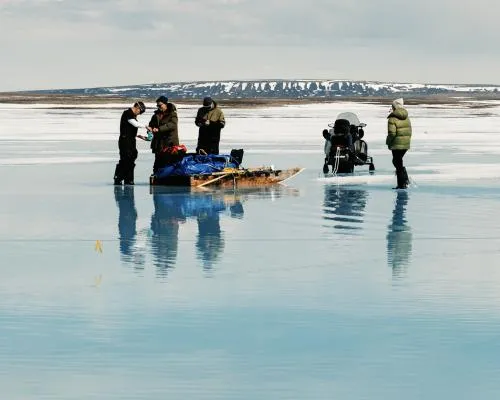 ‘At first, the idea does sound crazy’: meet the scientists trying to refreeze the Arctic
Sea ice is melting fast, worsening the climate crisis, but a bold attempt to rethicken it is showing early signs of success
-
 BoM forecasts strong El Niño and warns climate change could amplify any effects on Australia
El Niño events linked with extreme weather around the world – and can increase risk of bushfires in Australia and coral bleaching on Great Barrier Reef
-
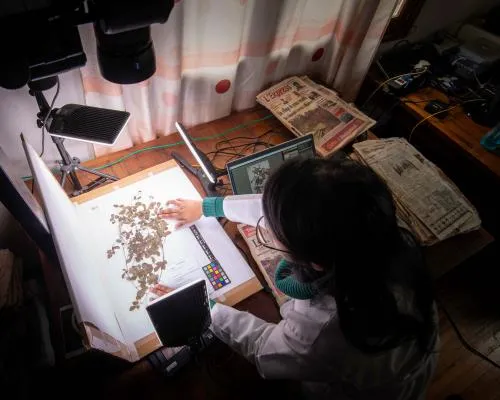 AI could help win ‘race against extinction’ of vital plants, say botanists
Tech is helping to identify and save new specimens and could open ‘genomic goldmine’ of fungi data
-
 Half of world’s children exposed to at least three climate hazards, Unicef says
Almost every child, including those from high-income countries, is now exposed to at least one hazard
-
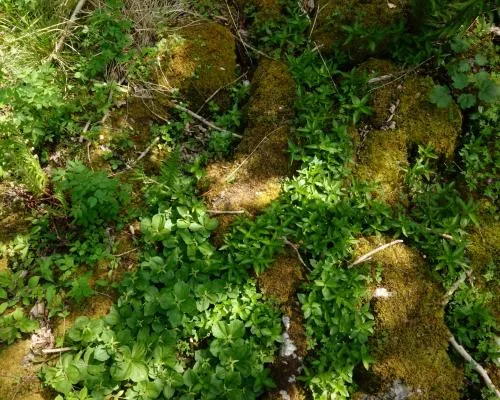 Country diary: A revelation among the ‘clints and grikes’ of my limestone seat
Wharfedale, Yorkshire: On the trail of a wood warbler, I find a suite of woodland plants rising up from a fascinating land formation – limestone pavement
-
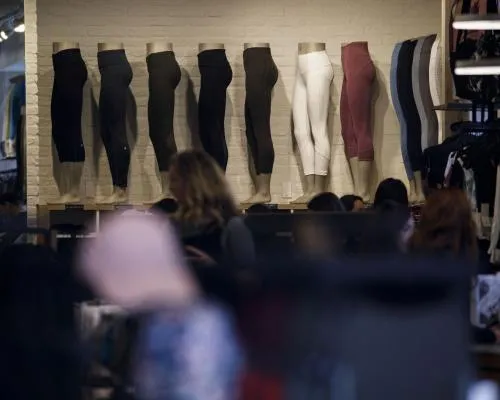 State bans on Pfas reduce ‘forever chemicals’ in clothing and textiles, US report finds
About 80% of 115 products tested show levels of Pfas that comply with rules – but some firms still exceeding limits


