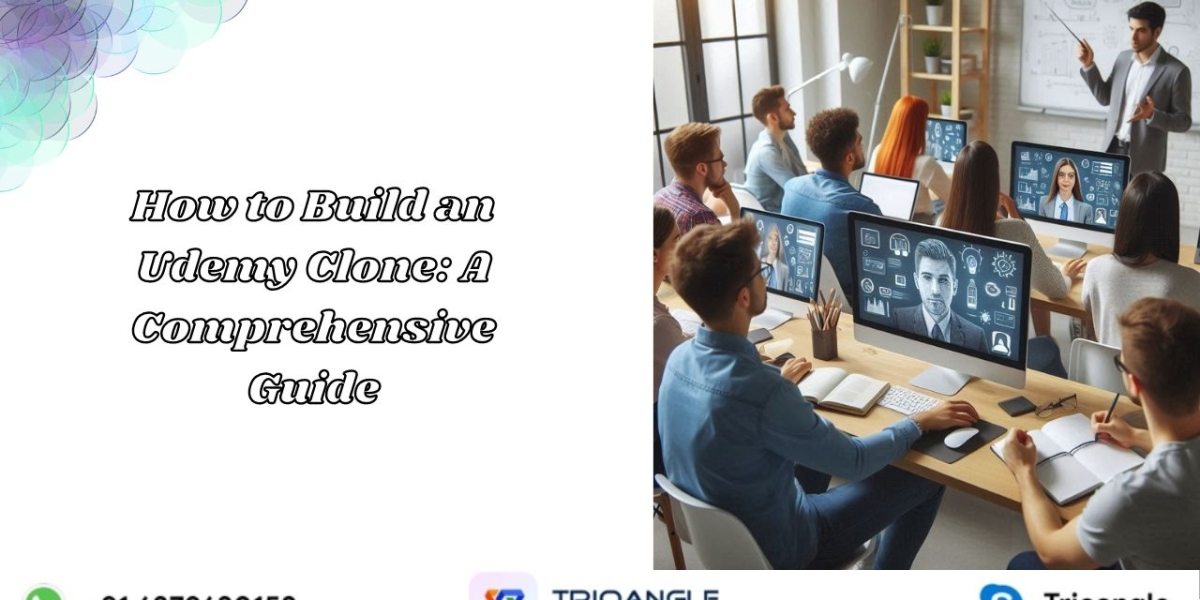
Online learning has experienced a surge in popularity. As per Statista's report, the global e-learning market is projected to reach nearly US$400 billion by 2026.
With such impressive numbers, it's no wonder entrepreneurs are eager to replicate the success of Udemy - a leading e-learning app.
If you are also planning to start a successful e-learning business, this guide is for you.
It will take you through the steps to build your own Udemy clone , from market research to launch.
Ready? Let's dive in!
Here are the 8 steps to build a successful e-learning app like Udemy:
Before diving into development, it's crucial to understand the e-learning landscape.
Identify your target audience, analyze competitors, and find your unique selling proposition (USP). Consider conducting surveys or focus groups to gather helpful insights.
As per the findings from the research, determine the core features your platform will need. Other than that, the features you must include are:
Your tech stack will determine the performance and scalability of your e-learning platform. So you must choose it wisely and here's a recommended stack:
Start with wireframes to outline the basic structure of your platform. Tools like Figma or Sketch can help create detailed prototypes.
Focus on creating an intuitive and engaging user experience. Ensure your design is consistent, visually appealing, and easy to navigate.
Set up your server, database, and APIs. Implement core functionalities like user authentication, course management, and payment processing.
Develop the user interface based on your designs. Ensure responsiveness across different devices and browsers.
Use FFmpeg to encode videos into various formats and resolutions. This ensures smooth playback on different devices and network conditions.
Store videos on AWS S3 and use CloudFront for fast and secure content delivery. Implement access control to protect your content.
Integrate a payment gateway like Stripe or PayPal. Ensure secure handling of transactions and compliance with relevant regulations (eg, PCI DSS).
Conduct thorough testing to identify and fix bugs. Perform usability testing to ensure a smooth user experience. Automated testing can help streamline this process.
Choose a reliable cloud provider (eg, AWS, Google Cloud, Azure) for deployment. Set up continuous integration and continuous deployment (CI/CD) pipelines for seamless updates.
Building an Udemy clone is a complex but rewarding endeavor.
By following this guide, you can create a robust and scalable e-learning platform. Stay updated with the latest trends and technologies to ensure your platform remains competitive in the ever-evolving e-learning market.
Happy building!

amra rosy
10 posts
-
 Common Mistakes Non-Technical Students Make While Learning Power BI
In today’s data-driven world, Power BI has become one of the most valuable business intelligence tools for students and working professionals.
-
 Why Non-Technical Students Sometimes Struggle in Power BI Courses — and How the Right Training Can Help
In today’s data-driven world, Power BI has become one of the most valuable business intelligence tools for students and working professionals.
-
 The Role of Technology in Modern Commercial Office Workstation Cleaning
Modern tech in workspace cleaning
-
The Role of Empathy in UX Design
Empathy is the heart of UX design. It transforms interfaces from functional tools into meaningful experiences that resonate with users.
-
 Jack Ma Success Story: From Struggles to Global Entrepreneurship Icon
The Jack Ma success story is a remarkable example of resilience, vision, and innovation. Born as Ma Yun in 1964 in Hangzhou, China, Jack Ma’s journey from a humble English teacher to one of the world’s leading entrepreneurs is nothing short of extraordinary
-
 How to Style Your Trapstar Hoodie for Any Occasion
Trapstar hoodies have evolved from simple streetwear staples into versatile fashion pieces that blend comfort, attitude, premium style, and cultural influence.
-
 Electrical Masters – Melbourne’s Trusted Solar Experts
Melbourne is leading the charge in Australia’s renewable energy transition, with solar power emerging as a dependable and cost-effective solution for sustainable energy needs.
-
 Beyond the Bluebook: Dubai's Secret to Conquering the Adaptive Digital SAT
The SAT has always been a significant hurdle for students aspiring to study at top universities globally. For students in the UAE, this challenge has taken on a new dimension with the global transition to the register for sat in uae. This isn't just the old paper test on a screen; it
-
 Chardham tour operators in Haridwar
Trimurti Travels is one of the most trusted Chardham tour operators in Haridwar, offering well-planned and comfortable pilgrimage packages for devotees from across India.
-
 How Did Edward Lear’s Nonsense Writing Affect Popular Culture?
Edward Lear redefined the boundaries of language, humor, and imagination. Through his inventive works, he influenced literature, art, and entertainment, leaving a lasting mark on popular culture.
-
 How Did Edward Lear’s Nonsense Writing Affect Popular Culture?
Edward Lear redefined the boundaries of language, humor, and imagination. Through his inventive works, he influenced literature, art, and entertainment, leaving a lasting mark on popular culture.


