For those shedding a tear over house prices falling, these numbers may change your mind

By Greg Jericho • June 10, 2026 • Business
An average home would cost $595,500 now if prices were the same relative to income as before John Howard turned the market into an investor casino
In the first three months of this year, house prices continued their previously inexorable climb, far outpacing incomes and wages growth. Now, thanks to changes to capital gain tax and negative gearing flagged in the budget, there is finally hope that housing affordability may improve. But after 26 years of damage, there is a long way to go. The Bureau of Statistics’ total value of dwellings survey always brings feelings of despair. In the March quarter, average dwelling prices across the nation increased 2.1% – well ahead of the 0.8% increase in average household disposable income. And the annual increase of 10.3% is again well ahead of the growth on incomes. But that is just the national average – in Western Australia dwelling prices rose 25% in the past year – absolutely monstering any notions of housing affordability: If the graph does not display click here The price booms over the past three years have not been a Sydney-centric issue as was the case in the 2010s. Brisbane, Perth and Adelaide have experienced the biggest surge in prices: If the graph does not display click here The price jump has been so extreme that Perth has joined Sydney, Canberra and Brisbane with a median house price above $1m, and Adelaide is not far behind: If the graph does not display click here The despair of course is that this is merely a continuation of more than a quarter of a century of prices going up and affordability going down. At this point I would normally look at the most recent home lending figures for a guide as to what will happen to prices for the rest of the year. In the March quarter, home loan growth slightly slowed, but still remained at a pretty high level. That would usually suggest that average dwelling prices by the end of the year would be growing at around 9%-10%: If the graph does not display click here But that will probably not happen because these figures predate the May budget, in which for the first time in more than a quarter of a century a government attempted to truly improve housing affordability. The change to end the 50% capital gain tax discount and negative gearing except for new builds has cut the housing affordability Gordian knot. Since 1999, governments of all persuasions have attempted to fix the problem of housing affordability by making it worse. Whether it be first home buyer grants, the HomeBuilder program or the 5% deposit guarantee, everything just added more demand to the market. The capital gains tax discount distorted the housing market in favour of investors, and so governments in effect tried to lessen the distortion, by adding more of them. It failed completely: If the graph does not display click here For more than 25 years we had a mixture of John Howard saying there was no problem, and other prime ministers and ministers avoiding the cause. By the start of this year the number of Band-Aids attempting to cover up the gaping wound of housing unaffordability was hard to count. By finally getting rid of the 50% capital gains tax discount the government has given people hope that there is a chance of ending the horror of runaway house prices. This, you might assume, should be seen as good news. And yet rather than acknowledge the housing hell for people unfortunate enough to be born after 1975, or admit that continuing the same policies would only perpetuate the problem, we now have some outlets crying tears because some economists have suggested the changes might cause house prices to fall 10%. Oh no! Imagine that! Imagine if house prices fell all the way back to – (checks notes) – December 2024 prices. If the graph does not display click here It says something about the scale of the problem that a 10% fall in prices would undo barely anything in terms of the damage of the past 26 years. Just over 20 years ago Howard was bragging about house prices rising, and when the value of dwellings reached a record level compared with incomes, he warned that removing the CGT discount “would hurt the aspirational middle class”. Really, John? Twenty-six years ago, the average dwelling price in Australia was equal to nine years and 4 months’ worth of per-capita household disposable income. In the first three months of this year, the average dwelling price of $1.11m was equivalent to 17 years and 4 months of current average household disposable income. If dwelling prices were 10% lower, they would be equal to 15 years and 7 months – or where it was 3 years ago: If the graph does not display click here But here’s something to ponder. If average dwelling prices were worth the nine years and 4 months of annual average household disposable income they were back in 1999 when Howard decided to turn the housing market into an investor casino – the average price would now be just $595,500. If the graph does not display click here So, forget the scaremongering over falls in house prices. The reality is after 26 years of damage, the changes to capital gains tax and negative gearing are just one small, vital step on the long road to repair. Greg Jericho is a Guardian columnist and chief economist at the Australia Institute
Source: The Guardian
Business Daily
56 posts
-
 Pub chain Fuller’s hopes for bumper summer of World Cup and staycations
Company says it has strong bookings for England matches and has spruced up gardens for domestic holidaymakers
-
 Phó tổng giám đốc EVN: Đổi khung giờ điện cao điểm không ảnh hưởng đến hộ gia đình
Chi phí tiền điện của các hộ gia đình sẽ không đổi, song doanh nghiệp cần điều chỉnh giờ sản xuất để thích ứng nếu khung giờ cao điểm mới được áp dụng, theo đại diện EVN.
-
 UK poised to ease steel tariffs as manufacturers warn of costs
Exemptions being considered after March announcement of measures to support domestic steel production
-
 Bitcoin yếu đi do dòng vốn đổ về AI
Dòng vốn chuộng rủi ro đang hướng về lĩnh vực xây dựng cơ sở hạ tầng AI, trở thành một trong những tác nhân lớn khiến giá Bitcoin giảm mạnh.
-
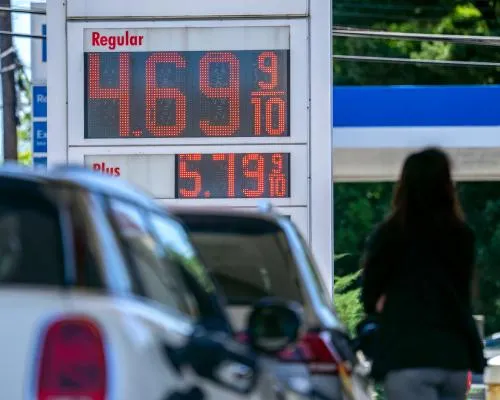 US inflation jumped to 4.2% in May, the third consecutive increase since start of Iran war
Before the conflict began, inflation was at 2.4%, but the closure of the strait of Hormuz has affected energy prices
-
 Giá USD tự do về thấp hơn ngân hàng
Giá USD tại các ngân hàng hôm nay nhích nhẹ lên mức trần 26.410 đồng, cao hơn so với đôla Mỹ giao dịch trên thị trường tự do.
-
 Weight loss drug users save over £400 on food as take-up triples
New research suggests GLP-1 users are buying fewer snacks and treats such as crisps and chocolate
-
 China’s BYD aims to be world’s biggest car firm within five years
EV maker aims to overtake Toyota, as it plans to spend £1.8bn to build five-minute flash chargers in Europe
-
 VN-Index vọt lên trên 1.800 điểm
VN-Index hồi phục hai phiên liên tiếp và đóng cửa gần 1.804 điểm nhờ dòng tiền giải ngân ở vùng giá thấp xuất hiện mạnh hơn.
-
 Peter Kyle’s quest for UK’s first $1tn firm is honourable, but he is overselling state activism
Business secretary exaggerates role of the British Business Bank and the National Wealth Fund in nurturing firms


