By Jasper Jolly • June 15, 2026 • Environment
Charging industry and electric vehicle manufacturers say measure could cost jobs and harm UK automotive sector
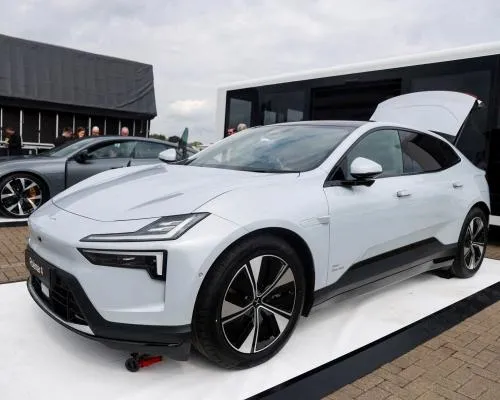
The UK government’s plans to further weaken electric car targets have provoked a furious backlash from the charging industry and the electric car brand Polestar, which would lose out from the changes. The Labour government is expected to dilute rules known as the zero emission vehicle (ZEV) mandate. Government sources have said it will reduce a target for pure electric cars from 80% of all sales by 2030 to 50%. The Labour government had already weakened the mandate last year by introducing loopholes – known as “flexibilities” – that allow the sale of more plug-in hybrid electric vehicles (PHEVs), which combine an engine with a small battery. The slower shift to electric cars would be a huge blow in particular to the charging industry, which is investing on the basis of future demand. Greg Jackson, the chief executive of Octopus Energy, said the government had chosen “short-termist incumbent lobbying instead of the long-term future of industry”. As well as being the UK’s largest retail energy provider, Octopus is also a large player in electric vehicle leasing and charging. “The fossil fuel market is shrinking globally and our best hope is to speed up development of electric vehicles, not go the other way,” Jackson said. “This hesitation undermines the credibility of government commitments which were supposed to give certainty to investors.” Vicky Read, the chief executive of the industry lobby group ChargeUK, said weakening the target was an “astonishing” proposal which could cost tens of thousands of jobs in the longer term. “The charging sector has ploughed billions into putting chargers in the ground on the basis of this policy, ahead of profitability,” Read said. “This government said it would not flip-flop like the previous did. To move the goalposts again would be exactly that – an act of self-harm denying the country a forward facing, economically prosperous industry leaving us behind the rest of the world.” The proposal would probably mean millions more cars with petrol engines on British roads and significantly higher carbon emissions. Plug-in hybrids produce about 135g of carbon dioxide per kilometre driven on average, compared with about 166g from petrol cars, according to T&E, a thinktank monitoring transport and environmental issues. Electric cars produce zero carbon directly and have much lower associated emissions over their lifetime. The government’s decision followed heavy lobbying by car manufacturers as well as the Unite union, which represents many workers in British automotive factories. Unite’s general secretary, Sharon Graham, described the proposed changes as “a huge victory” and said it would “protect the jobs of UK automotive workers”. However, Anna Krajinska, the UK director at T&E, argued that allowing more plug-in hybrid sales would ultimately harm the UK industry by leaving the door open to Chinese manufacturers. China’s Chery, owner of brands including Omoda and Jaecoo, and BYD, the world’s biggest electric carmaker, have sold about 30,000 cars each in the UK this year, many of them PHEVs. “Slowing down targets and increasing hybrid sales will destroy the UK’s automotive sector,” Krajinska said. “Only a rapid transition to battery electrics can secure the future of UK manufacturing. For that to happen targets have to remain unchanged and [the business secretary] Peter Kyle needs to deliver a coherent and robust industrial policy to transition the sector and jobs.” A weaker ZEV mandate would also represent a blow to manufacturers focusing on electric cars. Matt Galvin, the UK managing director of the Chinese-owned electric brand Polestar, said: “Weakening these targets allows car manufacturers to decelerate development of EVs at a time when they should be doing exactly the opposite and accelerating their investment and product offering.”
Source: The Guardian

Green News
72 posts
-
 State bans on Pfas reduce ‘forever chemicals’ in clothing and textiles, US report finds
About 80% of 115 products tested show levels of Pfas that comply with rules – but some firms still exceeding limits
-
 Weather tracker: Saharan heat to send temperatures soaring across Europe
Heatwave conditions build over much of continent, while mild start to winter continues in parts of Australia
-
 ‘The Antarctic is the last frontier’: the quest to save Shackleton’s Endurance
Amid fears the wreck will be more accessible to explorers – and new species – as the climate warms, conservationists want to create the region’s first underwater protected area
-
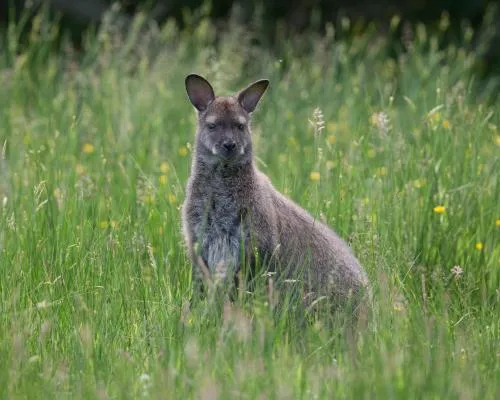 Country diary: Our island’s wandering wallabies come at a cost
Ballaugh, Isle of Man: As I discover, spotting one of these marsupials isn’t hard. The problem is how to manage them
-
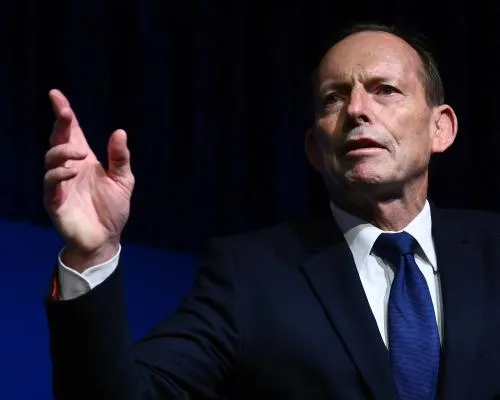 Shark expert says Tony Abbott ‘doesn’t understand the science’ after former PM calls for cull
Another expert says drone technology may have prevented a shark attack at Coogee beach on Saturday
-
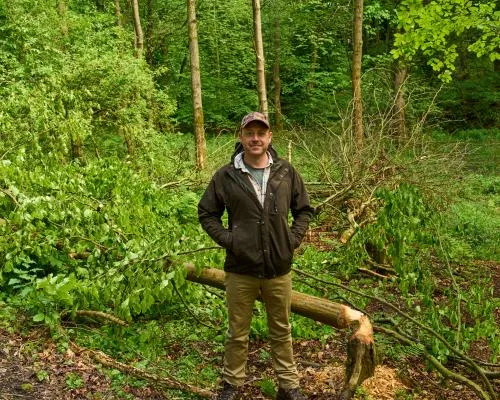 ‘People start connecting the dots’: why an investment fund is rewilding a North Yorkshire estate
Rebalance Earth is investing in Broughton Sanctuary to generate financial, environmental and social returns
-
 ‘Flamin’ cockatoos’ have lost much of their habitat to bushfires. Can the species survive?
Two fires in 12 years wiped out all but a handful of the mature native pines in Victoria’s Wyperfeld national park, a key breeding ground for endangered pink cockatoos
-
 Denial is back in vogue. As Australia leads climate talks, it’s beyond time we took the issue seriously
It is unlikely that many voters are flocking to Pauline Hanson for her scientific insights – but that is where they are lining up, regardless
-
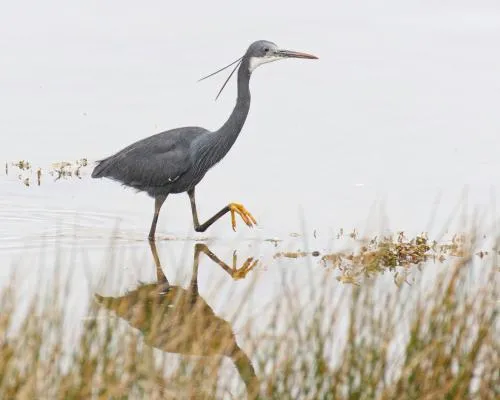 Tropical heron spotted in UK for first time as more exotic birds arrive to thrill birdwatchers
Appearance of a western reef heron in north Wales is unlikely to be the last, as heating temperatures mean species can survive Britain’s winter, say experts
-
 Trees may store less planet-heating carbon than hoped, study suggests
Photosynthesis does not always result in wood growth, a key factor in carbon dioxide sequestration


