US job creation smashes forecasts in May, fuelling rate hike bets; ‘no jet fuel shortage in Europe’ – as it happened

By Graeme Wearden • June 5, 2026 • Business
Rolling coverage of the latest economic and financial news
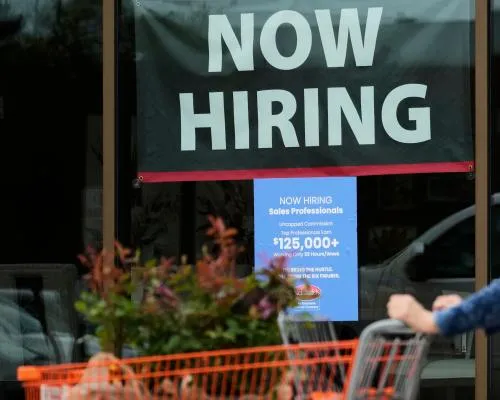
Time to wrap up… US employers added 172,000 jobs in May while the country’s unemployment rate held steady at 4.3%, a sign of a resilient labor market despite rising inflation and economic uncertainty brought on by continued conflict in the Middle East. Economists initially predicted there would be about 80,000 new jobs and a steady unemployment rate of 4.3%. Job figures for March and April were also revised up 29,000 and 64,000, respectively, a 93,000 boost compared to initial figures. The new data from the Bureau of Labor Statistics is the latest in a number of reports that have pointed to strong hiring in recent months, despite a strained economy and an increase in inflation. Wall Street fell as investors ramped up their bets that US interest rates could be hiked by the end of the year. In other news… European Union’s transport chief has insisted there are no signs of jet fuel shortages in Europe in the coming months. Transport commissioner Apostolos Tzitzikostas has told Reuters: “There is currently no jet fuel shortage in Europe. We have no signs that we will have a shortage in the coming period.” London’s stock market has closed for the week, with the FTSE 100 blue-chip index little chagned at 10,368 points, up 7 points today. Mining stocks fell, while London’s defensive stocks such as tobacco firms and consumer goods makers rallied. The smaller FTSE 250 share index fell 1%, despite a roaring performance from computer maker Raspberry Pi. Its share surged 27% after lifting its profit forecast this morning. The sell-off on Wall Street is continuing, with the Nasdaq Composite index now down 2% or -535 points at 26,295 points. The men’s World Cup, which kicks off later this month, may have helped drive up hiring in May. The BBC reckons that pubs, bars and restaurants ramped up hiring ahead of the World Cup, contributing to the 70,000 new jobs at hospitality firms last month. Donald Trump is unhappy that Wall Street is falling. Posting on Truth Social, the US president claims the market should be going up: With a great Jobs Report, like just announced, stocks should go up, not down. That’s the way it was for 200 years. Growth does not mean inflation! How else can a Country attain GREATNESS??? President DJT New York traders aren’t convinced, though. The S&P 500 is now down 0.9%, with the Nasdaq Composite down by 1.6%. Precious metal prices are also falling, as the US dollar strengthens. Silver is down 5.4% at $69.87 an ounce, with gold down 2.1% at $4,377 an ounce. Tech stocks on the slide today include storage firm Western Digital (-8.7%), Super Micro Computer (-8.1%), Sandisk (-7.5%) and Micron (-7.7%). Wall Street’s latest dilemma is whether to celebrate a strong economy or fear higher interest rates, says Rich McDonald, market analyst at investing and trading platform IG: US employers added 172,000 jobs in May, comfortably ahead of expectations, while unemployment held steady at 4.3%. Wage growth remained contained, suggesting the labour market remains healthy without reigniting inflation concerns. Ordinarily, that would be a reason for stocks to rally. Instead, investors focused on the prospect that a resilient economy could increase the need for a Federal Reserve rate hike later this year. The benchmark 10-year Treasury yield rose from 4.47% to 4.53% following the release, reflecting expectations that interest rates may move higher and for longer. The US stock market has opened in the red, as traders react to today’s better-than-expected jobs report. With hopes of interest rate cuts this year fading fast, the S&P 500 share index has dropped by 47 points, or 0.6%, in early trading to 7537 points. Technology stocks are among the fallers, as concern grows that the boom in AI-related stocks may be faltering. This has pulled the Nasdaq Composite index down by 301 points, or 1.13%, to 26,529 points. Financial traders are now fully pricing in a Federal Reserve interest-rate hike by the end of this year, after May’s surprisingly strong jobs report, according to Bloomberg. That will not please president Trump, who repeatedly attacked former Fed chair Jerome Powell for not cutting rates faster. Isaac Stell, investment manager at Wealth Club, thinks the markets are right, though. With strong job creation, and inflationary pressure from the Iran war, a rise in US interest rates does look more likely…. Stell explains: The Fed now faces a more complex policy backdrop. Inflation has risen sharply, reaching 3.8% in April from 2.4% at the start of the year, driven in part by the continued disruption in the Strait of Hormuz. With inflation pressures building and the labour market remaining robust, the bar for rate hikes continues to fall, increasing the likelihood of further policy tightening in the near term.” US government bonds are under pressure as investors conclude that early rate cuts are highly unlikely. This has pushed up the yield, or interest rate, on US two-year Treasury bills to 4.147%, the highest since February 2025, Reuters reports. Such strong jobs growth will make it tricky for America’s new top central banker to push for interest rate cuts. Seema Shah, chief global strategist at Principal Asset Management, says Kevin Warsh may find himself considering raising interest rates later this year, despite Donald Trump’s demands for lower borrowing costs: “Today’s jobs report reinforces that there is little basis for an easing bias from the Fed. Job creation above 150,000 – very comfortably exceeding the Fed’s estimate of breakeven and also broad-based in nature - comes alongside inflation that remains above target and is expected to trend higher in coming months. In effect, both sides of the Fed’s dual mandate argue against rate cuts at this stage. “If Chair Warsh pushes for cuts at his first meeting, he will be pushing against the evidence. Our base case remains that the Fed stays on hold through 2026, but if employment data continues to track around May’s pace, rate hikes this year would come firmly into play.” This strong US jobs report makes interest rate cuts less likely, explains Waleed Said, technical analyst from GivTrade: The US NFP print is clearly hotter than expected — 172k vs 85k forecast, only slightly below the previous 179k, showing the labour market is still resilient and not cooling fast enough for the Fed to relax. This is a hawkish jobs report: it supports a stronger dollar, higher yields, and pushes back aggressive rate-cut expectations. Gold may come under pressure first as yields and the dollar rise, unless geopolitical fear keeps safe-haven demand alive. Oil could get a short-term boost because strong jobs suggest solid economic demand, but gains may be capped if the stronger dollar and tighter Fed outlook hit risk sentiment. Here’s a breakdown of the sectors that hired more US workers last month: Leisure and hospitality added 70,000 jobs in May, including 48,000 new roles at food services and drinking places. Employment in local government rose by 55,000. Health care added 35,000 jobs in May, including 26,000 in ambulatory health care. Social assistance employment rose by 12,000 in May Employment in mining, quarrying, and oil and gas extraction increased by 5,000 But… Financial activities employment declined by 22,000 in May and is down by 107,000 since a recent peak in May 2025. Over the month, job losses occurred in insurance carriers and related activities (-11,000) and commercial banking (-3,000). Employment levels were broadly unchanged in transportation and warehousing, construction, manufacturing, wholesale trade, retail trade, information, professional and business services, and other services. The US unemployment rate held at 4.3 percent in May. Newsflash: the US economy added more jobs than forecast last month. Total nonfarm payroll employment increased by 172,000 in May, the US Bureau of Labor Statistics has reported, with gains in leisure and hospitality, local government, and health care. Employment in financial activities declined, though, the BLS reports. That’s much stronger than the 85,000 new jobs which economists had predicted for May. Jobs data for the previous two months has been revised higher too, the BLS adds: The change in total nonfarm payroll employment for March was revised up by 29,000, from +185,000 to +214,000, and the change for April was revised up by 64,000, from +115,000 to +179,000. Those revisions mean employment in March and April combined was 93,000 higher than previously reported – encouraging news for US workers, and the White House, but something which may make US interest rate cuts less likely… The EU trade commissioner has said the growing deficit with China is unsustainable. Speaking in Brussels, Maroš Šefčovič described the mood among commissioners who met for a China debate last Friday ahead of a leaders summit on 18 June. Šefčovič told the Brussels and European Policy Centre conference on economy security: “I would say the underlying and common thought in everyone that the situation where we are accumulating trade deficits with China at the pace of 1 billion euros a day is clearly unsustainable” “It cannot be in the situation that we could have 360 billion euros deficit.” But Šefčovič said they would look at re-engaging with China. “We also have to look how to address not only the deficit, but I would say our overall relationship with China ... [regarding] global over capacities as such. “So I think that what we are looking at internally is, you know, how to improve the, I would say, diplomatic outreach communications and discussions with our Chinese partners” Šefčovič also pointed out that “Openness has to be reciprocated by your partner”. The contraction in the eurozone’s economy in the first quarter of this year is awkward timing for the European Central Bank, which is expected to raise interest rates next week. Economists predict a rate hike from the ECB, to fight inflationary pressures from the Middle East conflict. Analysts at Unicredit explain: The ECB is very likely to start hiking interest rates next week, with a 25bp increase on 11 June. Several influential members of the Governing Council have already flagged the move, and the new macroeconomic forecasts will provide the background for the decision as the ECB’s inflation projection moves to the 3% area for this year and towards 2.5% for next year. Despite the inflationary pressures from the Iran war, Kazakhstan’s central bank has cut the country’s key interest rate to 17% from 18%. The National Bank of Kazakhstan eased monetary policy after its forecast for inflation this year was revised down to 9-11%, from 9.5-11.5%. Newsflash: the eurozone is on the brink of a technical recession, due to a slump in activity among multinationals based in Ireland. Statistics body eurostat has reported that eurozone GDP fell by 0.2% in the first quarter of this year, following a rise of 0.2% in the fourth quarter of 2025. A technical recession is two quarterly falls in GDP in a row. The decline was due to a 12.1% slump in Ireland’s GDP, according to official data released yesterday. However, that was caused by a 27.1% slump across Ireland’s multinational-dominated sectors, as a surge of demand for pharmaceutical products during 2025 unwound. Ireland’s modified domestic demand (MDD), a better measure of its domestic economy rose by 0.6%. Eurostat, though, uses GDP, so here we are. It also reports that Denmark (+1.9%) recorded the fastest quarterly, followed by Estonia and Malta (both +1.1%). At the bottom of the growth table, Ireland were followed by Lithuania (-0.3%), Sweden (-0.2%) and France (-0.1%). Eurostat had initially estimated last month that eurozone GDP rose by 0.1% in Q1 2026, before Ireland’s GDP slump hit…. India is set to launch a new high-ethanol fuel blend in the market, its latest effort to diversify supplies and reduce the country’s reliance on imported oil, Bloomberg reports. Oil minister Hardeep Puri is due to introduce the fuel today at an Indian Oil Corp.’s outlet in New Delhi. It will initially sold at 50 pumps in the country. The South Asian nation currently sells 20% ethanol-blended gasoline, or E20, across its retail fuel network. The new blend, called E85, will contain about 85% ethanol and pollute less than its conventional counterparts. More here. A majority of UK firms are expecting to hike their prices to pass on the cost of higher energy, but profits are still expected to be squeezed. The Bank of England’s latest poll of chief financial officers at small, medium and large UK businesses has found that 57% of firms expected to increase their prices, while 68% of firms expected their profit margins to be lower. The Decision Makers Panel has also found that bosses expect to hand out smaller pay rises this year. They reported that annual wage growth was running at 4.2%, while expected year-ahead wage growth is only forecast to be 3.4%. After rising in recent months, global food commodity prices stabilised in May. The UN’s Food and Agriculture Organisation has reported that its Food Price Index was stable last month, showing that the cost of a basket of food commodities dipped by 0.2% in May. There were some notable price rises, though. The Sugar Price Index rose by 7.5% in the month, blamed on fears that supplies will tighten in coming months. Cereal prices rose by 2.6%, on expectations of weak harvests in major exporters, including the US, and higher fuel and fertilizer costs. Meat prices were little changed, while vegetable oil and dairy prices fell in the month. The jump in jet fuel costs has prompted American Airlines to join the list of carriers temporarily cutting routes. On Wednesday, American told CBS News that it has adjusted schedules for “select routes” in August and September, due to elevated fuel costs. The routes affected include flights from Los Angeles to Cleveland, Columbus, Pittsburgh, and Washington Dulles, and from Charlotte to Ontario, and to Sacramento. Shares in UK low-cost computer firm Raspberry Pi have hit a record high, after it lifted its profit forecasts this morning. Raspberry Pi’s shares are up 14% to 937p, their highest level since the Cambridge-based company floated on the London stock market in 2024. Raspberry Pi told the City that trading in the first half of this year has been strong, with profitability “materially ahead” of the first half of 2025, and that it has been running down stockpiles of memory chips (DRAMs) before prices surged this year. It told shareholders: Performance has been supported by continued growth in unit volumes, a favourable product mix, and the ongoing utilisation of low-density DRAM inventory accumulated throughout FY 2025. It added that earnings this year are on track to be “significantly ahead of current market expectations”. Demand for Raspberry Pi’s computers jumped this year after technology experts found that they were a good choice to run the OpenClaw AI chatbot. The oil price is little changed this morning, with Brent crude trading around $95 a barrel. Susannah Streeter, chief investment strategist at Wealth Club, says: On the geopolitical front, conflicting messages from both Iran and the US have seen sentiment turn erratic. For now, oil prices are managing to stabilise around $95 a barrel, in the absence of a big reignition in the US military campaign. But there remain big questions about how negotiations can meaningfully progress, especially with Israel’s actions in Lebanon such a sticking point. Hezbollah rejected proposals for a ceasefire, and although there are now reports it’s seeking fresh talks with the US, this will be a highly complex situation to resolve. The US military action in Iran has opened a can of worms, with a slippery mix of geopolitical tensions escaping diplomatic attempts at containment, and threatening to unsettle markets further. Sentiment in risk markets across Asia has soured today, as investors worry that the rally in technology stocks may be stalling. South Korea’s KOSPI share index has dropped by 5% today (trimming its gains in 2026 to around 90%!), as a drop in chip shares on Wall Street yesterday ripples across markets. Chris Weston, head of research at Pepperstone, says: Questions are being asked more intently about whether some of the blockbuster trades of 2026 have had their time in the sun and are due for consolidation, and whether this modest pullback could evolve into something more pronounced. A second takeover battle has ended without success for the pursuer. US-based Apollo Global Management has said it does not intend to make a firm offer for British thermal processing services company Bodycote, following talks between the two sides. There’s a little takeover drama in the City of London this morning: the company behind bookmaker William Hill is being acquired. Evoke has agreed to be taken over by US casino operator Bally’s Intralot, in a deal which values Evoke at £243.1m. Bally’s Intralot says the deal will create a “global gaming and lottery champion”, with “significant scale and relevance in Europe’s largest and most attractive gaming jurisdictions”. The two sides have been talking for weeks, and Bally’s Intralot had been given a deadline of 5pm next Monday to reach a deal or walk away. UK house prices have dipped again, as the jump in borrowing costs since the Middle East conflict began hits demand. Lender Halifax has reported that house prices edged down -0.1% in May, the third monthly drop in a row after a 0.5% fall in March, and a 0.1% drop in April. That pulled the average price, on Halifax’s index, down to £298,806, from £299,251 in April. On an annual basis, prices were 0.5% higher than in May 2025. Amanda Bryden, head of mortgages at Halifax, says: “Property price trends continue to reflect the uncertainty linked to developments in the Middle East. Despite recent cuts to mortgage rates, higher inflation expectations have kept borrowing costs above the level seen at the start of the year, continuing to stretch affordability for many buyers and temper demand. “Even so, overall activity has held up well, reflecting the underlying resilience of the UK housing market. Latest industry figures show transaction levels remain relatively stable, suggesting buyers and sellers are still moving. Greater numbers of UK consumers went shopping last month as spring sunshine brought welcome relief to retailers, which have faced a squeeze on spending since the US-Israel war on Iran. Figures from the British Retail Consortium (BRC) and a separate survey by the accountancy firm BDO showed a bounce-back in footfall during May, reversing a sharp decline in April. The recovery coincided with consumer confidence surveys showing a rise in May as shoppers began to get over the sharp rise in petrol and diesel prices linked to the Middle East conflict, which began in late February. Good morning, and welcome to our rolling coverage of business, the financial markets and the world economy. With summer approaching, holidaymakers have been growing nervous that the Middle East crisis might leave airlines short of fuel. But despite the lack of progress to reopen the strait of Hormuz, the European Union’s transport chief has insisted there are no signs of jet fuel shortages in Europe in the coming months. Transport commissioner Apostolos Tzitzikostas has told Reuters: “There is currently no jet fuel shortage in Europe. We have no signs that we will have a shortage in the coming period.” Tzitzikostas pointed out that current high jet fuel prices have prompted airlines to cut uneconomic routes (an example of the demand destruction created by high energy costs), saying: “This is why we see that some airlines are choosing to cancel some of their routes that didn’t make any economic sense.” In May, airlines cut two million airline seats from their schedules, or less than 2% of global aviation capacity. Looking further ahead, Tzitzikostas suggested that the situation would be “very difficult” by the end of the year if Middle Eastern supplies remained disrupted. “It’s critical that the war stops and that the Strait of Hormuz opens and this needs to happen as soon as possible .... We should always keep in mind that Europe is prepared. We have the emergency stocks in our member states.” “For the time being, there is a certain degree of stability.” Back in April, the head of the International Energy Agency said Europe has only six weeks of jet fuel left before shortages will hit. Seven weeks on, flights continue – as Tzitzikostas points out – but airlines have been raising ticket prices to pass on the cost of higher fuel, and also to dampen demand. The agenda 7am BST: Halifax’s UK house price index for May 8.30am BST: UN’s FAO Food Price Index 1.30pm BST: US non-farm payroll jobs report for May
Source: The Guardian
Business Daily
10 posts
-
 ‘It’s not inevitable’: Asda chair on how his turnaround will hold off Aldi threat
Allan Leighton on government help, talk of a reheated merger with Sainsbury’s – and the vital role of bananas
-
 LPBank đem giải pháp thanh toán thông minh đến Ngày tài chính số
LPBank mang đến không gian trải nghiệm LPBank Plus, cùng nhiều tiện ích phục vụ giao dịch, góp phần đưa công nghệ đến gần hơn với khách hàng tại Ngày tài chính số 2026.
-
 Personal loans booming as cost of living drives Australians to borrow record amounts
National debt helpline calls have increased alongside growth in new personal loans, which charged an average 9% interest in March
-
 Taxi điện Green SM Limo ra mắt Ấn Độ
Green SM mở dịch vụ taxi điện dùng xe VinFast Limo Green tại Ấn Độ, thị trường thứ 5 của hãng sau Việt Nam, Lào, Indonesia và Philippines, hôm 5/6.
-
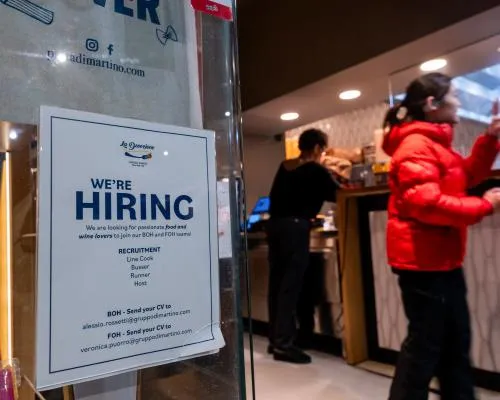 US added 172,000 jobs in May as labor market shows signs of resilience
Government figures show unemployment rate at 4.3% amid rising inflation and economic uncertainty from Iran war
-
 Đề xuất giao địa phương kiểm kê khí nhà kính hàng năm
UBND cấp tỉnh có thể thực hiện kiểm kê khí nhà kính hàng năm và chủ động quản lý các cơ sở phát thải trên địa bàn, theo dự thảo Luật Bảo vệ môi trường (sửa đổi).
-
 Aviation industry looks skywards as leaders fly in for Rio summit
Oil tankers may be stuck behind strait of Hormuz, but holding the Iata AGM in Brazil defies warnings of impending shortages
-
 UK urged not to further weaken EV rules as CO2 impact revealed
British vehicles will emit extra 17m tonnes of CO2 by 2030 due to loophole allowing sale of more PHEVs, data suggests
-
 'Bao bì cũng cần bền vững khi làm sản phẩm xanh'
Sản phẩm xanh không chỉ nằm ở nguyên liệu hay quy trình sản xuất bền vững mà còn ở vòng đời của bao bì, theo chuyên gia.
-
 On China, Trump picked the right battle but the wrong strategy
A long trade war looms. Trump’s scattershot protectionism, chaotic tariffs and belligerence against our natural allies guarantees that US trade policy will remain a hot mess


