US claims it is not responsible for strikes on Ecuadorian fishing boats – so who is?

By Joseph Gedeon and Cate Brown in Washington • June 13, 2026 • World news
Three vessels have been attacked in the eastern Pacific in recent months and the crews believe the US was to blame
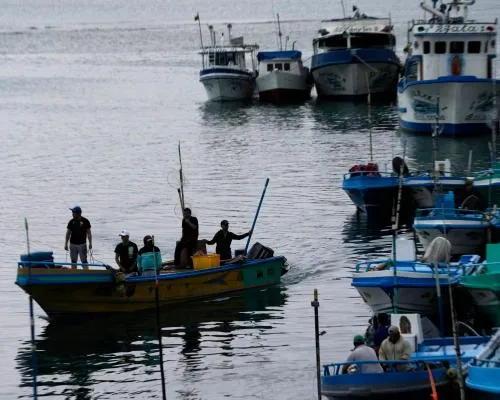
Captain Hernán Flores was fishing with his crew about 170 miles off the coast of Ecuador’s Galápagos Islands on 17 March when an explosion cut through the air and an unmanned drone crashed into the cabin of his boat, exploding into flames. Flores’s nephew was hit. The attack split his face and cracked his foot, exposing the bone. “Some guys looked for an extinguisher, but the fire was already spreading,” Flores, who has commanded the Negra Francisca Duarte for about 20 years, said. “So some of our crew leapt into the water.” An expansive US military campaign that has so far killed nearly 200 people across the Caribbean and eastern Pacific since September 2025 appears to have reached the fishing fleets of Ecuador and left eight men missing and presumed dead. But the Trump administration insists it had no part in these particular operations, like the one that set Flores’s boat aflame. Flores recounted his story to members of the Human Rights Commission (CDH) while in his home town in San Mateo, Ecuador. When Flores’s ship was hit, the US Coast Guard cutter Bertholf was patrolling the eastern Pacific Ocean, a spokesperson said, when its crew reported hearing “MAYDAY, MAYDAY, vessel on fire” over the ship’s radio. A Coast Guard spokesperson said that it assumed responsibility for coordinating a “search and rescue” and dispatched the Bertholf to respond. Meanwhile, Flores and his crew continued to sail their damaged ship searching for help. As they manoeuvred east, Flores said that a small observation plane followed them. “We kept our eyes fixed on it for fear it would drop another bomb.” After 40 minutes, Flores said they reached another ship that “seemed to be changing course to sail away”. “As we approached with the wounded man, we saw several Americans pointing guns at us,” Flores said. “They were yelling ‘hands up’ in Spanish, using translators. I was the first to go up; they handcuffed me behind my back, put a hood over my head, and took me to the top of the boat. They sat us down one by one on the deck. “Around three in the afternoon, they gave us a bottle of water, and the boat set sail,” Flores recalled. The next morning, Flores said his crew were transferred on to a large Salvadorian coastguard vessel, where they were reported as a “shipwrecked crew”. He said they spent eight days sailing north to Puerto Unión, a coastal city in El Salvador, and were placed in temporary detention. The fishermen said they were never charged with any wrongdoing and were issued emergency travel permits to return to Ecuador by the end of the month. Conflicting accounts Human rights organizations, including Amnesty International, Human Rights Watch and CDH have been looking into the alleged interactions between US vessels and fishing boats in the eastern Pacific. So far, the Pentagon and the US Coast Guard have both publicly denied participating in operations involving Ecuadorian fishing vessels. “We have no knowledge of, nor were Department of War forces involved in, the incidents described in those reports,” a spokesperson for United States Southern Command (Southcom) said in a statement to the Guardian. “US forces conduct operations under established legal authorities and hold its forces to the highest standards of professionalism, safety, and compliance with US and international law.” The state department did not return a request for comment on whether it had any communication with Ecuador over these maritime incidents and whether it was aware crew members were being transferred to El Salvador. The Coast Guard also said that it had no knowledge of, nor were any Coast Guard forces involved in, the incident described in reports on attacks on Ecuadorian fishermen. A spokesperson added that the US Coast Guard does not operate armed drones. Latin American experts have said that something about the various reports does not add up. “There are strange aspects to the official ‘rescue’ story in the Negra Francisca’s case,” Will Freeman, a fellow for Latin America studies at the Council on Foreign Relations (CFR) said, which was “disputed by the crew, who publicly claim they were captured and taken to El Salvador – that none of the three governments has clarified. “We do not have smoking gun evidence to say this was a US strike,” Will continued. “But who else might have taken these men – found so far from El Salvador – to that country?” Embassy representatives from Ecuador and El Salvador did not immediately respond to a request for comment. A search for answers In a letter obtained by the Guardian, the Democratic representatives Joaquin Castro of Texas and Bill Keating of Massachusetts in the House foreign affairs committee confront senior administration officials with survivor testimony, UN intervention, and a direct challenge to the Pentagon’s denials to demand whether the United States has been telling the truth. “These incidents have resulted in eight persons still missing or unaccounted for, credible survivor accounts of arbitrary or unlawful detention, abuse, and extrajudicial use of force by US personnel, and the formal intervention of the United Nations Committee on Enforced Disappearances,” the two lawmakers wrote to the secretary of state, Marco Rubio, defense secretary, Pete Hegseth, homeland security secretary, Markwayne Mullin, and coast guard commandant, Adm Kevin Lunday. Their letter was delivered on Thursday. The letter, which sets a response deadline of 10 July, focuses on three incidents in the eastern Pacific. The Fiorella, an Ecuadorian fishing vessel, disappeared on 20 January after its captain sent a final satellite message describing what [he] said was a US aircraft, a UAV, and a blue patrol ship that had been following the vessel for three days. Eight crew members have not been seen since. The Negra Francisca Duarte II, captained by Flores, reported being struck by a drone on 17 March near the Galápagos, and its crew reported being hooded, handcuffed and held on a blue patrol vessel bearing the word “Spear” on its hull before being transferred into Salvadorian custody. Trump’s counternarcotics program spanning the Americas is nicknamed Operation Southern Spear. Fishermen onboard a third Ecuadorian ship, the Don Maca, also described being stopped and arrested by an American patrol boat after catching swordfish, albacore and dogfish along one of their regular fishing routes. “As we boarded, they handcuffed and hooded us all,” crew member John Sebastián Palacios said in testimony to CDH. “After we were hooded, they fired two more shots at the boat. After half an hour, they sank it. We were so scared we didn’t even dare reach for our phones to record, thinking that if we made a wrong move they would shoot us again.” Palacios said that the first vessel transferred his crew to a Salvadorian patrol. The US has long denied involvement in the three incidents targeting the Ecuadorian boats. The House armed services committee chair, Mike Rogers, on 4 June, read a Pentagon statement into the record during an NDAA markup that said the US “did not board the Don Maca and conducted no kinetic strikes against it”, was “unaware of any strikes” against the Fiorella, and equally unaware of any strikes against the Negra Francisca Duarte II. Castro and Keating now ask whether that denial covers every entity that could have been involved: specifically the DEA, the Coast Guard, Customs and Border Protection and any intelligence agencies or contractors operating under US authority. A fraught moment The questions also land at a moment of rapidly deepening US military engagement with Ecuador. In November 2025, President Daniel Noboa hosted then-DHS secretary, Kristi Noem, at the Manta naval air station to discuss establishing a US military base. On 6 March, the US participated in strikes on an armed group inside Ecuador, which Hegseth celebrated on X, writing that the United States was now “bombing Narco Terrorists on land”. Ecuadorians rejected the expansion of US military bases into their country in a November vote, stalling plans to advance US “anti-narcoterrorism” operations there. The small coastal nation is located between Peru and Colombia – the world’s top cocaine producers – and the US Coast Guard and Drug Enforcement Agency have long operated interagency patrols that monitor the eastern Pacific Ocean corridor for drugs that may be headed to the United States or Europe. Then, in April, Ecuadorian navy vessels trained alongside the Nimitz carrier strike group in the Pacific. At a Senate foreign relations committee hearing on 2 June, Senator Tim Kaine pressed Rubio on targeting criteria, revealing that striking a vessel does not require evidence of narcotics being onboard. Kaine had called that description “odd”, though Rubio defended the program, saying every strike involves a legal officer making a determination on legality. Among the handful of questions, Castro and Keating are asking whether detained crews were ever searched for contraband, whether they were given access to lawyers or consular officials, and whether survivors were asked to sign non-disclosure agreements. They also demand “all videos, photographs, and audio recordings taken by US personnel or US aircraft, UAVs, or other modes of surveillance” during those three incidents. The three vessels remain the clearest evidence yet that Washington’s supposed war on drugs in the eastern Pacific has quietly expanded into a shooting war against the fishermen. “[I]f it was drug traffickers, pirates, or the crews themselves who set fire to their vessels,” Freeman said, “why has the Ecuadorian government been so unwilling to launch a serious investigation?”
Source: The Guardian
Guardian News World
139 posts
-
 Longtime New York City TV anchor announces retirement after revealing Alzheimer’s diagnosis
Bill Ritter, anchor on WABC since 2001, said he’s stepping down but will continue to report on the disease
-
 Mourners line Bangkok’s streets to pay respects to Thailand’s Princess Bha
Funeral procession travels to palace as people remember royal’s campaigning and work for underprivileged
-
 New York man who killed gay dancer faces 25 years after hate-crime conviction
Dmitriy Popov fatally stabbed O’Shae Sibley in Brooklyn in 2023 and was found guilty of manslaughter as a hate crime
-
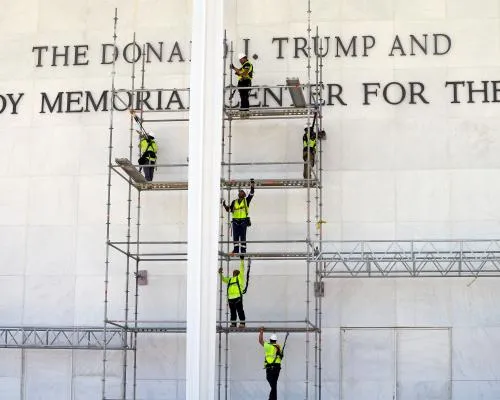 Workers remove Trump’s name from Kennedy Center after court rulings
In the dead of night, behind a screen, the president’s name is purged from the facade of the Washington building
-
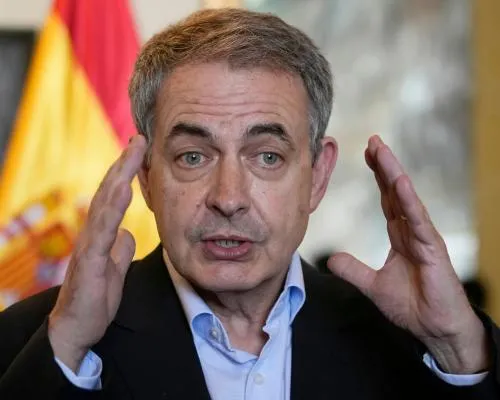 Spain’s former PM faces tax fraud inquiry as police find €1.3m of jewellery
José Luis Rodríguez Zapatero, already under investigation for alleged influence-peddling, facing questions over items found in office safe
-
 Lời hứa không thành của thủy thủ Ấn Độ trên tàu dầu bị tấn công gần Hormuz
Suresh hứa trở về cùng vợ kỷ niệm ngày cưới nhưng không thể thực hiện, khi anh thiệt mạng trong cuộc tấn công của Mỹ nhằm vào một tàu dầu trên vịnh Oman.
-
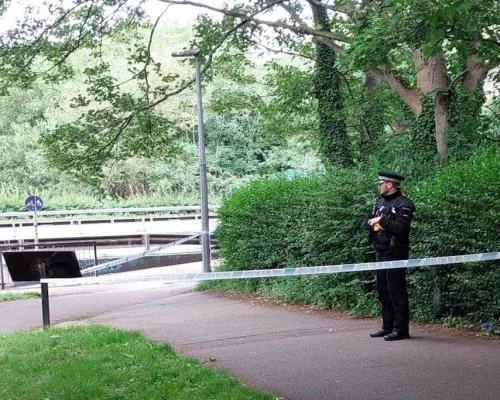 Three teenagers arrested over death of man in Essex
Boy, 14, among three people held after 21-year-old was found critically injured in Central Park, Chelmsford
-
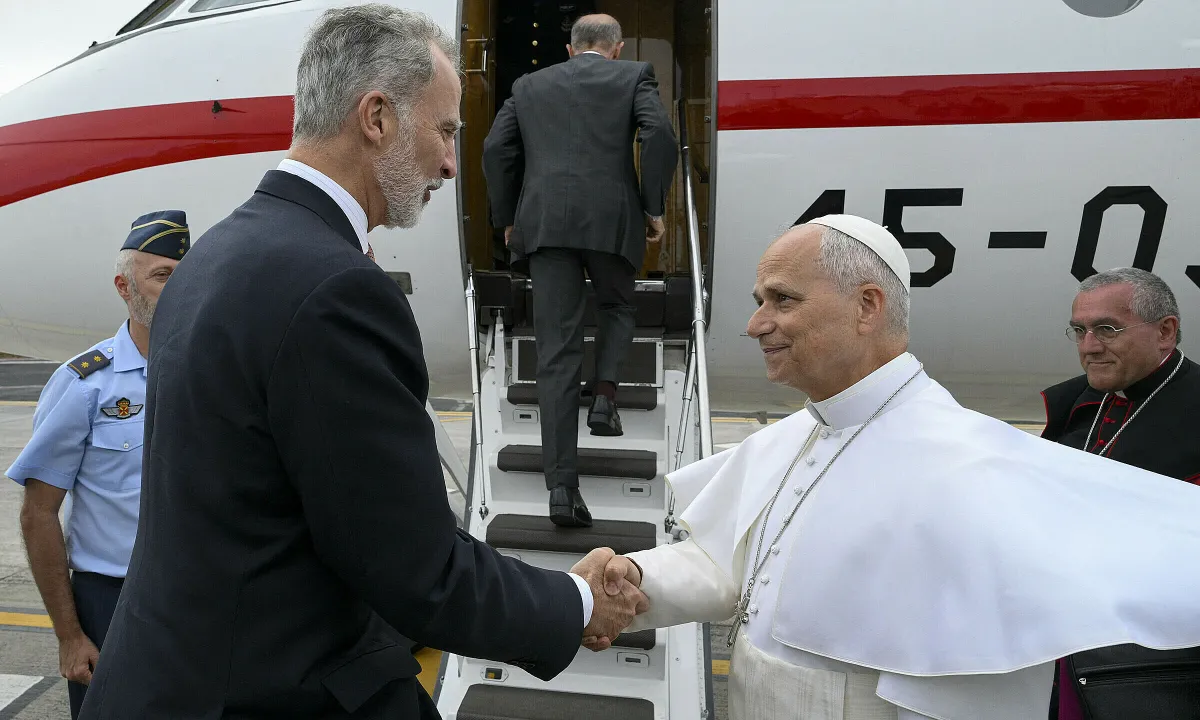 Giáo hoàng đi nhờ chuyên cơ Vua Tây Ban Nha vì máy bay bị hỏng
Chuyến bay chở Giáo hoàng Leo XIV gặp sự cố kỹ thuật, buộc ông phải đi nhờ chuyên cơ của Vua Tây Ban Nha từ quần đảo Canary về Rome.
-
 Trump as Don Corleone: ‘Every time he does somebody a favour … he expects a quid pro quo’
Barbara McQuade’s book is a piercing exposé of how Trump is eroding democracy by turning the US into a mafia state
-
 Mỹ tuyên bố bắn hạ loạt UAV Iran 'tấn công tàu hàng'
Mỹ tuyên bố bắn hạ nhiều UAV Iran đang nhắm vào tàu thương mại tại Hormuz, dù hai bên thông báo tiến gần thỏa thuận hơn bao giờ hết.


