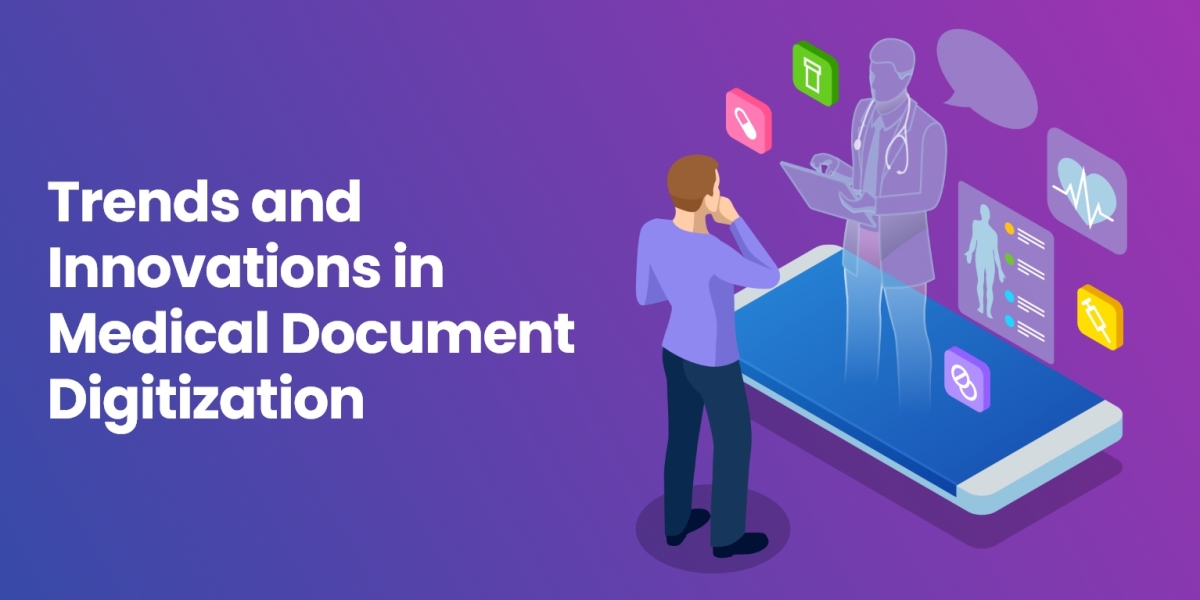
In the rapidly evolving business technology landscape, the urgency to adapt to new changes and stay ahead in the market is more pronounced than ever. Every industry, including healthcare, is seeking new ways to compete, and integrating new technologies and innovation is a primary approach.
Every industry in the economy is revolutionized with digitalization, resulting in enhanced outcomes. One of the most essential and crucial sectors of the economy is the healthcare sector. Over the years, the industry has collected and generated significant amounts of data in physical format. And in the digital realm of business, data is the new oil.
The healthcare industry, traditionally reliant on paper charts, manual medical reports, and physical filing systems, is undergoing a profound transformation. In the face of a rapidly changing world, healthcare businesses are embracing digital solutions, transitioning from manual to digital processes through the adoption of healthcare data management. The shift is not just about change, but about a transformative leap into a more efficient, secure, and patient-centric future.
In the revolutionary era, digital healthcare is increasingly spreading, and a large number of documents collected in medical facilities are usually in paper format. Here, healthcare professionals play a crucial role, utilizing healthcare data entry services to streamline their processes digitally and gain quick access to data. Their active involvement is not just a necessity but a testament to their integral role in the industry's evolution.
Medical document digitization, the process of converting traditional paper records into a secure, accessible digital format, is of paramount importance in the healthcare sector. It enables the efficient management of the variety of data collected and generated, including sensitive patient information.
While the shift from paper to pixels began with the introduction of Electronic Health Records (EHRs), today's trends and innovations are pushing the boundaries of what's possible, promising a future of more efficient, accurate, and patient-centric care. The importance of medical document digitization is not just about data, but about putting patients at the heart of every healthcare decision.
Importance of Medical Document Digitization in Healthcare
As discussed, the healthcare sector is important and contains sensitive information that is at risk if manually managed. Documents, reports, x-rays, and other sets of medical information are typically stored and accessed manually, which is insignificant in the digital age. Traditional paper records in the medical field are fraught with challenges: they are prone to misfiling, loss, and damage; they require vast physical storage space; and create bottlenecks in information retrieval and collaboration.
In a fast-paced medical environment, these inefficiencies can lead to delays in treatment, administrative errors, and even compromise patient safety. Hence, digital healthcare transformation addresses these issues and creates a foundation for a more agile, secure, and patient-centric healthcare system.
Integration of healthcare data entry services and document digitization enables medical professionals to access, share, and store sensitive information in digital databases without worrying about any risk. As a matter of fact, a variety of medical documents are available to professionals and contain sensitive information as well. Therefore, medical record digitization enables medical practitioners to store and access digital records while prioritizing patient well-being.
Medical document digitization came to the forefront with the widespread adoption of EHRs. These digital versions of a patient's medical chart provide a real-time, comprehensive view of their health history, including diagnoses, medications, treatment plans, and test results. The benefits of EHRs reflect the importance of healthcare data digitization.
- Enhanced Accessibility and Efficiency
- Improved Patient Outcomes
- Cost Reduction
- Simplified Compliance
- Streamlined medical process
- Improved communication and collaboration
While EHRs provided the initial framework, medical documents hold the importance and demand for acute security as well as management. Implementing healthcare data entry services helps to enhance the medical facility's processes. Moreover, digitizing medical documents is just one aspect; continuing to implement trends and innovation enables healthcare businesses to stay ahead and deliver exceptional patient care services. Let's look deeply into the medical document digitization trends and innovation.
Key Trends in Medical Document Digitization
The landscape of medical document management is rapidly evolving, driven by digitalization, technological advancements, and shifting trends. Since technology deeply impacts any business segment, it is essential to adapt to trends to stay ahead, deliver as required, and enhance patient care. Explore some of the trends that have the ability to change the face of the healthcare industry.
- Increased Adoption of Electronic Health Records: EHR advancements are the cornerstone of modern healthcare. They are digital versions of patients' charts that provide real-time, comprehensive information about medical histories. The widespread adoption of EHRs is a primary catalyst for digitizing paper records, as it enables seamless data tracking, monitoring, and sharing across departments and even different healthcare facilities.
- Cloud-Based Storage and Security: The shift to cloud-based solutions is a game-changer. Cloud platforms allow healthcare institutions to securely store vast amounts of data without the need for on-premise physical servers. This not only reduces costs but also enhances collaboration by providing authorized users with easy access to records from anywhere. Robust security features like advanced encryption, access controls, and audit trails are paramount for protecting sensitive patient information and ensuring compliance with regulations like HIPAA.
- Emphasis on Compliance and Data Privacy: Healthcare organizations face immense scrutiny to maintain compliance with data privacy regulations. A proper digitization strategy, with features like automated audit trails and role-based access controls, is no longer optional—it's a necessity for reducing the risk of costly fines and legal disputes.
- Artificial Intelligence and Machine Learning: AI and ML are transforming how healthcare institutions process and analyze data, simplifying complex processes. From scanning the document to extracting key information, AI in medical digitization is a beneficial innovation as it offers a variety of processes that enhance the healthcare process, as follows;
- Automated Data Extraction
- Intelligent Classification and Indexing
- Predictive Analytics
- Workflow Automation
These are key trends that are rapidly changing the current scene of the healthcare sector. This digital healthcare transformation enables medical professionals to streamline administrative tasks, medical processes, treatment planning, and more. As a matter of fact, healthcare is a vast sector and deals with large volumes of data and documents.
Data digitization companies offer accurate data entry and digitization services in various sectors. This becomes an ideal solution for medical professionals to stay focused while having hands-on digital data. However, this isn't the end, as future medical records innovation has greater potential and ability to offer exceptional patient care services. As healthcare data entry services have become an indispensable process, they offer not only digital representation but also an intelligent, interconnected, and quickly accessible approach.
Towards the End
Managing patient information accurately is a crucial process in today's modern business landscape. The medical industry's pursuit of healthcare data digitization as an ideal solution yields a range of benefits, including enhanced patient care and improved efficiency within the internal healthcare system.

Rahul Dogra
1 posts
-
 Taxi và xe tải lao xuống ruộng sau cú tông trời giáng
Lao tốc độ cao qua ngã tư, chiếc xe taxi tông thẳng vào đuôi xe tải phía trước rồi cả hai rơi xuống ruộng, hôm 19/6 tại Thanh Miện.
-
 Có bị tính vượt đèn đỏ khi chờ ở làn rẽ trái không?
Khi đến ngã tư đèn đang đỏ, nhưng làn chờ rẽ trái vẽ nối tiếp lên phía trước, tôi có được vượt qua vạch. (Tuấn Anh)
-
 Những lựa chọn ôtô 7 chỗ cho gia đình đông con từ 1/7
Quy định bắt buộc lắp ghế trẻ em từ 1/7 khiến nhiều khách hàng có nhu cầu lựa chọn MPV hay SUV 7 chỗ thay vì xe 5 chỗ.
-
 Sếp Toyota: 'Một mẫu xe có quá nhiều phiên bản'
CEO Kenta Kon cho rằng Toyota đang tạo ra quá nhiều biến thể của cùng một sản phẩm nên một số mẫu có thể bị loại bỏ.
-
 Xe Toyota sẽ cắt giảm số lượng phiên bản
CEO Kenta Kon cho rằng Toyota đang tạo ra quá nhiều biến thể của cùng một sản phẩm nên một số mẫu có thể bị loại bỏ.
-
 Audi triệu hồi e-tron, Q8 e-tron nghi lỏng bàn đạp phanh
Tổng 9 xe nằm trong đợt triệu hồi có thời gian sản xuất từ 2/2/2018 đến 11/6/2024 được nhập khẩu và phân phối chính hãng tại Việt Nam.
-
 Xe con chuyển làn bị xe khách tông: ai sai?
Bật xi-nhan, xe con chuyển sang làn đường sát dải phân cách thì xe khách lao tới.
-
 Toyota TR010 Hybrid - tinh hoa công nghệ của hãng xe Nhật
Mẫu xe đua hybrid sử dụng hàng loạt công nghệ vật liệu cùng động cơ hybrid để về đích nhanh nhất nhưng vẫn đảm bảo ổn định sau 24 giờ.
-
 Thaco Auto và Stellantis mở rộng chiến lược đa thương hiệu
Sự kiện giới thiệu bộ đôi thương hiệu Jeep, Ram, hai dòng Peugeot 3008 và 5008 mới, xác lập cột mốc chiến lược trong quan hệ hợp tác Thaco Auto và Stellantis.
-
 Omoda C5 thêm bản Sport giá 559 triệu đồng
Mẫu xe gầm cao cỡ B bổ sung lựa chọn cho khách hàng Việt, bản Sport mới trang bị nhiều tính năng.
-
 Chờ đèn trước đầu xe tải, người phụ nữ bị cuốn vào gầm
Quay ngang xe máy dừng chờ đèn đỏ trước đầu xe tải, khi đèn chuyển xanh, người đi xe máy gặp nạn.


