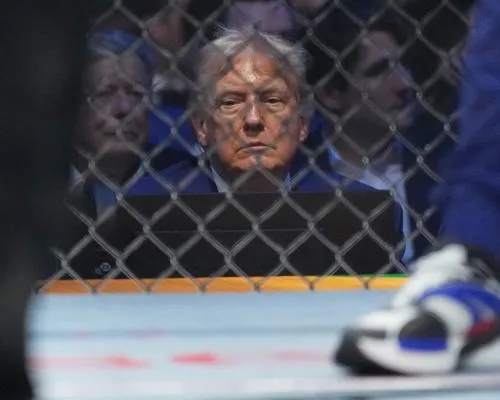
The UFC match plot: how a far-right group tried to assassinate Trump at his own event

By J Oliver Conroy • June 27, 2026 • US news
Court files show how men connected through TikTok and encrypted apps planned attack on White House UFC fight
When Tycen Proper, 19, finished high school, his family gave him at least $3,000 of “graduation money”, according to court documents. Despite the generosity, he seemed content to just live at his parents’ home, in a tiny Ohio town near Amish country, and spend more and more time on the internet. But Proper did have ambition of a kind, an affidavit says. He quit his job to focus on a special project that he was planning with friends from the internet. His mother saw him studying maps of Washington DC. He also put his graduation money into investments that made his father uneasy: a rifle, a shotgun, body armor, ammunition. His parents eventually told police that they were scared of what their son was hatching. They were right to be. Almost two weeks ago, the US Department of Justice announced that it had foiled a plot by Proper and a number of co-conspirators to assassinate Donald Trump and other elected officials at the Ultimate Fighting Championship event recently held at the White House. As of Friday, eight people from around the country are in custody. All appear to be men in their 20s or early 30s. Yet at least 19 people were involved with the plot, investigators have said. Many in the group met through TikTok. After verifying each other’s identities and ideological commitment, they migrated to closed groups on the encrypted messaging apps Signal and SimpleX, where they sorted themselves into “tiers” of risk tolerance. Some met in person for tactical training. The plotters planned to stage a demonstration near the White House to distract law enforcement. As Trump and other officials cheered on the UFC’s gladiators of mixed martial arts, the plotters would bomb the event with drone-borne explosives, causing a panicked evacuation toward an area where waiting marksmen would pick off “high-value targets”. A “second wave” of attackers, according to court documents, would storm the White House. It was to be, one of the alleged conspirators told others, “a fucking bloodbath”. After the story broke, it was partly eclipsed by breaking news about the Iran war and the excitement of the World Cup. Yet the facts are shocking, and perhaps confusing: the plotters had far-right views, but hoped to kill Republican officials. They chose their targets with the help of a leftwing website that tracks politicians who receive donations from the American Israel Public Affairs Committee (Aipac), the pro-Israel lobby group. And one of the plot’s alleged ringleaders, Abraham Alvarez, 31, is reportedly an undocumented immigrant from Mexico. The Trump administration has contributed to the confusion, simultaneously praising the FBI’s heroism in stopping the plot and downplaying the severity of the threat. “[T]he plot was, like, not that advanced,” JD Vance said last week. “They had not really done that much planning.” He added: “I get why people are so fascinated by it … But thank God we have good law enforcement.” Similarly, some conservative media outlets have seized on aspects of the story to imply that the plotters were actually bad seeds of the far left. One of the alleged plotters, an article in the Federalist argued, “parroted Democrat conspiracy theories about President Trump protecting child predators connected to sex offender Jeffrey Epstein”. That framing is disingenuous – Trump, as much as anyone, mainstreamed conspiracy theories about Epstein – but it does point to the fact that the plot, viewed from the outside, might seem ideologically incoherent. Yet it is coherent, said Michael Edison Hayden, a journalist and analyst who studies extremism. Far-right communities online are often as hostile to Trump and the Maga movement as they are to Democrats, he said. People like the alleged UFC plotters are “anti-government, and the government happens to be run by Republicans”, he said. He suspects that the plotters have fairly standard anti-elite views with antisemitic and accelerationist characteristics. According to investigators, the conspirators were enraged by the Trump administration’s continued alliance with Israel. Proper praised Adolf Hitler in posts on social media. Another alleged plotter, Michael Alan Thomas, 32, “indicated that he believes that the U.S. government is run by an elite group of individuals who sacrifice and consume infants who also were deeply involved with [Jeffrey] Epstein and are now protected by President Donald Trump,” an affidavit said, adding that Thomas also “places some of the responsibility of this corruption of government [on] Jewish people and blames them and Israel for the current war with Iran”. He and his co-conspirators allegedly thought that their attack would bring about (or “accelerate”) a second American Revolution. While the US Department of Justice has acknowledged the plotters’ anger at what they called an “Epstein class”, the government’s account has nonetheless downplayed a critical element, Jonathan Larsen, a journalist, recently argued: Christian extremism. Proper’s mother, according to court documents, said that her son had recently become more religious. She feared that his friends were manipulating his newfound Christian zeal. He had fallen in with a “group online [of] individuals who represented themselves as ex-military and that may share some Christian-based ideology”, an affidavit said. The group “expressed ultra-religious and anti-government sentiments”. The plotters bandied biblically-tinged language about “shepherds” and “lions’ dens”, and believed that demons (or at least demon-worshipers) were preying on children, itself a QAnon- and Epstein-era update of a centuries-old Christian antisemitic trope. According to court documents, investigators found a diary in which Proper “wrote that the government sought to control people and to sacrifice children and others to a demonic figure”. “We’re seeing a very aggressive ideological civil war going on in the far right,” Matthew D Taylor, a scholar of contemporary Christian nationalism, said. Although both factions employ Christian rhetoric, people on one side are closely aligned with the Trump administration and are often Christian Zionists who support the state of Israel. The other side are anti-interventionist Christian nationalists who feel disappointed and betrayed by the Maga movement. They prefer to describe themselves as “America First”, he said, and are tapping a religious antisemitism “that has been part of the far right for a very long time”. The US’s alliance with Israel became a hot-button issue on the right because of the Gaza war, he noted. The assassination of Charlie Kirk accelerated tensions because Kirk had straddled the Israel line and both sides wished to claim his legacy. But all of that pales against the Iran war – the “straw that broke the camel’s back”, he said, for people on the far right suspicious of Israel’s influence on Trump. Trump used to be able to hold the factions together, Taylor said, but these tensions – plus Trump’s flip-flopping about the Epstein files – have collapsed the coalition. Even evangelical Christians, once a bedrock of Christian Zionism, are slipping in their support for Israel. Younger evangelicals do not share their parents’ philosemitism. “Going into Iran, I think Trump very much misread the landscape,” Taylor said, “and thought, ‘Oh, the evangelicals are all Christian Zionists; they’ll love me for doing this.’” Vance may have been right in describing the plot as amateurish. The plotters were stopped before even reaching Washington, and one was apparently frustrated by car trouble. It is also unclear to what extent all of the people aware of the plot actively supported it. Because of the prevalence of bragging, fantasy and irony-layered humor in far-right spaces, some may not have thought the plot was real. Yet terror plots often start in a weird limbo between fantasy and violent reality, and the possibilities are grim. The alleged conspirators had thousands of rounds of ammunition, law enforcement have said. “I would not think that this group of young men is particularly unique,” Taylor said. “If anything, there are a lot – maybe thousands – of young men around the country who are being drawn into similar communities, similar arguments, similar ideas.” Taylor noted that would-be domestic terror attacks are often only stopped because worried family members tip off police. “That’s what you would hope that family members would do,” he said. “But it’s a pretty thin branch to be relying on.”
Source: The Guardian
World News Today
381 posts
-
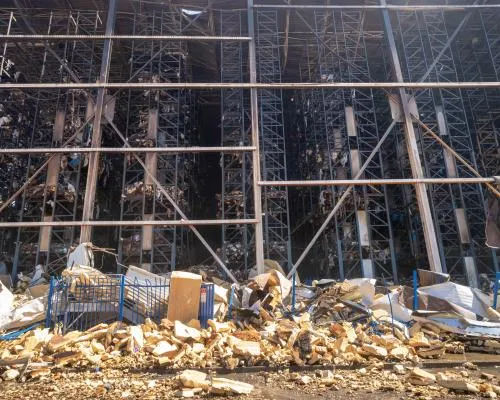 ‘Like a dead body’: after warehouse fire, LA residents say air thick with smell of rotting food
Cleanup under way after week-long fire at a Boyle Heights facility spoiled tens of millions of pounds of frozen food
-
 Quân đội Mỹ tiếp nhận lô F-35 thiếu thiết bị radar
Quân đội Mỹ tiếp nhận lô F-35 đầu tiên không có thiết bị radar quan trọng, ảnh hưởng đến khả năng chiến đấu và gây lo ngại về tiến độ phát triển chương trình AN/APG-85.
-
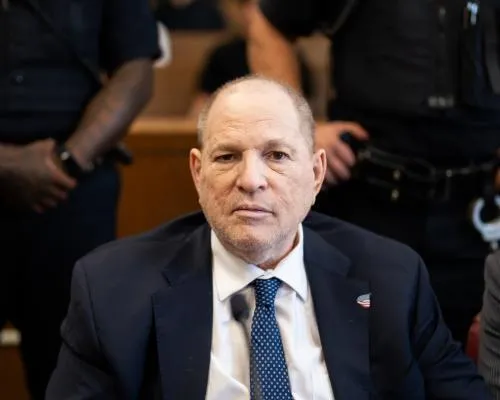 California appeals court upholds Weinstein’s rape conviction but orders resentencing
Weinstein was convicted in 2022 of one count of rape and two counts of sexual assault and sentenced to 16 years
-
 Children embrace Cornish language as it enjoys ‘remarkable resurgence’
Go Cornish Celebration engages younger generation as council finalises strategy to boost everyday use of Kernewek
-
 Iran bị cáo buộc tập kích UAV vào Bahrain: Vụ việc căng thẳng ở eo biển Hormuz
Bahrain cáo buộc Iran tiến hành cuộc tập kích bằng UAV, sau khi Vệ binh Iran tuyên bố đã triển khai loạt đòn trả đũa Mỹ. Việc này làm gia tăng căng thẳng trong…
-
 Ukraine war briefing: Russian-occupied Crimea declares ‘emergency’ as Zelenskyy’s forces step up attacks
Ukrainian president says Crimea at centre of Kyiv’s ‘policy of ensuring justice’ against Moscow. What we know on day 1,584
-
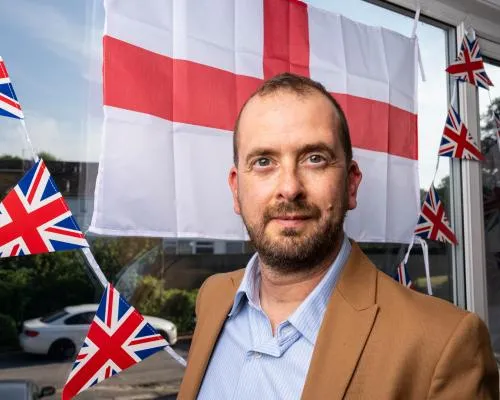 ‘Not a culture war’: the council that won its case over England flags on lampposts
Leader of local authority in Oxfordshire faces backlash over injunction ‘to maintain neutral, safe space for residents’
-
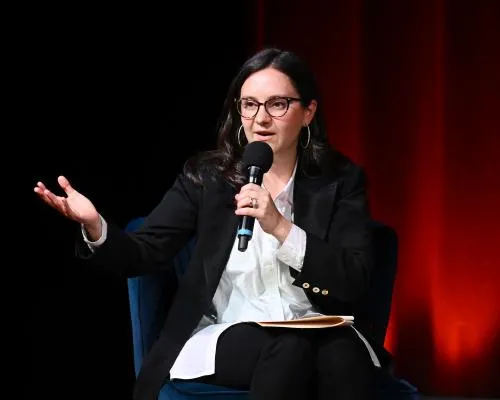 ‘Not puff pieces and kid gloves’: why Bari Weiss is hiring British journalists at CBS News
Editor-in-chief has developed network of UK thinkers she believes reject what she regards as overly ‘woke’ consensus
-
 Mỹ và Iran leo thang mâu thuẫn, thế giới bóng đá bị ảnh hưởng
Mỹ triệt phá trang web phát lậu World Cup và Iran lên án Mỹ vi phạm thỏa thuận hòa bình, tạo ra bối cảnh phức tạp cho giải đấu.
-
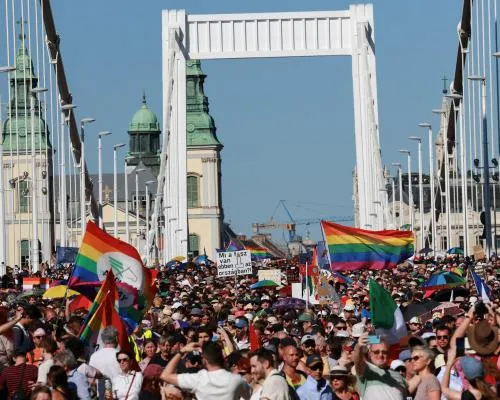 ‘Many are still afraid’: hope and caution in Budapest before first Pride since Orbán
LGBTQ+ people continue to reel from stigma spread by 16 years of rightwing populist government, says organiser


