Repair of Hyundai Final Drives: Selection Criteria for Bearings and Seals


Hyundai heavy equipment, particularly their excavators, is engineered for power and productivity. The final drive (or travel motor) is a fundamental component of this design, acting as the final gearbox that translates hydraulic motor power into the high-torque, low-speed rotation needed to turn the tracks. These components operate under the most extreme stress imaginable, supporting the entire machine's weight while enduring constant shock loads and a barrage of external contaminants.
Consequently, final drive failure is a common and costly repair. While the heavy-duty gears are incredibly durable, the failure almost always begins with the components designed to support them: the bearings and seals. A successful, long-lasting repair is not just a matter of reassembly; it is entirely dependent on selecting replacement bearings and seals that meet the exact, demanding specifications of the application.
The Interdependent Failure Cycle: Bearings and Seals
In a Hyundai final drive, the bearings and seals live in a symbiotic, high-stakes relationship. The failure of one component directly and rapidly causes the failure of the other.
- Seal Failure Leads to Bearing Failure: The most common failure path begins with the outermost seal (the duo-cone or face seal). This seal's only job is to keep gear oil in and dirt/water out. When it is compromised by abrasive materials (sand, rock dust, mud), two things happen: the lubricating gear oil leaks out, and abrasive slurry gets in. This slurry is then circulated directly into the high-load bearings. The bearings, now running dry and contaminated, quickly overheat, pit, and disintegrate.
- Bearing Failure Leads to Seal Failure: If a bearing begins to fail due to fatigue or shock load, it allows the main shaft to "wobble" or become misaligned by fractions of a millimeter. This misalignment places an impossible, non-axial load on the precision duo-cone seal, shattering its lapped faces or compromising the hydraulic motor seals, leading to a catastrophic and rapid loss of all fluids.
Selection Criteria for Replacement Bearings
Choosing the correct bearing is not as simple as matching a part number. The material and design are critical for surviving the high-impact environment.
- Type and Load Rating: Final drives do not use standard ball bearings. They require heavy-duty tapered roller bearings (or in some cases, angular contact or spherical roller bearings). This specific design is essential because it can handle the immense axial (pushing/pulling) and radial (weight) loads that an excavator exerts simultaneously. Using a bearing not designed for high axial loads will result in immediate failure.
- Material Purity and Hardness: The quality of the steel is paramount. Bearings for Hyundai final drives must be made from high-purity, case-hardened bearing steel. This process creates an ultra-hard surface to resist wear, while keeping the bearing's core ductile enough to absorb shock loads without cracking. Low-quality steel is brittle and will spall (flake) or fracture under the first high-impact event.
- Precision and Tolerances: The fit of the bearing on the shaft and in the housing must be exact. A "cheap" bearing with loose manufacturing tolerances will allow microscopic "play" in the shaft. This play creates vibration, which in turn accelerates wear and leads directly to seal failure, restarting the failure cycle.
Selection Criteria for Replacement Seals
The seals are the final drive's primary defense. Their quality is non-negotiable. There are two main seal types to consider during a repair.
1. The Duo-Cone Seal (Heavy Duty Mechanical Face Seal)
This is the main seal separating the planetary gearbox from the outside world. It is not a simple rubber lip seal.
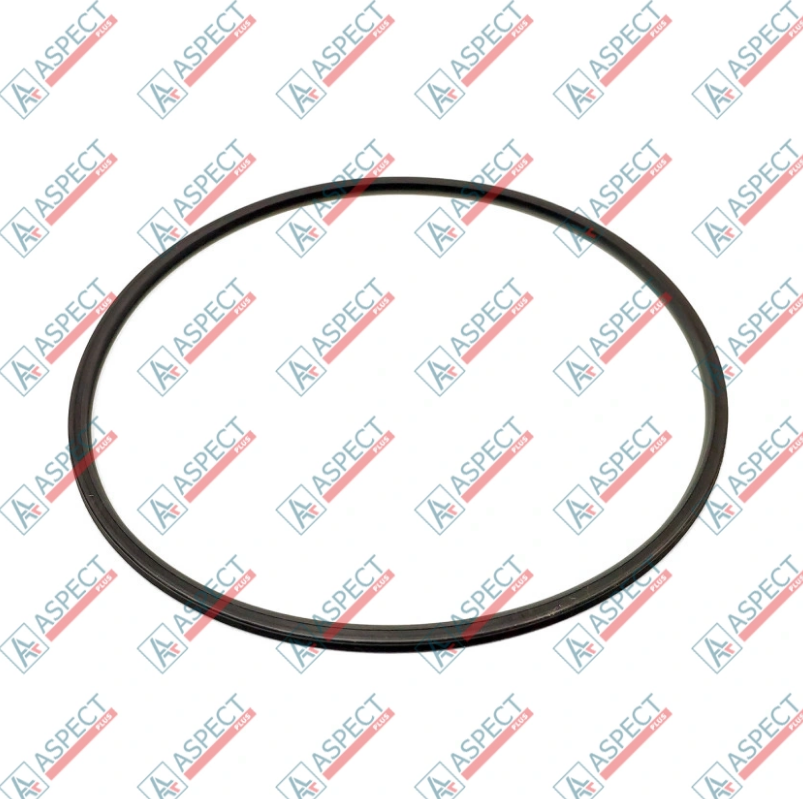
- Component Design: It consists of two mirror-polished, super-hard metal rings that seal against each other under pressure from two elastomer "toric" O-rings.
- Material Quality: This is where cheap seals fail. The metal rings must be made from a specific, durable cast iron alloy that resists abrasion. The O-rings must be made from high-quality NBR or HNBR (Nitrile) compounds that remain flexible and do not harden or crack with heat and age. Low-quality O-rings will harden, lose their "pushing" force, and allow the seal faces to separate, causing a leak.
- Lapping (Surface Finish): The two metal faces are "lapped" to a near-perfect flatness. A high-quality seal set will have a flawless, pre-lubricated finish. A low-quality set will have surface imperfections that allow fine grit to enter and destroy the seal from day one.
2. Internal Hydraulic Motor Seals (Shaft Seals & Piston Seals)
These seals keep the high-pressure hydraulic oil inside the motor section.
- Material Compound: These are typically high-performance polyurethane (PU) or advanced Nitrile compounds. The material must be able to withstand high pressures (over 300 bar / 4500 psi) without "extruding" or being squeezed into the gaps. A standard, low-cost seal will disintegrate under such pressure.
- Profile and Fit: The shape of the seal (its profile) is just as important as the material. It must be an exact match for the original groove dimensions to ensure it seals correctly under pressure.
The "Repair Kit" Approach: A Warning
A final drive repair should always be performed using a complete rebuild kit. This kit must include all bearings, duo-cone seals, O-rings, and hydraulic seals. The ultimate criteria for selecting this kit is quality.
A low-cost "will-fit" kit is a false economy. The savings of a few hundred dollars on a cheap kit will be erased when the inferior bearings fail after 200 hours, destroying the multi-thousand-dollar planetary gear set and requiring a complete new final drive. A successful, long-term repair for a Hyundai final drive is defined by the quality of the components used.
Our company, Aspect Plus, supplies complete, high-quality final drive repair kits for Hyundai equipment. We ensure that every bearing and seal in our kits meets or exceeds the OEM specifications for material, hardness, and precision, guaranteeing a reliable and long-lasting repair.
Conclusion
The reliability of a Hyundai excavator's final drive is not determined by its massive gears, but by the precision of its smallest components: the bearings and seals. These parts are the first to fail from contamination and the first to be destroyed by misalignment. When performing a repair, the selection criteria must be strict. Only high-quality tapered roller bearings and genuine-spec, high-performance seals (especially duo-cone seals) can withstand the extreme loads and harsh environment. Investing in premium parts is the only way to ensure the repair is a long-term solution, not a short-term patch.
For expert consultation on final drive diagnostics and a reliable source for high-quality Hyundai repair kits, contact the specialists at Aspect Plus.
Katerina Lomac
2 posts
-
 Electric Golf Carts Ocala FL – Premium Electric Golf Carts for Sale, Service & Performance
"Carts & Clubs
Address: 4121 S Pine Ave, Ocala, FL 34480, United States
Email: [email protected]
Phone:+13523512278
Carts & Clubs in Ocala, FL offers Yamaha Golf Cars sales, service, and parts. Visit us at 4121 S Pine Ave or call for reliable golf carts -
 Taxi và xe tải lao xuống ruộng sau cú tông trời giáng
Lao tốc độ cao qua ngã tư, chiếc xe taxi tông thẳng vào đuôi xe tải phía trước rồi cả hai rơi xuống ruộng, hôm 19/6 tại Thanh Miện.
-
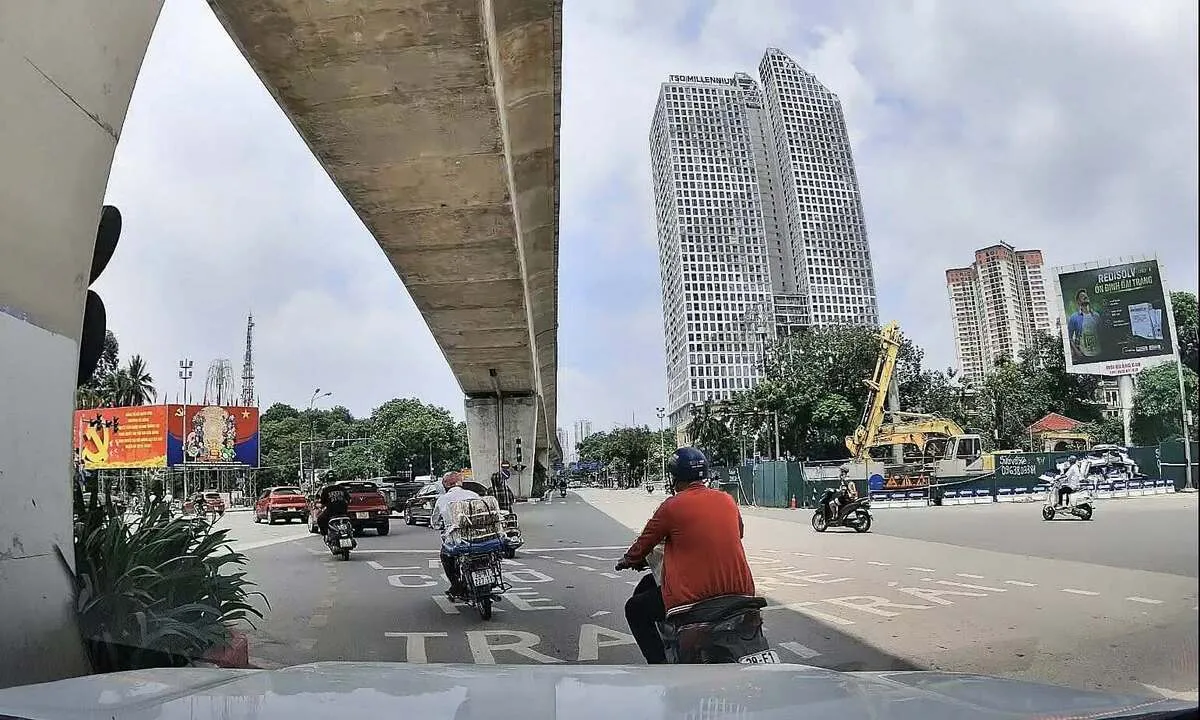 Có bị tính vượt đèn đỏ khi chờ ở làn rẽ trái không?
Khi đến ngã tư đèn đang đỏ, nhưng làn chờ rẽ trái vẽ nối tiếp lên phía trước, tôi có được vượt qua vạch. (Tuấn Anh)
-
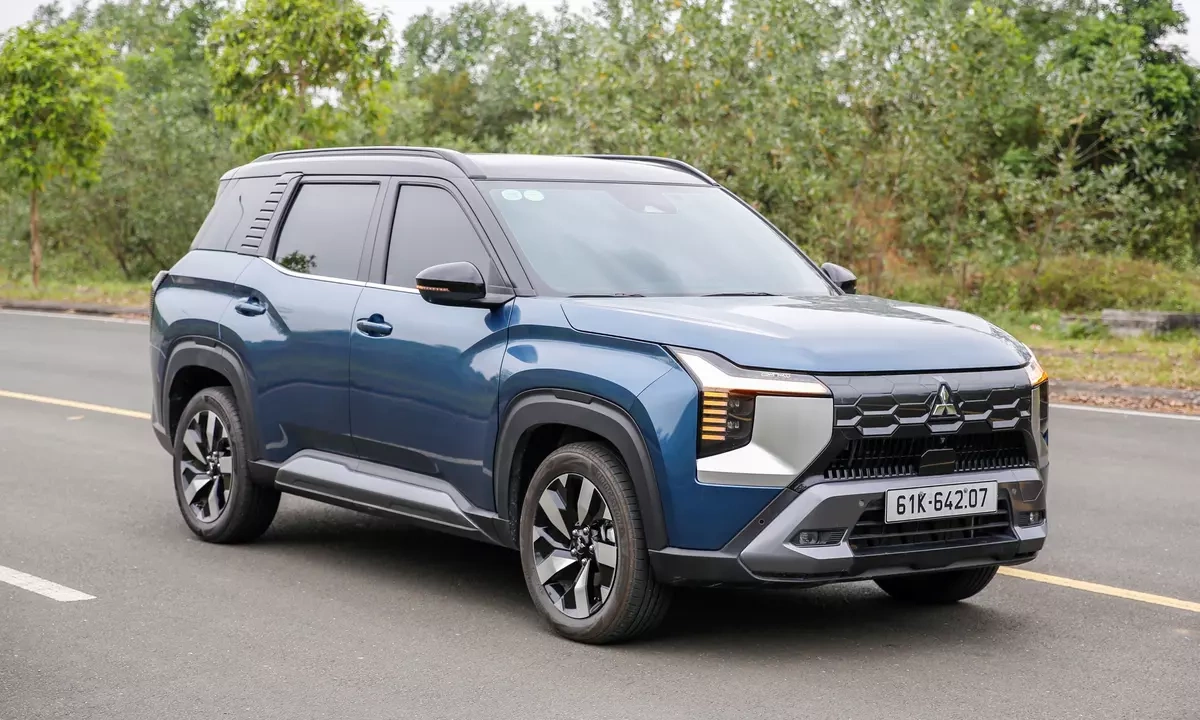 Những lựa chọn ôtô 7 chỗ cho gia đình đông con từ 1/7
Quy định bắt buộc lắp ghế trẻ em từ 1/7 khiến nhiều khách hàng có nhu cầu lựa chọn MPV hay SUV 7 chỗ thay vì xe 5 chỗ.
-
 Sếp Toyota: 'Một mẫu xe có quá nhiều phiên bản'
CEO Kenta Kon cho rằng Toyota đang tạo ra quá nhiều biến thể của cùng một sản phẩm nên một số mẫu có thể bị loại bỏ.
-
 Xe Toyota sẽ cắt giảm số lượng phiên bản
CEO Kenta Kon cho rằng Toyota đang tạo ra quá nhiều biến thể của cùng một sản phẩm nên một số mẫu có thể bị loại bỏ.
-
 Audi triệu hồi e-tron, Q8 e-tron nghi lỏng bàn đạp phanh
Tổng 9 xe nằm trong đợt triệu hồi có thời gian sản xuất từ 2/2/2018 đến 11/6/2024 được nhập khẩu và phân phối chính hãng tại Việt Nam.
-
 Xe con chuyển làn bị xe khách tông: ai sai?
Bật xi-nhan, xe con chuyển sang làn đường sát dải phân cách thì xe khách lao tới.
-
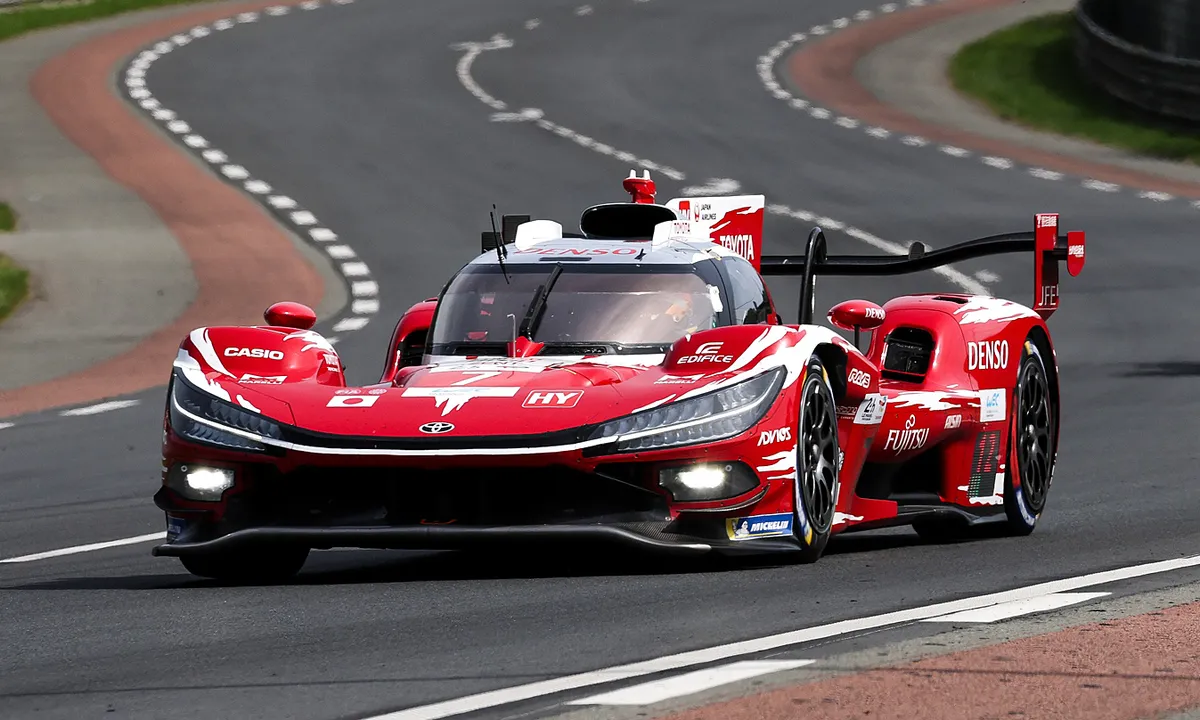 Toyota TR010 Hybrid - tinh hoa công nghệ của hãng xe Nhật
Mẫu xe đua hybrid sử dụng hàng loạt công nghệ vật liệu cùng động cơ hybrid để về đích nhanh nhất nhưng vẫn đảm bảo ổn định sau 24 giờ.
-
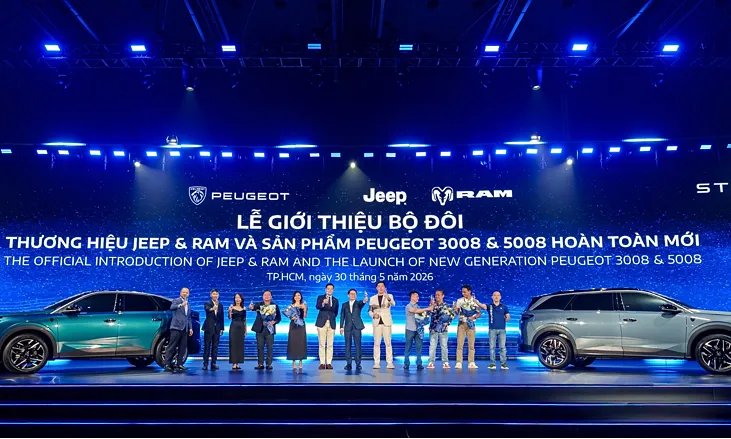 Thaco Auto và Stellantis mở rộng chiến lược đa thương hiệu
Sự kiện giới thiệu bộ đôi thương hiệu Jeep, Ram, hai dòng Peugeot 3008 và 5008 mới, xác lập cột mốc chiến lược trong quan hệ hợp tác Thaco Auto và Stellantis.
-
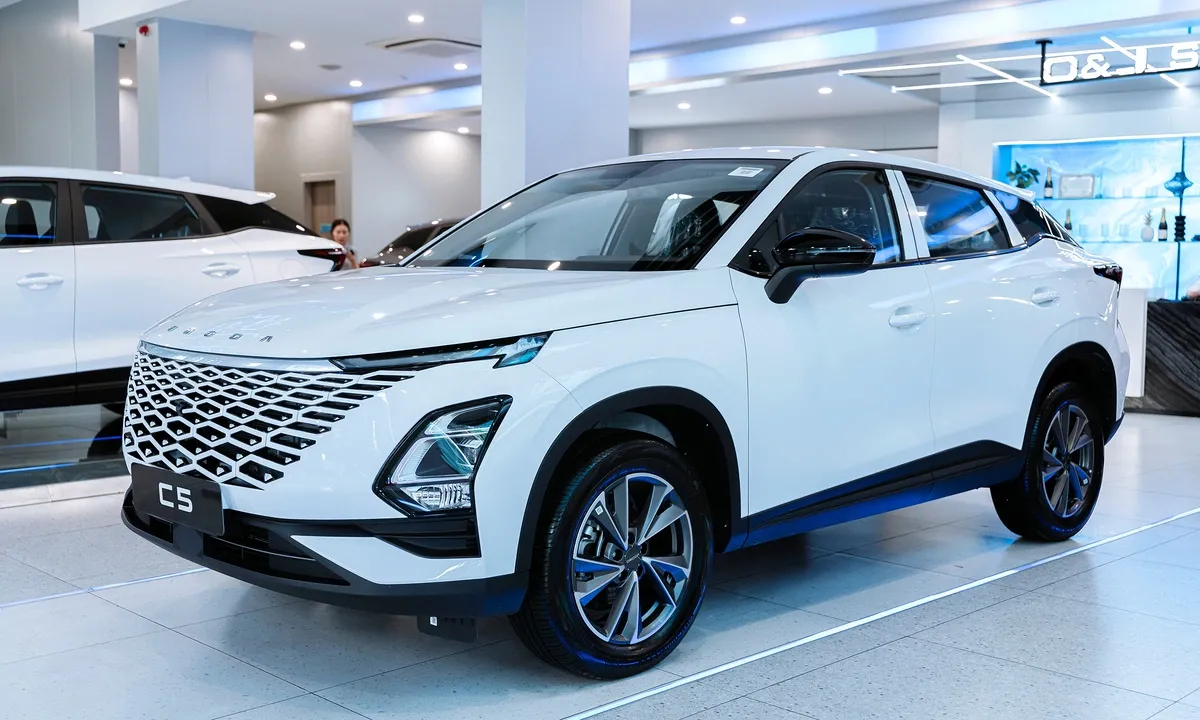 Omoda C5 thêm bản Sport giá 559 triệu đồng
Mẫu xe gầm cao cỡ B bổ sung lựa chọn cho khách hàng Việt, bản Sport mới trang bị nhiều tính năng.


