Pro-Palestine activists sentenced as terrorists over damage at Israeli arms factory in UK

By Haroon Siddique Legal affairs correspondent • June 13, 2026 • UK news
Four found guilty will face tougher conditions as judge says actions were ‘designed to intimidate the UK government and a section of the public’
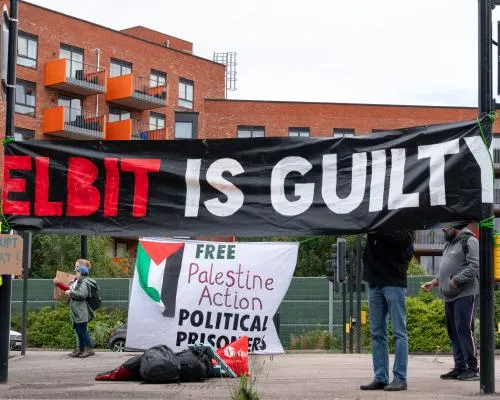
Four Palestine Action activists who smashed up drones and other equipment at an Israeli arms manufacturer’s UK factory will be sentenced as terrorists, a judge has ruled. Mr Justice Johnson made the ruling at a sentencing hearing on Friday for Samuel Corner, 23, Charlotte Head, 30, Leona Kamio, 30, and Fatema Rajwani, 21, who were all found guilty of criminal damage last month in relation to a 2024 break-in at the Elbit Systems UK site in Gloucestershire. Corner was also convicted of grievous bodily harm without intent for striking Sgt Kate Evans with a sledgehammer. A report relied on by the prosecution at Friday’s sentencing hearing said the raid on the factory had caused £1.2m of damage, including to 41 military assets. The report referred to £395,056 of damage to six units in an unnamed drone system as well as damage to other unmanned aerial vehicles. Announcing his finding of a “terrorist connection” under section 69 of the Sentencing Act, ahead of deciding on the sentences, Johnson said: “I am sure that each defendant’s offence of criminal damage involved serious damage to property, was designed to intimidate the UK government and a section of the public [Elbit employees and those of other businesses linked to Elbit] and was for the purpose of advancing a political or ideological cause.” He added that the fact that each acted out of conscience would be taken into account when imposting sentence. Representing Head, Rajiv Menon KC had told Johnson that it was unprecedented for the prosecution to apply for a judge to sentence a defendant as a terrorist for a non-violent offence. Menon said it was “an invitation to chilling, creeping authoritarianism that undermines the very fabric of our society”. In written arguments, Mira Hammad KC, representing Kamio, said the defendants had initially been arrested on suspicion of involvement in acts of terrorism but not charged with those offences “showing that a deliberate decision was taken not to submit the crown’s case [that there was terrorism] to the arbitrament of a jury …[therefore] the court should not allow the crown to use [section 69] as a vehicle for enhancing sentence in circumstances where it has determined that a conviction for the same offence by the jury is unlikely”. Tom Wainwright KC, representing Corner, said a terrorist connection finding against the defendants would also mean the suffragettes, the Greenham Common women and the Trident Ploughshares movement were terrorists. “It’s wrong for someone to be sentenced for a more serious offence of which they have not been convicted,” he added. The “terrorist connection” finding means the four will face harsher sentences, serve a greater proportion of their sentence in prison than normal and have to notify police for life about certain changes in their personal circumstances. Reading her witness statement, Evans, occasionally crying, said that Corner, who struck her while she was on all fours facing away from him, showed no remorse afterwards. “The overall impact of this incident has been profound and long-lasting,” she told the court. “It has affected my physical health, mental wellbeing, confidence, career, and family life. I am not the same person I was before this happened, I feel my personality has changed.” During the trial, Corner said he panicked after being pepper sprayed and acted to protect a co-defendant he believed was being seriously hurt. Approximately 500 protesters gathered outside Woolwich crown court in south-east London, including some holding placards that read “Saving lives is not terrorism. I support Palestine Action”. More than 70 people were arrested for allegedly supporting Palestine Action, which remains proscribed under the Terrorism Act pending the court of appeal’s judgment on Monday on the lawfulness of the ban.
Source: The Guardian
Uk News Feed
72 posts
-
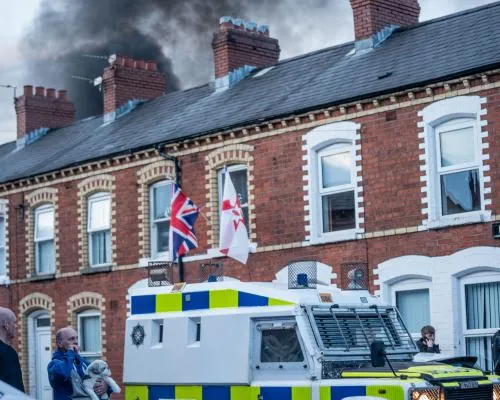 Belfast riots trigger renewed scrutiny over loyalist paramilitary influence
The violent disturbances in Northern Ireland occurred in a nationalist area yet played out against a backdrop of union jack flags
-
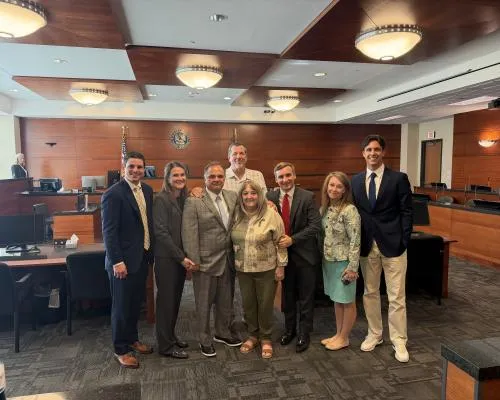 Louisiana jury awards $1.1bn to woman who sued over childhood molestation in 1960s
‘Lookback law’ allowed Pamela Lockridge to seek damages against late stepfather who abused her starting at age four
-
 Latest US release of UFO files reveals strange lights but few hard facts
New batch of previously classified government documents takes no position on origin of unidentified aerial phenomena (UAPs)
-
 Texas shooting leaves one person dead and nine others in hospital
Midland police reported that the suspected shooter was dead after a two-hour standoff
-
 Chaotic talks on a US-Iran deal continue on the Trump rollercoaster
Amid rhetoric, market uncertainty and tit-for-tit exchanges, the two sides are still trying to find a way out of the impasse
-
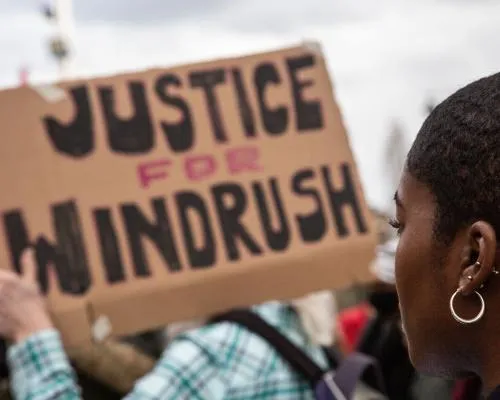 Remove Windrush payout scheme from Home Office control, campaigners urge
Public figures sign open letter calling for scheme to be moved from Home Office to independent body
-
 Thanh niên bị suy thận cấp vì tập gym quá đà
Sau khi tập thể dục với cường độ quá cao, nam thanh niên 23 tuổi không thể tiểu tiện, nhập viện trong tình trạng suy thận cấp và không thể đi lại.
-
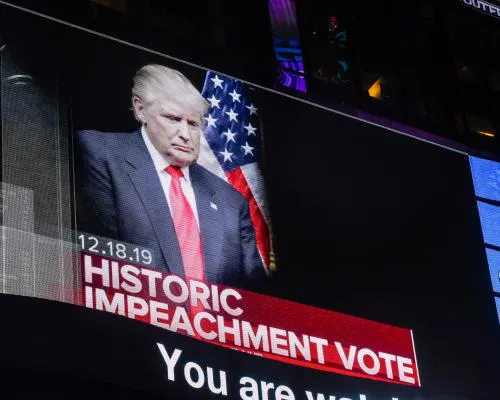 Trump asking Congress for symbolic expunging of his two impeachments
President is first in US history to be impeached twice, over abuse of power and inciting an insurrection
-
 Ấn Độ phản đối Mỹ sau loạt vụ tấn công tàu ở vùng Vịnh
New Delhi hai lần triệu tập phó trưởng phái đoàn ngoại giao Mỹ, sau khi các cuộc không kích của Mỹ đánh trúng 3 tàu có thủy thủ Ấn Độ.
-
 Mỹ - Iran đưa ra thông điệp mâu thuẫn về thỏa thuận tiềm năng
Iran tuyên bố dự thảo thỏa thuận đáp ứng phần lớn yêu cầu của nước này, trong khi Tổng thống Trump chỉ trích đó là thông tin sai sự thật.


