By Jack Snape • June 7, 2026 • Sport
A perfect storm has propelled the NRL towards an outcome few thought possible – and one which is likely to be felt beyond sport
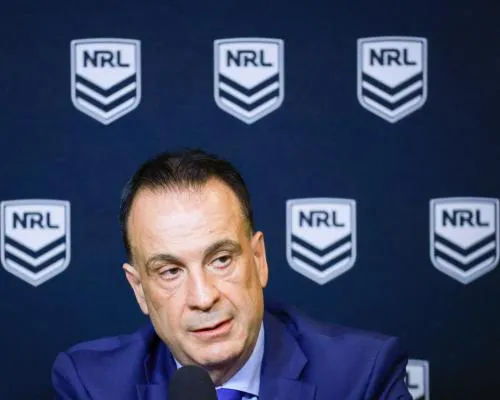
The outcome of NRL broadcast negotiations in the coming weeks will be a seismic moment in Australian TV history, as colourful rugby league administrator Peter V’landys threatens to end the reign of Foxtel over Australian sport or quell Nine Entertainment’s expansion as a major subscription player. For years observers have ridiculed the potential for the NRL to exceed the AFL’s $4.5bn deal struck in 2022. A perfect storm, however, has propelled the NRL towards an outcome few thought possible. V’landys and outgoing chief executive Andrew Abdo have been in meetings with broadcasters in recent weeks, and their decision will have wide-reaching ramifications. The NRL has emerged over the past 12 months with a claim to the country’s sporting throne. Last year’s grand final between Brisbane and Melbourne drew an average audience of almost 4.5m, the first time it eclipsed the AFL showpiece in a year since 2015. The first match of the men’s State of Origin attracted close to 4m, up 6% year on year, while the women’s series consistently draws around 1m viewers, figures that are the envy of women’s Australian rules. The AFL’s $4.5bn, seven-year deal with Seven and Foxtel – worth roughly $640m per year – was signed in 2022. As television advertising slumped, and the government finally looked set to crack down on gambling advertising, that AFL arrangement was seen by many as the high watermark for sports rights deals after years of growth. By comparison, the NRL’s current deal with Nine Entertainment and Foxtel – ending at the end of the 2027 season – is for around $400m per year. The growth of international streaming companies like Netflix was briefly seen as a way to keep the record spinning in what has been a decades-long sports broadcast bonanza. However, there has been a relative lack of interest in non-US, local competitions by major global players. Netflix has rights to some NFL and MLB matches, Apple has purchased Formula 1 in the US, MLB and MLS, and YouTube has an NFL arrangement. Amazon has had a few bites at Australia, but there seems to be little broader appetite for a market of barely 25m potential subscribers. Rights are only worth (slightly more than) what the second-highest bidder will pay for them. Whatever the ratings for a sport have been, and however attractive and free-flowing its play has become – although some of the NRL’s players and fans will have different opinions – rights negotiations need competition to drive up the price. From a pessimistic outlook as recently as a year ago, suddenly the NRL officials can be looking up. It’s less what they have achieved – although an expansion push towards 20 teams means more content to sell each week – and more about the two major bidders for the rights. And the outcome of the negotiations will be felt beyond sport. Foxtel was purchased by global streaming company DAZN last year in a deal valued at $3.4bn, as the emerging international player largely financed by Russian energy baron Len Blavatnik looked to mature into more of a cash-generating operation. Foxtel, as Australia’s major pay TV company – which has moved entirely from an install-a-cable operation to an over-the-internet one in recent years – has more than 4m Australian subscribers. Foxtel’s new owners, with seemingly deep pockets, won’t want to see their new investment lose one of its key properties so soon after the takeover. The other development is the emergence of Nine Entertainment-owned Stan as a legitimate player in Australian sport. Stan Sport first emerged in 2020 to coincide with the purchase of rugby union rights, and in recent years it has added tennis, combat sports, cycling, motorsport, Olympics and European football rights. Nine’s streaming service took over Optus Sport last year, securing Premier League rights, recognised alongside the NBA as the most popular international sports league for Australians. Former Foxtel executive Amanda Laing moved to Nine Entertainment last year to spearhead the network’s broadcast and streaming efforts. She knows the appeal of rugby league well, having served as an Australian Rugby League Commissioner for two years until 2020, and having benefited from the NRL rights directly during her six years at Foxtel and 14 months at Nine. Under Laing, Stan has become increasingly integrated with Nine, blurring the lines between free-to-air and pay TV. Stan Sport subscribers began seeing advertising last year, and on Wednesday the company announced a new ad-supported tier for general subscribers. This cross-spectrum offering would in theory meet the needs of the NRL, which wants a commitment of prime-time exposure by its free-to-air partner combined with billions in revenue provided by the subscription platform. (Foxtel’s financial contribution to the AFL’s deal is reportedly two-thirds of the total.) But the moves at Nine and Stan are being watched closely by the likes of Seven owner Southern Cross Media Group, which will be motivated to partner with Foxtel and act as a spoiler for Nine. If V’landys hands Nine Entertainment the full suite of NRL matches, the impact on Australian entertainment will be massive. The country’s highest-rating TV property would enjoy co-promotion across both the free-to-air channel and Stan, earning the Nine conglomerate the status of Australia’s first to consolidate major FTA and subscription offerings since the pay TV splintering of the 1990s. It would be costly – perhaps three times Nine Entertainment’s current market cap of $1.5bn – but such a deal would diversify the strained traditional TV operations, at the same time cutting Foxtel out of the NRL for the first time since the Super League war of the 1990s. If V’landys turns to Foxtel, in partnership with, say, Seven or Channel Ten, it would leave Nine without rugby league for the first time since the early 1990s, and without either of Australia’s major winter codes. Suddenly, one of the pillars of Australian TV would be on shaky ground. The stakes are high. So too will be the numbers on the cheques. And all will flow back to V’landys from a deal he has only the TV gods – and Abdo – to thank.
Source: The Guardian

Sports Update
298 posts
-
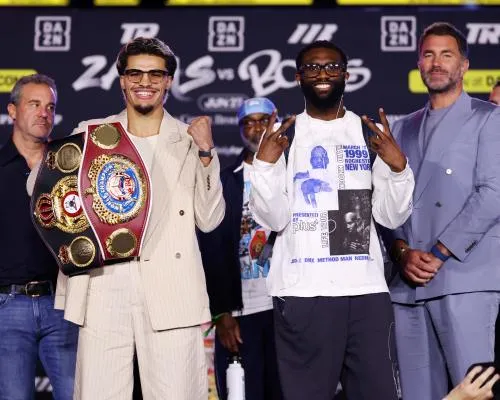 Jaron ‘Boots’ Ennis and Xander Zayas put promise to test in Brooklyn clash
Two of America’s brightest stars-in-waiting have been earmarked for greatness since adolescence. On Saturday, one will take a decisive step toward fulfilling that promise
-
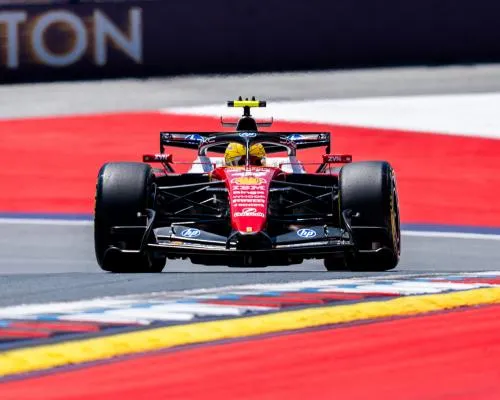 Lewis Hamilton and Ferrari on the march with Austria key to title hopes
Victory in Barcelona showed the Scuderia are improving and they are looking at another engine advance after the summer break
-
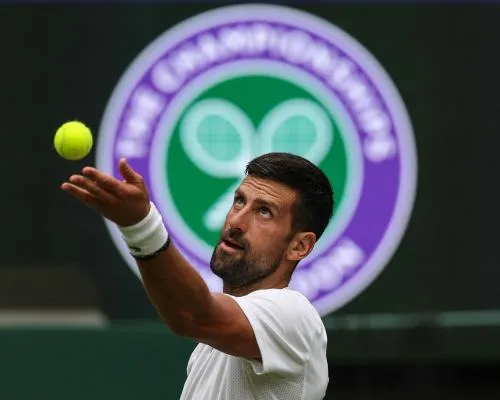 Wimbledon offers Novak Djokovic his last realistic shot at a 25th grand slam
Shorter points help the 39-year-old Novak Djokovic at SW19, where the reigning champion Jannik Sinner hopes to show his early French Open exit was a temporary blip
-
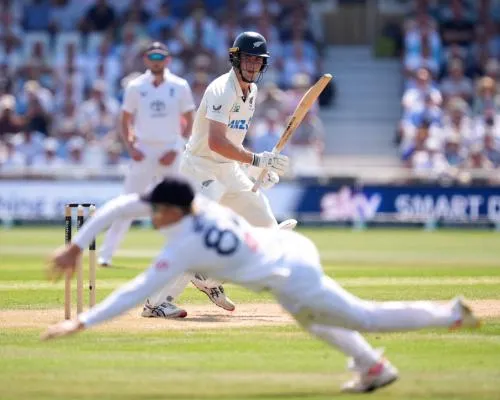 Nightwatcher O’Rourke plucks form with bat from thin air to frustrate England
The New Zealand bowler had 19 runs from his previous 23 Test innings but doubled his total in the first innings at Trent Bridge
-
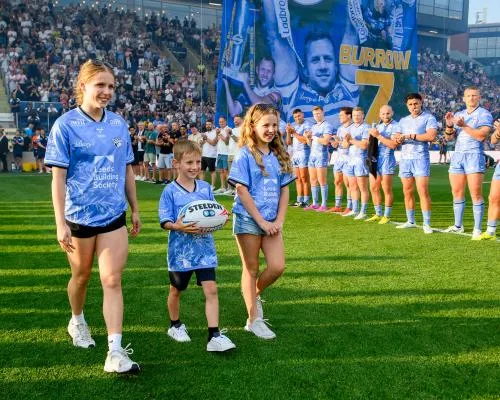 Leeds celebrate Rob Burrow and underline title credentials with rout of Hull KR
Two more tries from Maiko Sivo helped Leeds Rhinos thrash the champions, Hull KR, 38-8 on a night celebrating Rob Burrow
-
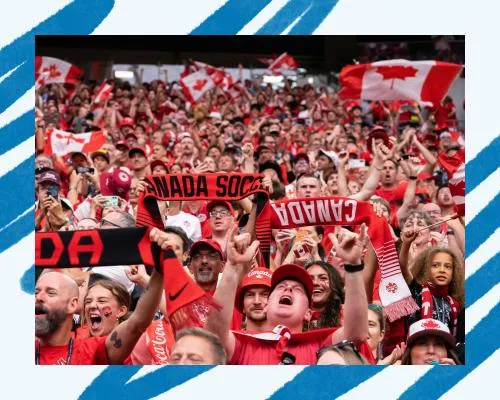 World Cup knockout stage begins, F1 in Austria and Women’s T20 World Cup drama – follow with us
Here’s how to follow along with our coverage – the finest writing and up-to-the-minute reports
-
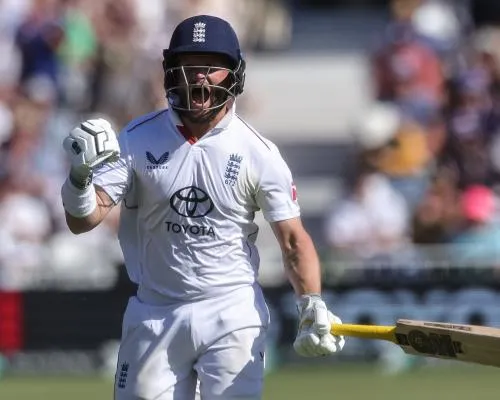 Ben Duckett says shedding pounds has helped him pile on runs for England
Ben Duckett has credited a four-week fitness regime after the winter for scoring his first England century for over a year against New Zealand
-
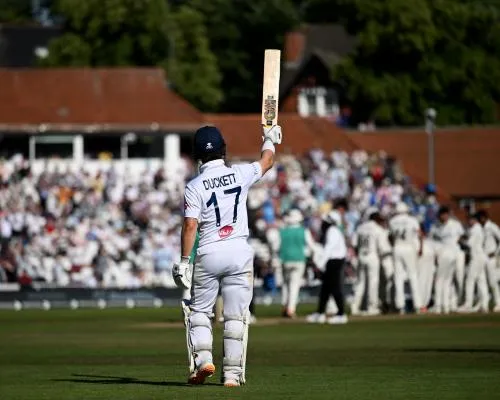 Nicholls’ drop defines the day as Duckett cashes in on luck to deliver for England
On an unforgiving Trent Bridge pitch where the runs flow like melted butter, every little mistake in the field is measured in centuries
-
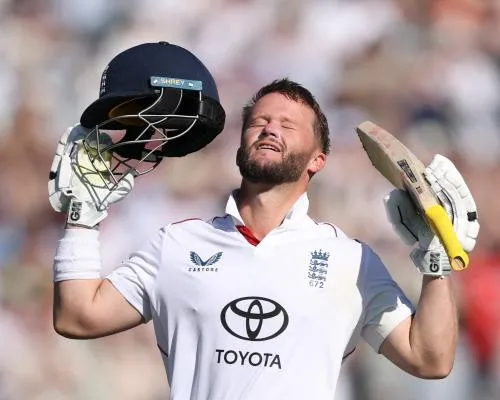 Stokes sparks England recovery as Duckett finds his groove against New Zealand
New Zealand were limited to 438 with Ben Stokes taking four wickets as Ben Duckett scored 113 with England reaching 223 for two on the second day
-
 Na Uy và Pháp chuẩn bị cho trận đấu quyết định
Na Uy và Pháp chuẩn bị cho trận đấu quyết định tại World Cup 2026
-
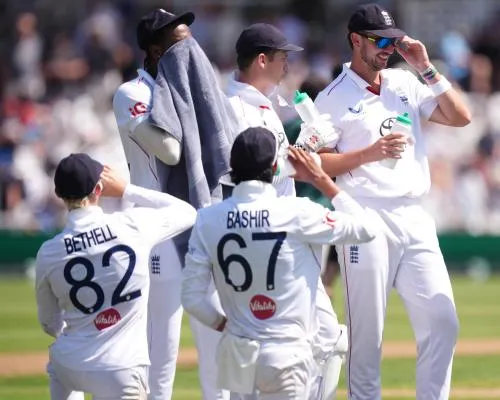 Hot stuff: players and fans have to adjust to sport’s new normal and sweat it out
The climate crisis is on show every day when sportspeople do their thing and the rest of us suffer on the sofa or in the stands


