Non-Woven Fabric Market Growth Driven by Healthcare and Personal Care Applications

Non Woven Fabric Market Introduction:
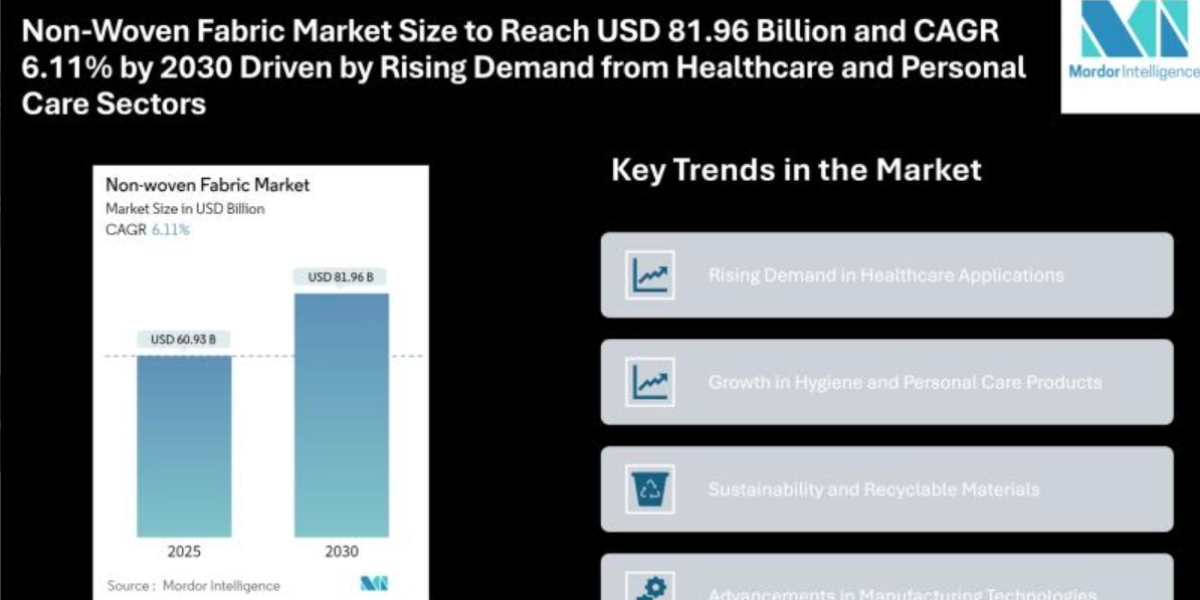
According to the Non‐Woven Fabric Market report by Mordor Intelligence, the market is forecast to grow steadily, reaching USD 81.96 billion by 2030, up from USD 57.21 billion in 2024, with a compound annual growth rate (CAGR) of 6.11% during the period from 2025 to 2030.
This steady rise in demand is being led by increased use of non-woven fabrics in healthcare-think surgical gowns, face masks, drapes, and wound care-as well as in personal care items like diapers and feminine hygiene products.
Additional contributions are coming from sectors like filtration and construction, where the fabric's versatility and cost advantages are particularly valuable. Innovations in manufacturing technologies-spunbond, meltblown, airlaid, and others-are also enabling higher quality, more efficient production, further boosting market momentum.
Non-Woven Fabric Market Key Trends
Rising Demand in Healthcare Applications
Non-woven fabrics are extensively used in medical textiles such as surgical gowns, face masks, drapes, and wound dressings due to their superior barrier properties, breathability, and cost-effectiveness. The COVID-19 pandemic significantly boosted demand, and the trend continues as healthcare infrastructure investments increase globally.
Growth in Hygiene and Personal Care Products
Products like baby diapers, adult incontinence items, and feminine hygiene products account for a large share of non-woven fabric consumption. The increasing global population, coupled with rising hygiene awareness in emerging markets, is driving this segment's growth.
Sustainability and Recyclable Materials
With growing environmental concerns, manufacturers are focusing on biodegradable and recyclable non-woven fabrics. Companies are investing in R&D for eco-friendly raw materials such as polylactic acid (PLA) and other bio-based polymers to meet regulatory and consumer expectations.
Advancements in Manufacturing Technologies
Technologies such as spunbond, meltblown, and airlaid processes are improving production efficiency, product uniformity, and customization for specific applications. Meltblown non-wovens, in particular, have gained importance due to their role in high-performance filtration media.
Construction and Geotextiles Demand
Non-woven fabrics are gaining traction in construction for roofing, insulation, and geotextiles applications. Their durability, water resistance, and thermal insulation properties make them ideal for infrastructure and road development projects.
Non-Woven Fabric Market Key Players
Berry Global Inc. - A leading producer focusing on healthcare and hygiene applications with innovations in spunbond and meltblown technologies.
Kimberly-Clark Corporation - Known for its strong presence in personal care products, leveraging advanced non-woven materials for hygiene applications.
Freudenberg Group - Provides a wide range of non-woven solutions for automotive, construction, and industrial applications.
DuPont de Nemours, Inc. - Offers specialty non-wovens under its Tyvek brand, catering to protective apparel, medical packaging, and construction markets.
Ahlstrom-Munksjö - Specializes in sustainable and high-performance fiber-based materials, with a focus on filtration and healthcare applications.
Gain a 360° perspective on the forces driving the future of the Non Woven Fabric Market. With our research-backed intelligence, you can identify new opportunities, make smarter decisions, and stay ahead in a rapidly evolving market.
About us:
With a team of over 550 domain experts and on-ground specialists spanning 150+ countries, Mordor Intelligence possesses a unique understanding of the global business landscape. This expertise translates into comprehensive syndicated and custom research reports covering a wide spectrum of industries, including aerospace & defense, agriculture, animal nutrition and wellness, automation, automotive, chemicals & materials, consumer goods & services, electronics, energy & power, financial services, food & beverages, healthcare, hospitality & tourism, information & communications technology, investment opportunities, and logistics.
Mordornews Research
11 posts
-
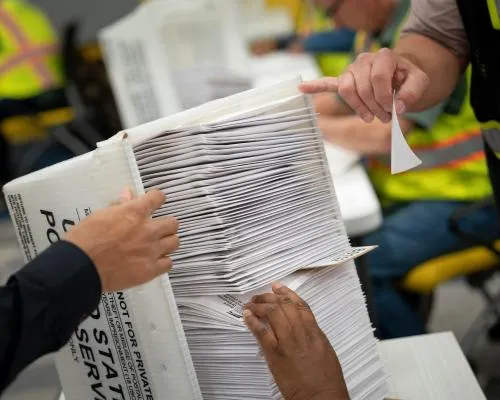 US judge blocks Trump administration’s bid to restrict mail-in voting
Ruling comes amid drive by Republican administration to reshape rules around voting ahead of midterms
-
 Động đất kép tại Venezuela: Tác động lớn và nỗ lực cứu trợ đa quốc gia
Venezuela hứng chịu hai trận động đất kép, số người chết tăng lên 164, nhiều quốc gia chuẩn bị cung cấp hỗ trợ.
-
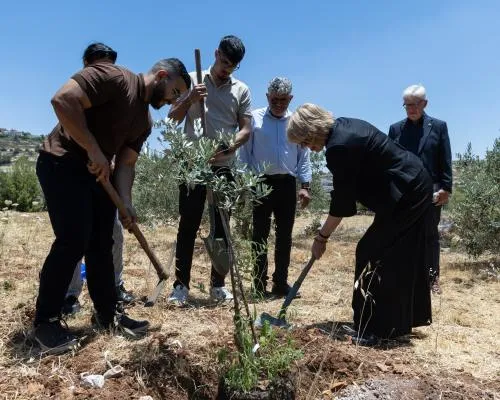 Archbishop of Canterbury calls for end to Israeli occupation of Palestine
Sarah Mullally ends visit to region with call for two-state solution that allows Israelis and Palestinians to live in peace
-
 Teenage boy found not guilty of murdering Aria Thorpe, nine, in Somerset
Jury clears 16-year-old of murder and manslaughter over the death of Aria, who died from a single stab wound
-
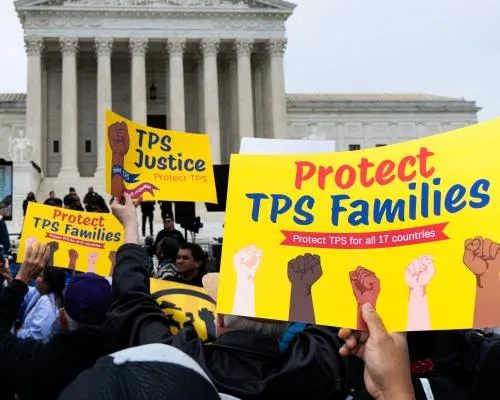 US supreme court allows Trump administration to strip Haitians and Syrians of protected status
Decision effects hundreds of thousands of people who have permission to live and work in the US because their home countries are unsafe
-
 Keito Nakamura: Cầu thủ Nhật Bản gây sốt mạng xã hội nhờ vẻ đẹp 'tài tử'
Keito Nakamura, cầu thủ bóng đá Nhật Bản, thu hút lượng lớn người hâm mộ nữ nhờ vẻ đẹp 'tài tử' và thành tích nổi bật tại World Cup 2025.
-
 Perpetrators of LGBTQ+ conversion practices could face prison and unlimited fines under new bill
Government draft bill to ban abusive practices in England and Wales hailed as ‘historic’ by campaigners
-
 Exotic hazard: golfers confront 3-metre-long boa constrictors on UK course
Pair of sick snakes discovered at club in County Durham presumed to have been dumped there by owner
-
 Tell us: were you born on 4 July?
We are looking to hear from people born on 4 July about what it means to share a birthday with the US when it turns 250 years old
-
 Tranh chấp biển Đông: Mỹ và Nhật Bản đối đầu với Trung Quốc
Tranh chấp giữa Nhật Bản và Trung Quốc ở eo biển Miyako cùng với đề xuất ngân sách mới từ Mỹ về chiến sự ở Iran cho thấy căng thẳng trong quan hệ quốc tế ngày càng tăng.
-
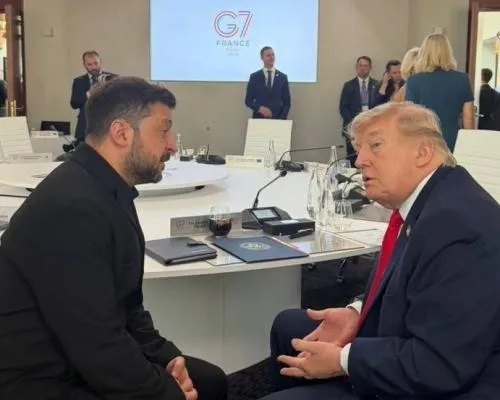 Ukraine war briefing: Zelenskyy doing ‘pretty well’ against Russia, declares Trump
Ukrainian president ‘holding his own’ in war, says US leader, as German chancellor flags ‘strong signal of support’ to Kyiv from European allies. What we know on day 1,583


