
It seems like it's best to avoid this without an IT degree, administrative experience, and a knowledge of every crypto acronym. In practice, things are different: a mining farm often becomes a small family affair, where adults and teenagers learn along the way, try things out, make mistakes, correct them, and, step by step, transform chaos into a comprehensible process. And in this process, not only the hardware is crucial, but also tools that make management simple and intuitive, like the hashcore toolkit, which makes even someone without a technical background feel more confident.
Why mining is suitable for family use
Mining is interesting because it combines several familiar realities. On the one hand, it's about technology: noisy devices, cables, temperature, settings. On the other, it's about very familiar everyday things: electricity costs, dividing up tasks within the family, organizing space, keeping quiet at night, and security concerns.
A family mining rig often grows out of curiosity and a desire to find an additional source of income. Someone saw a YouTube video, someone read articles, someone has long been interested in cryptocurrency and finally decides to give it a try. And then it becomes less of an IT project and more of a shared family affair: one person is responsible for researching information, another for organizing the electrical system and wiring, a third for tracking expenses and income, and the teenagers are eager to help with installation, monitoring, and basic setup.
This format allows for a gradual introduction to the topic without diving headfirst into complex technical details. What matters is not how much a person initially knows, but how willing they are to learn and try things out.
Minimum knowledge to get started
When we say that a family can get into mining without a specialized education, that doesn't mean no knowledge is needed. What's needed is a reasonable minimum, which can be mastered without universities or courses, simply by carefully reading instructions and communicating on relevant forums and chats.
First, basic electrical engineering. We need to understand the permissible electrical load, how to properly distribute outlets and circuit breakers, and why it's not advisable to connect everything through a single, cheap extension cord. This is about safety, fire risks, and simple peace of mind. Understanding wattage, amperage, and cable cross-section is possible in an evening if you approach it as an important element of a future profitable business.
Second, understanding the software interfaces. Most miner and pool control panels are laid out quite logically. They display the hashrate, temperature, errors, and connection status. If you're not afraid of the buttons and gradually read each label, you'll eventually understand what's what.
Third, accounting for expenses and income. Here, we need to learn how to calculate how many kilowatt-hours the farm consumes, how much it costs, how many coins a miner earns, and how the situation changes with exchange rate fluctuations. This is simple but regular accounting that can be done in a spreadsheet, on paper, or in a separate app.
How we learn as we go
Family mining has one big advantage: no one expects a perfect start. We don't have to know everything before turning on the device for the first time. We can work from simple to complex.
First, we learn the basics: how to turn on and configure the first ASIC, how to access its management page, how to connect it to the pool, and how to verify that it's actually working. At this point, it's incredibly helpful to keep a record of everything we do: logins, passwords, setup steps, and any errors.
Gradually, we begin to understand the nuances. We notice how room temperature affects operational stability. We realize that dust isn't a trivial matter, but a real enemy of equipment. We begin to distinguish normal noises from suspicious ones. We learn to respond to notifications, look at graphs, and spot anomalies.
If several people in the family are involved in the process, everyone is involved in training. Some read forums and find life hacks, some monitor airflow during cooling, and still others are responsible for financial calculations. This is where the true "small family business" is born, where everyone contributes.
Expense accounting as a foundation of common sense
Sometimes it seems like mining is a "set it and forget it, the money just rolls in" proposition. In reality, it's much more down-to-earth. We pay for electricity, equipment wears out, and cryptocurrency prices don't always rise.
Therefore, tracking expenses isn't a boring formality, but a key tool that prevents a hobby from turning into a pointless waste of money. We calculate how many kilowatts are consumed per day or month, multiply it by the tariff, and get the actual cost of energy. We compare it with mining income for the same period. We look at the payback of equipment not in mythical "months according to someone else's calculator," but in the real figures of our apartment, our tariff, and our devices.
This approach is especially useful within a family: everyone sees transparent figures, no one lives under any illusions, and decisions become well-founded. If projects are over budget, it becomes clear upfront, not when huge electricity bills arrive.
Tools that make a farm owner's life easier
People without technical training are often intimidated not by the devices themselves, but by the interfaces, graphs, terminology, and sheer volume of information. Here, tools that can "translate" technical language into simple visual language—color indicators, clear graphs, and understandable statuses—come to the fore.
When we use a user-friendly control panel, monitoring ceases to be a tedious process of digging through settings. We no longer scroll through dozens of browser tabs or try to remember which miner's IP address is which. Instead, we see all our devices in a single window, along with their status, temperature, hashrate, and potential errors. Technically, this is still a complex task, but in our minds, it all boils down to the principle of a traffic light: green means good, red means a problem worth addressing.
This is where solutions like the hashcore toolkit come in handy. They allow you to see your entire farm, like a map, rather than as a collection of disparate links and tables. For someone unfamiliar with specialized jargon and command lines, this is a huge advantage. Crucially, we can not only monitor but also manage: change settings, switch modes, respond to overheating, and notice hashrate drops. All this reduces anxiety and makes mining less "scary" and more understandable.
Safety as the first responsibility
A family business always requires responsibility. In mining, safety is a key responsibility. We deal with high grid loads, noise, heat, and dust.
We install a dedicated circuit breaker or carefully design an existing one, select high-quality circuit breakers, and install proper outlets rather than dubious tee-plugs. We ensure that flammable materials are kept away from hot devices. We also consider ventilation and heat dissipation.
Such decisions don't require specialized education, but they do require attentiveness and a willingness to avoid cutting corners on anything directly related to risk. And the family format is ideal for this: there's always someone to check, notice, ask, and suggest a safer option.
Over time, you develop the habit of regularly visually inspecting equipment, paying attention to odors, sounds, and temperatures. This isn't complex engineering, but common sense backed by discipline.
The Psychology of Family Mining
Beyond the technical and financial aspects, mining as a family business also touches on the psychological side. It's a collaborative project that unites around a goal. Someone is responsible for the knowledge, someone for the hands-on work, and someone else for the numbers and strategy.
We learn to discuss, debate on the merits, and test ideas in practice. Adults set an example for children: if we don't know something, it's not a reason to give up; it's a reason to open a manual, watch a video, or ask a question on a forum. Instead of the phrase "it's too complicated," the phrase "let's figure it out" is born.
It's a kind of school for independence. Mining in this format is no longer just a way to earn money, but a platform for developing critical thinking, responsibility, and the ability to process information.
Is it possible to manage a farm without a technical education?
If by "management" we mean deep firmware optimization, manual protocol configuration, and development of custom solutions, then without a solid background it will indeed be difficult. But if we're talking about a real-life family scenario, where the main task is to safely launch equipment, monitor it, promptly respond to problems, and understand the economics of the process, a specialized technical education no longer seems mandatory.
We require a basic set of practical and technical skills that are acquired as the project develops. We benefit from modern software that translates complex metrics into clear graphs and user-friendly dashboards. We also benefit from an open community that shares experiences and answers to common questions.
As a result, we come to a simple conclusion: a mining farm can be not only the preserve of IT specialists, but also a genuine family endeavor, if you take it seriously, count, learn, and aren't afraid of technology. Tools like the hashcore toolkit and similar solutions remove the barrier to entry and transform a complex process into something manageable, while the family gains not only potential income but also valuable shared experience working with the modern digital reality.

alex snowy
6 posts
-
 Capital gains tax changes are already having an impact on wealth inequality – and vested interests are running scared
Weekend house auction results and the official taxation data reveal the arguments from outraged conservatives are hollow
-
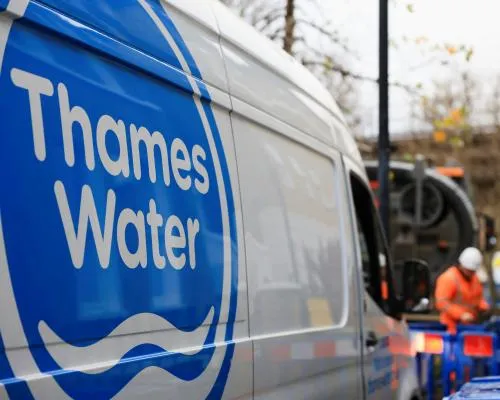 BT pension scheme lost £300m on Thames Water stake
Loss came after decision to write off 8.7% equity stake in water company moving closer towards nationalisation
-
 Bedford train crash occurred after train passed red signal and was not stopped, investigators believe
Interim report says other train it hit had halted on line because warning system wrongly caused it to brake
-
 UK warehouse landlord Segro rejects £12.6bn takeover offer from US rival
FTSE 100 firm says Prologis all-share proposal turned down as it falls long way short of its own views on value
-
 Heatwave pushes Great Britain’s grid operator to call for extra electricity from power plants
Neso issues rare summer warning for Wednesday evening, as households turn on fans and air conditioning
-
 Former WH Smith’s small suppliers to lose at least half of debts in rescue plan
If TG Jones’s aggressive restructuring is voted through, the charity Help for Heroes and other creditors will be out of pocket
-
 Elon Musk’s trillionaire status at risk after drops in SpaceX and Tesla’s shares – business live
Rolling coverage of the latest economic and financial news
-
 Card payments outage hits pubs and shops during England match
Customers report having to use cash at stores such as Tesco and to buy drinks due to outage at payments processor WorldPay
-
 Adidas, Uniqlo and Calvin Klein ads banned over ‘recycled’ clothing claims
UK regulator has increased its scrutiny of fashion retailers over potentially misleading environmental statements
-
 Electricity prices jump in Europe as demand soars in the heatwave
Great Britain has paid at least six times the normal price for imported power as millions turn on air conditioning and windfarm output sags
-
 US AI stock sell-off shakes markets from Wall Street to Asia
Losses spread globally as investors questioned soaring valuations and spending on AI infrastructure


