‘It’s massive destruction’: outcry in Texas over waivers to allow border wall in Big Bend national park

By Roque Planas • June 12, 2026 • US news
Despite plunging border crossings, Trump administration is circumventing laws to expedite building in a vast, pristine wilderness
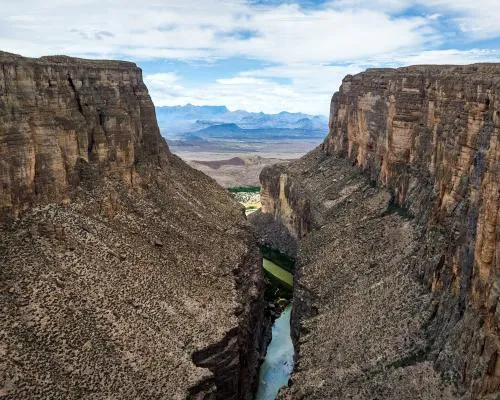
The Trump administration has waived a slew of environmental and historical preservation laws that would allow it to build a towering border wall that cuts through Big Bend national park, a vast protected wilderness in south Texas. Congress poured a whopping $46.5bn for border wall construction into the “Big, Beautiful” bill last year, supercharging Donald Trump’s ambition to wall off the southern border with Mexico. The longest unwalled stretches lie along a roughly 500-mile (800km) section of west Texas that Customs and Border Protection calls the “Big Bend sector”. That corridor includes some of the largest chunks of protected land in a state that is 95% privately owned, including Big Bend national park, Big Bend Ranch state park and Black Gap wildlife management area. The prospect of marring those landscapes in the name of border security at a time of plummeting unauthorized immigrant crossings has drawn fierce backlash from a bipartisan group of local leaders and protest from public land users. The notion of walling off Big Bend national park has sparked the most fury. The 800,000-acre (325,000-hectare) expanse of Chihuahuan desert punctuated by the Chisos mountain range draws half-a-million visitors annually to hike, camp, stargaze and float the Rio Grande. For months, CBP has sent mixed signals about its intentions for Big Bend national park, while limiting its comments about its plans to vague and infrequent statements. CBP updated an interactive map on its website in February to indicate that the agency planned to erect a steel bollard wall along the park’s river frontage, sparking an outcry from public land advocates, local business owners and elected officials. CBP later changed the map to show that it only intended to use detection technology along the length of the park’s border. The current iteration shows that the agency plans to build new roads along the length of the park’s southern border, along with four separate 4-6ft-tall barriers intended to stop incoming vehicles. CBP officials have rarely discussed their plans for the wall publicly. The park’s advocates worry that an opaque agency with a massive war chest could still wreak severe damage on the most beloved park in Texas. The waiver that the Department of Homeland Security (DHS) published on Tuesday in the Federal Register empowers CBP to build seemingly whatever security infrastructure it wants in the park – from 30ft steel bollard fencing to unpaved roads. The waiver casts aside protections outlined in major laws including the National Environmental Policy Act, the Endangered Species Act, the Clean Water Act, the Native American Graves Protection and Repatriation Act and many others. The Big Bend area is home to several endangered species, a struggling population of bighorn sheep and a large concentration of Native rock art and petroglyphs. The US representative Lloyd Doggett, a Texas Democrat, criticised the move as ludicrous in a region where illegal border crossings are already rare. “Billions of taxpayer dollars are being wasted on this unnecessary project, as Big Bend’s rugged mountains make illegal crossings nearly impossible, with crossings in the area accounting for under half a percentage point of all illegal border crossings nationwide last year,” Doggett said in a statement. Vehicle barriers and surveillance The only infrastructure project formally proposed within the park itself so far is a 17-mile, non-contiguous “vehicle barrier system” in four separate locations, composed of steel rails and posts measuring 4-6ft tall, along with 205 miles of roads up to 24ft wide equipped with detection technology. The project also envisions the erection of utility poles, lighting and surveillance cameras. Two of the proposed vehicle barriers are located in the middle of the park’s river frontage, along with one on each end. The vehicle barriers are enough to dramatically alter an otherwise wild landscape, according to Bob Krumenaker, former Big Bend national park superintendent. “It’s massive impact, massive destruction,” said Krumenaker, who now heads a nonpartisan advocacy group called Keep Big Bend Wild. “You’re looking at some of the most remote parts of a remote national park.” DHS has signed off on border wall-related waivers for other federally protected lands in the past, including Organ Pipe Cactus national monument, Buenos Aires national wildlife refuge and Coronado national memorial, all in Arizona. But Tuesday’s waivers marks the first time the agency has used that authority to install border security infrastructure in a national park, Krumenaker said. Like many other public land advocates, Krumenaker is concerned that CBP’s infrastructure development won’t stop with the vehicle barriers. Though he viewed a 30ft steel bollard wall as an unlikely “worst-case scenario”, the waiver’s broad authority makes it possible for the agency to add virtually any security infrastructure it wants in an area prized for its scenic beauty and wildness. “Waiving the law undermines all credibility and makes them completely unaccountable to anyone,” Krumenaker said. “They don’t care about the impact on the environment. If they have, say, a fuel spill, they’re not subject to any laws – they’ve just waived the Clean Water Act and the Clean Air Act.” “Their words, whether intended to be truthful or not, mean nothing,” he added. In a statement, a CBP spokesperson said its border security infrastructure plans in “the areas adjacent to the Big Bend National Park and State Park are still in the planning stages, while CBP focuses on other higher priority locations”. “CBP continues to coordinate with the National Park Service, Texas Parks and Wildlife Department, and other federal and state agencies, throughout the planning of border barrier and technology deployments, in order to achieve Border Patrol’s operational priorities,” the statement said. Border crossings remain low The Big Bend sector of west Texas contains some of the longest stretch of terrain on the US-Mexico border that remain untouched by significant border wall and fencing. It is also one of the most remote, with steep cliffs and vast stretches of Chihuahuan desert on both sides of the border that make it unattractive as a crossing point. DHS justified the waiver as an emergency measure necessary to contain illegal crossings in the area. But the area was always among the least-trafficked corridors of the southern border, and unauthorized immigrant crossings have plummeted since Trump re-took office in 2025. His administration has largely dismantled humanitarian protections that allowed some immigrants to gain entrance to the United States, while the Republican-backed Congress has heaped tens of billions of new dollars into border security and mass deportation. Within Big Bend national park itself, border patrol made only 100 arrests in 2023, and 125 in 2024, according to data obtained by Krumenaker and shared with Public Domain. Those numbers likely continued to drop last year, after Trump took office and unauthorized crossings plummeted. CBP commissioner Rodney Scott told the Washington Examiner last month that it would be “kind of silly to put like a 30-foot border wall on top of a 90-foot granite cliff”. Big Bend national park’s scenic Santa Elena canyon cliffs, which are composed of limestone, in fact reach heights of 1,500ft. Democrats in Congress have attempted to block DHS from using its funds from the “Big, Beautiful” bill to build barriers through Big Bend national park. But the measure, proposed by the representative Henry Cuellar of Texas, failed in an appropriations committee vote on Tuesday in the face of Republican opposition, according to the Texas Tribune. The waiver has already prompted a legal challenge. The Friends of the Ruidosa Church, river guide Billy Miller and the Center for Biological Diversity updated an existing lawsuit on Thursday that challenges DHS border wall-related waivers of environmental laws in the Big Bend sector, arguing that they violate due process and other constitutional rights “This is an attack on the integrity of the National Park Service itself,” said Laiken Jordahl, a national public lands advocate with the Center for Biological Diversity. “They have never waived these laws on a national park itself. If they’re willing to do this in a national park, where virtually no one is crossing the border, where won’t they?” The story is co-published with Public Domain, an investigative newsroom co-founded by Roque Planas that covers public lands, wildlife and government
Source: The Guardian
World News Today
115 posts
-
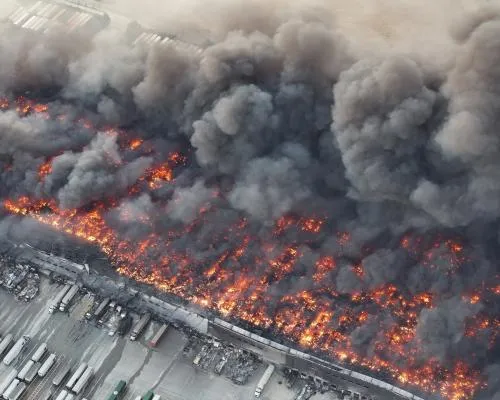 Fire at California warehouse complex prompts evacuations as authorities fight blaze
No injuries reported as fire in Tracy destroys medical equipment warehouse and authorities investigate cause
-
 Tornadoes rip through central US while extreme heat and humidity creep into the north-east
One man died in Iowa after a tree fell on him as nearly 700 severe weather events were recorded over three days
-
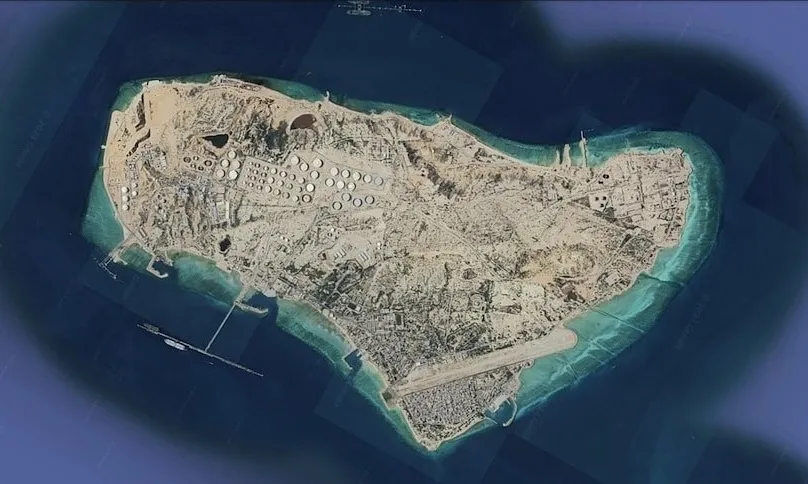 Giá trị chiến lược khiến đảo Kharg lọt tầm ngắm của ông Trump
Kiểm soát đảo Kharg có thể giúp Mỹ bóp nghẹt kinh tế Iran và thay đổi cục diện xung đột, nhưng kịch bản này cũng tiềm ẩn nhiều rủi ro cho Washington.
-
 France accuses Israeli firm of interfering in Scottish elections and targeting SNP
Cyber agency says BlackCore targeted John Swinney, as well as interfering in New York and French elections
-
 Nhóm tin tặc dọa nhắm vào World Cup
Nhóm tin tặc Handala tuyên bố đã xâm nhập máy bay không người lái của FBI và dọa nhắm mục tiêu vào giải đấu World Cup.
-
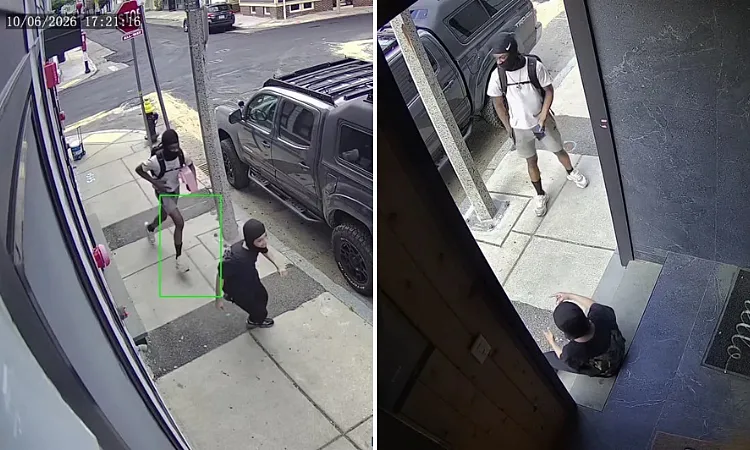 Boston rúng động vì vụ nhóm trẻ bán nước chanh bị cướp tiền
Hai nghi phạm dùng súng cướp tiền của nhóm trẻ bán nước chanh gần nhà, khiến dư luận Boston rúng động và cảnh sát vào cuộc điều tra.
-
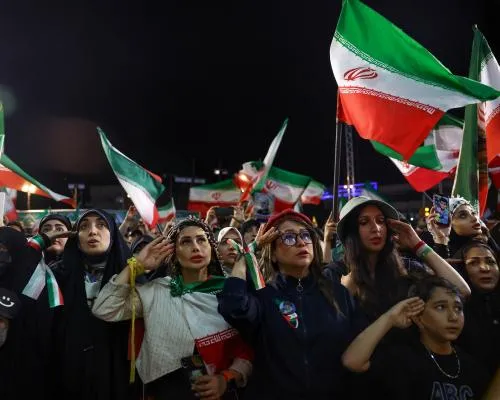 Iran to become first World Cup team to play in country with which it is at war
Belligerent backdrop to tournament tests Fifa’s ‘football unites the world’ slogan
-
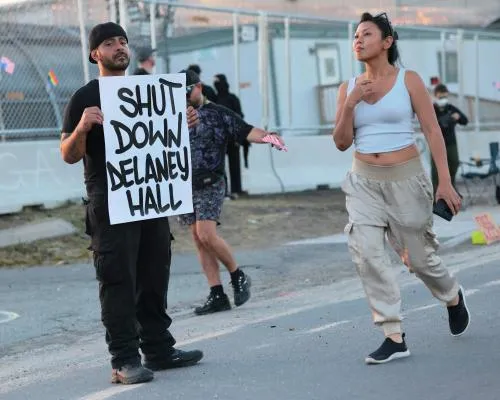 Women held at much-denounced Ice detention camp sign on to hunger strike
Nearly 40 women detained at Delaney Hall join striking men and outline demands ‘rooted in basic human rights’
-
 Trung Quốc bắt công dân Mỹ với cáo buộc gián điệp
U Min Zin, công dân Mỹ đứng đầu tổ chức nghiên cứu về Myanmar, bị bắt với cáo buộc hoạt động gián điệp và gây nguy hiểm cho Trung Quốc.
-
 Has the US really carried out a secret mission to get oil through Hormuz?
Trump says hundreds of tankers have escaped Iran’s blockade. Data suggests shipments are increasing but many questions remain


