By Raphael Rashid in Seoul • June 6, 2026 • World news
A botched tumbler promotion on the anniversary of a pro-democracy massacre unleashed a boycott, police investigation and political firestorm
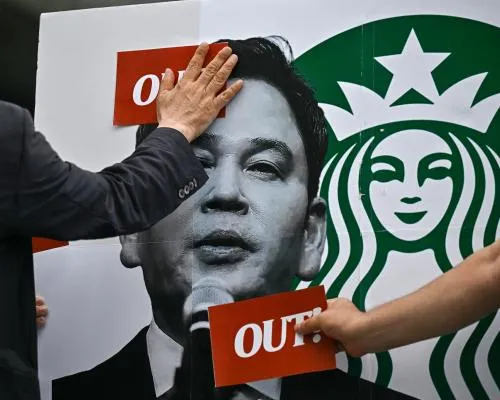
It was a PR nightmare: customers smashing Starbucks branded tumblers and mugs as fans deleted loyalty apps and cashed out prepaid balances. Amid the uproar, government ministries cut ties with the coffee chain and apology notices were pasted on Starbucks stores across South Korea. The initial shock may have passed, but the anger remains. Hours after launching a marketing campaign called “Tank Day” for its new “Tank” coffee tumbler range on 18 May, Starbucks Korea found itself at the centre of a cultural storm that would force a billionaire chairman to apologise on national television, and see a chief executive sacked. The controversy reverberated all the way to the South Korean president’s office. Starbucks’ Tank Series tumblers and discount campaign was designed to promote “spacious volume” for bigger coffees. But the specific date of the promotion’s launch, and its imagery and wording, reopened the painful wounds of a 46-year-old massacre in South Korea and dictatorship-era torture scandal. Starbucks cancelled the promotion hours after it launched, and its CEO, Son Jeong-hyun, was fired that same day. But it was too late. The anger had already spread, with videos of people smashing the Starbucks mugs and tumblers circulated on social media. Protests were held outside stores and people were incensed Starbucks had launched a tumbler called “tank” on 18 May, and that the coffee chain was declaring it “Tank Day”. Known locally as 5/18, the 18th of May is the anniversary of a 1980 massacre in Gwangju. Over 10 violent days, paratroopers crushed pro-democracy protests against military strongman Chun Doo-hwan. Victims’ groups say hundreds were killed. There was also a problem with a slogan the Starbuck campaign used: “thwack on the desk”. It echoed a notorious cover story used by police after the 1987 torture death of student activist Park Jong-chul. Authorities at the time initially claimed Park died because an officer had used his fist to “hit the desk with a thwack”. Marketers chose the slogan after consulting an AI tool, looking for suggestions, Shinsegae Group said. It turned out some managers who approved the campaign never opened the email attachments showing the marketing material. In a statement issued before his dismissal, Son apologised and pledged company-wide education on historical awareness and ethics. On 19 May, Chung Yong-jin, the billionaire chair of Shinsegae Group, swiftly issued a written apology. Chung’s Shinsegae Group is the parent company behind Starbucks Korea, operating the chain under licence from the Starbucks Corporation. But that failed to quell the outrage. Starbucks is especially popular in South Korea, its third-largest market globally, with more than 2,100 stores nationwide. Following the controversy, card payment volumes at Starbucks stores plunged 26% in a week, according to market data, with May card payments down 10% on the previous month. And customers began demanding refunds from an estimated 400bn won ($260m) held in Starbucks prepaid cards. The musical actor Jung Min-chan stepped down from his production after posting a photograph of himself inside a Starbucks drew public backlash. In attempt to stem the rising anger, Chung issued another apology, on 26 May, this time bowing three times at a televised press conference. “I take it very seriously the fact that many people felt deep pain and anger because of Starbucks Korea’s inappropriate marketing campaign,” he said. Bereaved families and 5/18 organisations rejected Chung’s apology. Park Jong-chul’s elder brother wrote to police, demanding Chung and the former CEO, Son, be charged for insulting the memory of victims. Chung and Son have since been booked as criminal suspects by police. Cho Youngho, a political scientist at Sogang University, says attitudes towards the Gwangju Uprising mirrored the deepest divisions in South Korean society. “For people who supported democratisation in the 1980s and 1990s, now in their forties and fifties, the idea of commercialising, mocking or trivialising 5/18 is simply unacceptable.” The controversy has also turned political. Government agencies stopped ordering Starbucks gift cards and the defence ministry suspended a partnership with the chain. The Democratic party’s leader, Jung Chung-rae, wanted Chung to kneel before the nation in atonement. It did not take long before reverberations reached South Korea’s president Lee Jae Myung, who condemned those responsible as “low-class peddlers”. He raised the prospect of shutting down Ilbe, a far-right online community, similar to 4chan, where mocking of Gwangju victims is common. Far-right groups have kept alive a decades-old, discredited state narrative that the Gwangju protesters were North Korean sympathisers, a claim the supreme court in February ruled was defamatory. Those debates have acquired renewed urgency since Yoon Suk Yeol’s failed declaration of martial law in 2024, which revived public discussion of authoritarianism and state violence. Shinsegae’s investigation found no evidence the Starbucks campaign was deliberate, and Starbucks Korea asked customers to refrain from directing their anger at frontline shop staff. Starbucks Corporation, headquartered in Seattle, which licenses the brand but holds no equity in the Korean operation, said it was “deeply sorry for an unacceptable marketing incident.” “While unintentional, this should never have happened. We recognize the deep pain and offense this has caused, particularly to those who honor the victims, their families, and all who contributed to Korea’s democratization,” it said in a statement. The company said it was reviewing internal review standards and training to ensure the incident was not repeated. “We sincerely apologize to the people of Gwangju, to those impacted by this tragedy, and to our customers and communities.” Prof Cho, who has studied the national struggle over 5/18, said the public reaction reflected more than a marketing failure. “Companies today are expected to respect human dignity and social norms,” he said, adding that the controversy was unlikely to fade soon.
Source: The Guardian

Guardian News World
9 posts
-
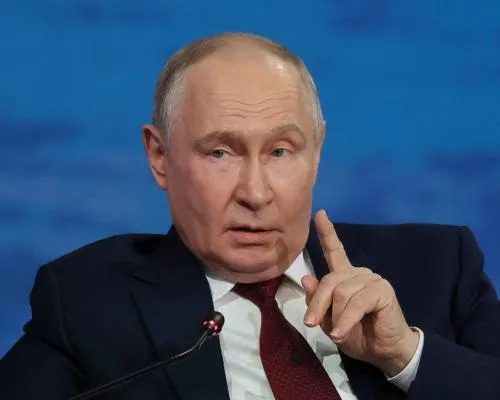 Putin rejects Zelenskyy’s offer to meet and reaffirms Ukraine war aims
Russian president describes Ukrainian counterpart’s letter as rude and says he sees no point in face-to-face talks
-
 EuroMillions winner dies after suspected hit-and-run in Essex
Eighteen-year-old man arrested after car collides with cyclist Anthony Canty, who died in hospital four days later
-
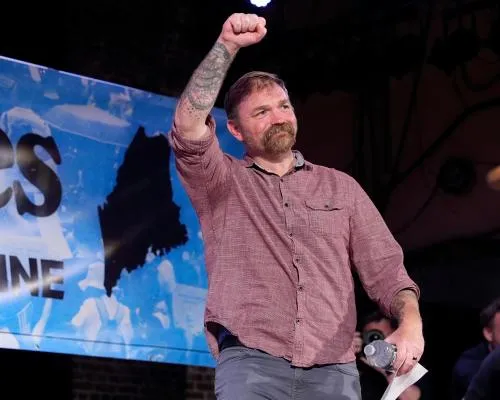 Despite new allegations, Maine’s Platner predicts voters will send him to Senate
Democrat denies reports of physical intimidation towards women, saying his past has been ‘weaponized’
-
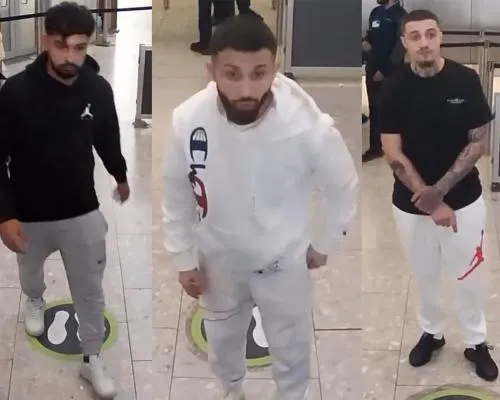 Two men convicted of wounding journalist in London ‘on orders of Iran’
Pouria Zeraati of Iran International TV was stabbed three times outside his London home in attempt to ‘silence’ him
-
 ‘How do we know you won’t be the next John Fetterman?’: bruised Democrats weigh how to win back voters
The party may reclaim the US House and even Senate, but primary candidates are far from united on how to move forward
-
 Người chú 'siêu thiên tài' của ông Trump
Vượt xa lời ca ngợi của cháu trai Donald Trump, John Trump thực sự là siêu thiên tài với những đóng góp quan trọng cho ngành khoa học và quân sự Mỹ.
-
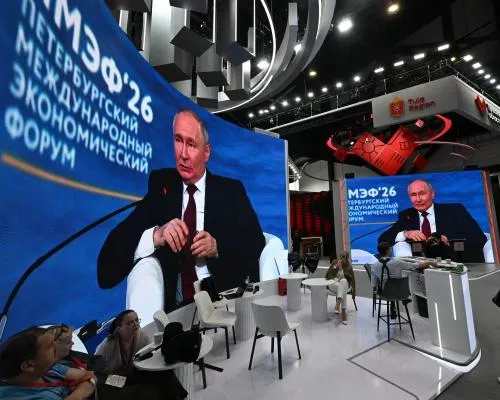 Ukraine war briefing: Putin says ‘no point’ meeting Zelenskyy, insists Russia will win the war
Putin’s rejection of Zelenskyy’s offer comes as Russian attacks killed five people in Kherson. What we know on day 1,564
-
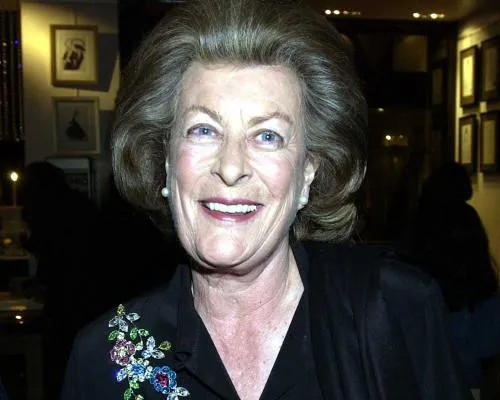 Lady Pamela Hicks obituary
Witness of the partition of India as the daughter of Lord Mountbatten and bridesmaid to the future Queen Elizabeth II
-
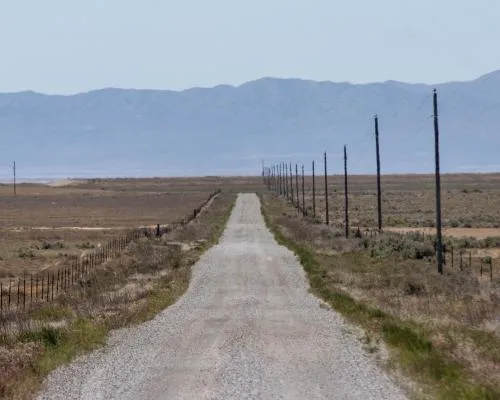 Suit filed against controversial planned Stratos datacenter project in Utah
Plan backed by Shark Tank’s Kevin O’Leary had footprint reduced but concerns remain over its health impacts
-
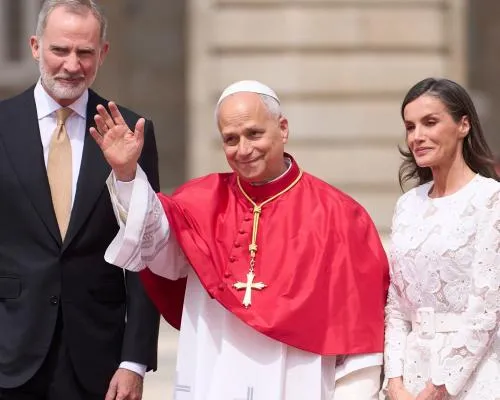 Pope Leo calls for leaders to reject polarisation as he begins Spanish tour
Pontiff to make marginalised a focus of first papal visit since 2011 including meeting with migrants in the Canaries


