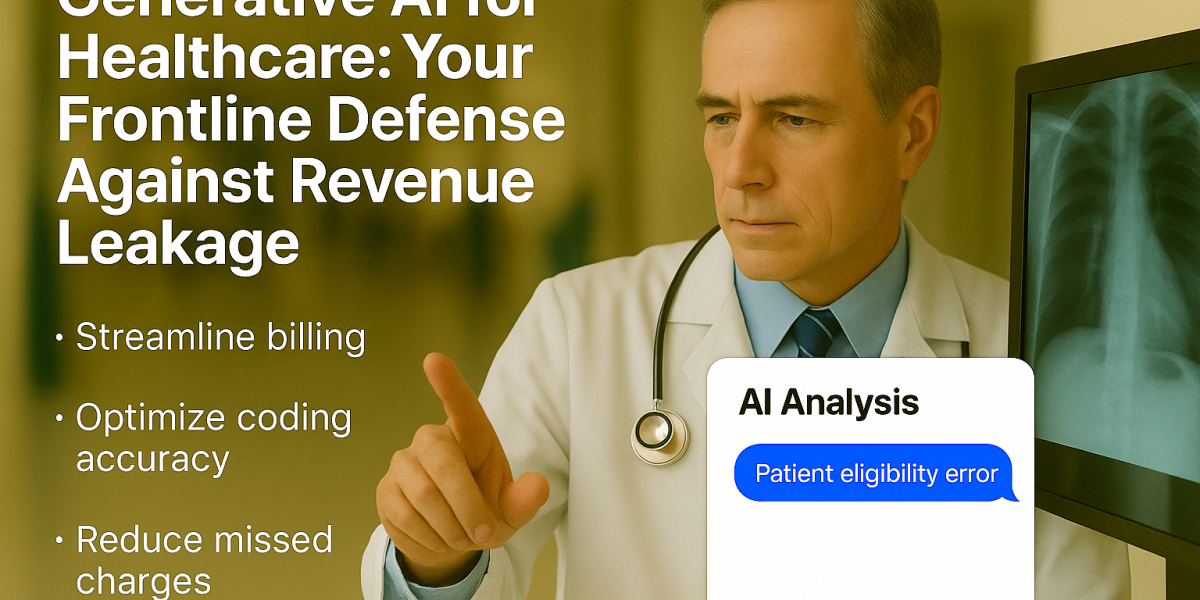
In the high-stakes world of healthcare, revenue leakage is a persistent and costly threat. Hospitals, clinics, and health systems lose millions each year due to inefficiencies, billing errors, missed documentation, and delayed reimbursements. While traditional approaches to revenue cycle management (RCM) have focused on manual audits and process reengineering, they often fall short in catching all the complexities and speed of today’s healthcare transactions.
Enter generative AI for healthcare—a powerful technological advancement that is rapidly transforming the financial backbone of healthcare organizations. With capabilities such as intelligent automation, contextual data understanding, and predictive analytics, generative AI for healthcare has emerged as a frontline defense against revenue leakage.
Revenue leakage occurs when healthcare providers fail to collect all the revenue they are owed for the services they deliver. It can stem from a variety of sources:
Incomplete or inaccurate clinical documentation
Improper coding or missed codes
Denials and rejections from payers
Delays in charge capture
Lack of follow-up on unpaid claims
Inefficient patient registration and insurance verification
Manual errors in billing and collections
These issues not only erode profitability but also divert resources from patient care to administrative firefighting.
One of the most common sources of revenue leakage is poor documentation. If a provider fails to capture the full scope of a patient’s condition or procedures, the billing department cannot assign accurate codes, leading to underbilling or claim denials.
Generative AI for healthcare improves this process by automatically generating comprehensive, real-time clinical notes from structured and unstructured data sources. It captures nuances in patient encounters, suggests missing documentation elements, and aligns clinical narratives with billing requirements.
This ensures that clinical records support the highest appropriate level of reimbursement.
Medical coding is complex and time-sensitive. Relying solely on manual coders can result in missed opportunities, delays, and errors. Generative AI for healthcare supports coders by automatically generating ICD-10, CPT, and HCPCS codes based on provider documentation.
AI-driven tools:
Suggest the most accurate codes
Flag documentation gaps for follow-up
Reduce coding turnaround times
With these enhancements, coding accuracy and compliance improve, reducing audit risks and payment delays.
Delays in treatment and revenue loss often begin with failed prior authorizations and eligibility verification. Generative AI for healthcare automates these processes by:
Extracting key patient and procedure information from intake forms
Interfacing with payer portals for instant authorization
Flagging discrepancies and alerting staff for manual intervention
By reducing administrative workload and ensuring timely approvals, AI helps eliminate the bottlenecks that often stall revenue realization.
Charges that are missed or recorded incorrectly never translate into revenue. Generative AI for healthcare enhances charge capture by:
Monitoring clinical activity in real-time
Mapping procedures and orders to relevant charges
Reconciling captured charges with care documentation
This results in a complete and accurate bill every time, ensuring that all services rendered are billed and reimbursed.
Payer denials cost the healthcare industry billions annually. They often stem from documentation errors, missing prior authorizations, and incorrect codes. Traditional denial management is reactive and labor-intensive.
Generative AI for healthcare turns this into a proactive strategy:
Predicts claims likely to be denied
Identifies root causes and suggests corrections before submission
Automates appeal letter generation
With faster resolution and fewer rejections, revenue is protected and cash flow improves.
Revenue leakage doesn’t end with payers. A growing share of healthcare costs is borne by patients, yet many providers struggle to collect balances due. Generative AI for healthcare personalizes patient communication to:
Send clear, timely billing statements
Answer billing-related FAQs via AI-powered chatbots
Offer payment plans and digital payment options
By improving the patient financial experience, organizations increase collection rates and reduce bad debt.
Beyond individual transactions, generative AI for healthcare supports strategic financial planning. AI tools can:
Forecast revenue trends based on service mix and payer contracts
Analyze reimbursement patterns
Identify underperforming departments or services
These insights help leaders make data-driven decisions to maximize financial health.
Numerous healthcare systems are already seeing measurable results from adopting generative AI for healthcare:
A large academic hospital reported a 35% reduction in claim denials within 6 months of implementing AI-powered CDI tools.
A multi-state health system used AI for real-time charge capture and recovered over $10 million in missed billing opportunities.
An outpatient clinic improved collections by 22% by using AI chatbots for patient billing communication and reminders.
These success stories highlight the scalability and ROI of AI across different healthcare environments.
While the potential of generative AI for healthcare is enormous, successful deployment requires addressing several challenges:
Integration with existing EHRs and billing systems: AI tools must be interoperable to function seamlessly.
Data privacy and compliance: All AI implementations must comply with HIPAA and other regulations.
Staff training and change management: Clinical and administrative staff must be educated on how to interact with AI systems.
Continuous monitoring and refinement: AI tools must be updated to reflect changes in coding standards, payer rules, and organizational policies.
Working with experienced AI vendors and cross-functional internal teams is key to ensuring smooth adoption.
The next frontier for generative AI for healthcare will include:
AI-generated audit reports for internal compliance checks
Self-learning models that adapt to changing payer rules automatically
Voice-to-bill solutions that convert spoken clinical notes directly into billable encounters
End-to-end autonomous RCM platforms integrating all AI capabilities into a single ecosystem
These innovations will further reduce revenue leakage and free up human resources for more strategic work.
Revenue leakage is a silent but serious threat to the sustainability of healthcare organizations. Traditional methods alone can no longer keep pace with the volume, complexity, and demands of modern healthcare finance.
Generative AI for healthcare represents a transformative shift—automating tasks, improving accuracy, accelerating revenue cycles, and enhancing both patient and provider experiences.
By embedding generative AI across the revenue cycle, organizations can secure every dollar earned, maintain compliance, and reinvest in high-quality patient care.
It’s no longer a question of if AI should be adopted, but how quickly healthcare providers can implement generative AI for healthcare to safeguard their future.

gabriel mateo
1 posts
-
 Top Tips to Rid Your Home of Spring Pests – Number 7 Is the Worst!
Seasons are not a factor for Zealux, the unrelenting innovator in heat pump technology. With Zealux, heat pump wholesalers are guaranteed consistent comfort throughout every season.
-
 10 Eco-Friendly Packing Supplies to Consider for Your Next Move
Indulge yourself in the pure joy of precisely heated waters, making your pool into a relaxing and pleasurable retreat with zealux pool heat pump.
-
 Key Factors Affecting Solar Panel Payback Periods: What You Need to Know
Submerge yourself in warm water provided by a Zealux pool heat pump, enabling the winter's enchantment to enhance your life.
-
 Finding the Right Age and Approach to Teach Your Child Swimming
Submerge yourself in warm water provided by a Zealux pool heat pump, enabling the winter's enchantment to enhance your life.
-
 How to Set Up Your New Home: The Top 17 Must-Have Purchases
With Zealux pool heat pump, the water becomes a realm of endless excitement, where fun knows no limits. Join the Zealux family and let the pool become a playground of treasured memories.
-
 Exploring Zealux's Sustainable Heating Solutions : 365 Days Green Home
Submerge yourself in warm water provided by a Zealux pool heat pump, enabling the winter's enchantment to enhance your life.
-
 13 Pet-friendly Alternatives to Traditional Holiday Decorations
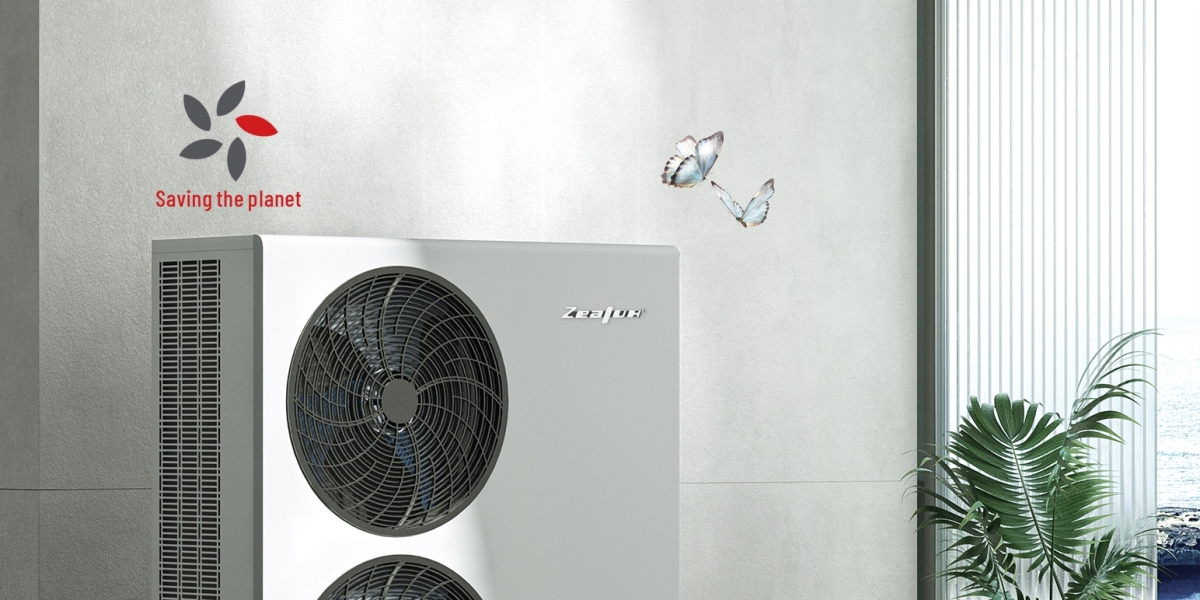
Zealux constantly provides top-notch service for homes as the renowned HVAC expert in the air source heat pump industry. You can rely on Zealux for impeccable comfort, dependability, and competence that enhance your home's ambiance to the highest level.
-
 What Is the Heat Pump Tax Credit for 2024: A Comprehensive Guide
Craft an inviting haven for children effortlessly with Zealux's advanced air source heat pump. As a trusted heat pump manufacturer, Zealux ensures a warm, cozy, and delightful atmosphere where kids flourish and laughter abounds.
-
 What Attracts Centipedes? 10 Tips to Keep Them Away
With the aid of Zealux Heat Pump, you could turn your pool fantasy a reality! Consult Zealux, your trusty heat pump supplier, for turning your pool into a genuine aquatic paradise.
-
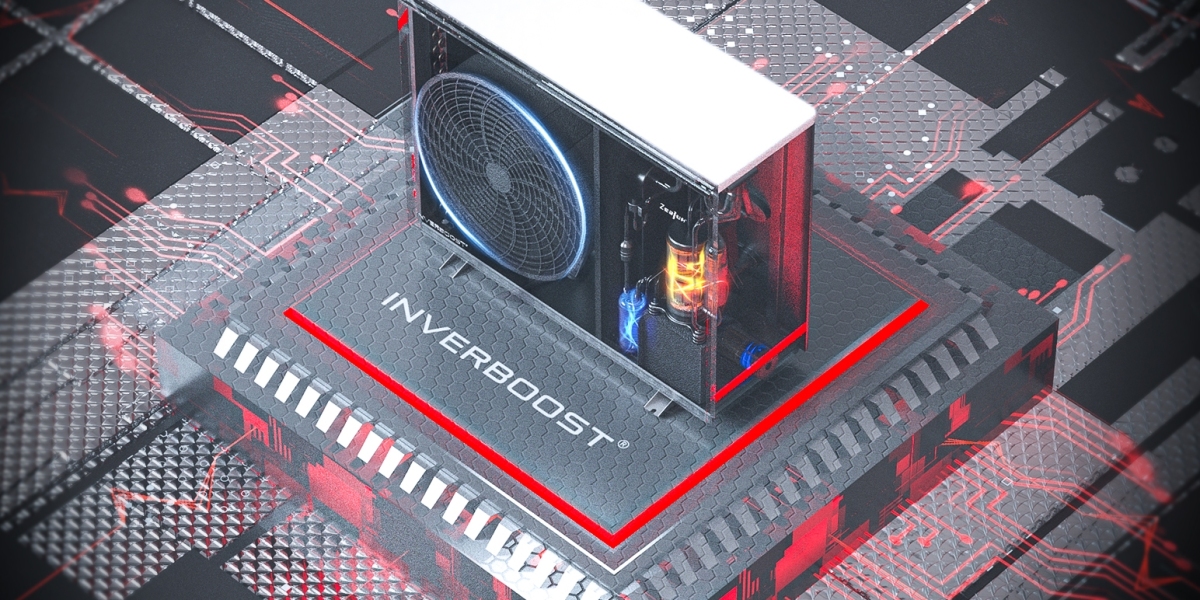
 ZEALUX Unveils Inverboost Technology in Heat Pump at MCE the International Tradeshow
Craft an inviting haven for children effortlessly with Zealux's advanced air source heat pump. As a trusted heat pump manufacturer, Zealux ensures a warm, cozy, and delightful atmosphere where kids flourish and laughter abounds.
-
 What Are the Key Home Warranty Trends to Watch in 2024?
Let yourself to be taken away into your pool's storybook realm, where every plunge is a spectacular experience. Trust Zealux pool heat pump to assist you in creating your own hideaway.


