‘Distressingly beautiful and disorienting’: the Willem Dafoe film that only one person can see at a time

By Nick Buckley • June 15, 2026 • Culture
A porter escorted Nick Buckley to his seat in an empty theatre in Hobart. Loris Gréaud’s new movie, part of Dark Mofo festival, left him questioning everything
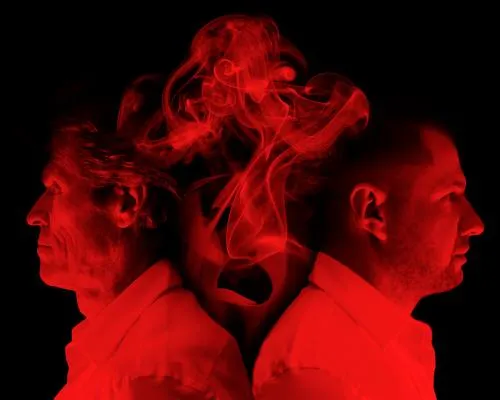
Leanne is first in line on Saturday, standing outside the 19th-century Memorial Uniting Church in Hobart, Tasmania. She’s been waiting in the winter cold since 4.45am, but has no idea what for: “It’s a film?” The film is Sculpt: Eye of the Duck, starring Willem Dafoe and Charlotte Rampling – and only one person gets to watch it at a time. Its director, the French conceptual artist Loris Gréaud, has cut six versions since its 2016 premier at the Los Angeles County Museum of Art; less than 500 people saw that first film at Lacma and even fewer have seen the subsequent edits, although you can dig up some clips on the dark web. Dark Mofo – Hobart’s winter festival – is now screening its seventh iteration, with nine tickets made available each day. Only 90 people will get a chance to watch the movie, and the act of seeing it is part of the show. I wait at a red park bench. A silent, black-suited driver steps out of a black BMW. He hands me a metal military dog tag engraved with the film’s title, and a red business card: “Please fasten your seatbelt,” it reads. “For your safety this car is fitted with a camera.” The film – which we’ll get to – is set within a type of stock market trading in “moments” of pure emotion and raw intensity; moments made valuable by their unattainability. My car snakes between Queens Domain’s bare trees as, over the speakers, Dafoe’s voice recounts a murder we can assume will be part of the plot. There’s a synergy with Dark Mofo itself, a festival that often trades in trials of the flesh and one-off experiences – and the film, and its unattainability, is designed as both a product and subversion of art world consumer capitalism. A phone starts ringing on the passenger seat; I answer it, but the voice is too faint to hear. The movie’s world is merging with my own and the mind games have begun. My car pulls up to the Playhouse Theatre. A severe-looking porter peering through the red drapes inspects my dog tag. Entry is granted to the almost pitch black empty theatre. Its chairs are piled up in a chaos of upholstery. The bellhop pours me a viscous cocktail garnished with secretions from a glass eye dropper. I take my spotlit red velvet seat and the film begins. Even having read the synopsis, the art market plot is essentially inscrutable. Instead, we’re offered a montage of surreal decadence that’s exquisitely, bizarrely, distressingly beautiful and disorienting in equal measure. What unfolds on screen goes beyond a fever dream; it’s more like a telepathic inferno extending beyond the screen’s frame, with Gréaud the arsonist combusting my psyche. Dafoe’s character cackles with sadistic wonder at women held aloft in a shibari ritual. The Japanese erotic knot tying tradition is a trust exercise, but the scene depicts something that feels cruel and dangerous. “The marriage of reason and nightmares gives birth to a world that’s even more ambiguous,” mutters Charlotte Rampling, dressed in a ghostly “grumpy bear” costume, barely audible over the soundtrack. A voodoo priestess places an incantation on 16mm film rolls, which were later used in the making of more of the film. An old man deposits fly larvae on film strips with an eye dropper that makes me question my cocktail’s ingredients. Describing this movie feels like tearing strips from a precious tapestry. When it ends, the exit is lit up by a spotlight. I walk into the street discombobulated, and a woman places a USB drive into my hand. I turn in circles, stupefied and unsure if the experience has finished. I follow the USB courier down an lane-way; she sees me, doubles back and scurries through the Playhouse’s green stage door. I ring the bell and wait. The expressionless porter opens the door, stares at me, then closes it in my face. I suspect I’ve gone rogue here; they didn’t expect me to chase the performer. The day before my screening, I spoke to Gréaud, who explained that the film explored “a dichotomy between fiction and reality and how to make things from fiction crash into reality.” The two, he believes, are indistinguishable and we need a new word: “Real-iction”. He tells me about the unlocked New Orleans voodoo temple in which that spell was placed on his film stock; about how $100 notes protruding from the walls were left untouched by the neighbourhood’s resident drug addicts, seemingly through some mystical protection. He’s a true believer in the spirit world: “I can’t talk about it because it brings some bad luck each time. It’s not a superstition. I experienced something with my older brother and little sister.” Gréaud was unwell on the day of our interview, and left to get a CT scan before his flight. But the next day, at my screening, I watched a man who could be a younger Gréaud undergo his own CT scan. Was the artist’s alleged appointment yet another layer in Gréaud’s “real-iction”? Leanne, first in line on Saturday, also found herself questioning when the experience began or ended; after her screening, she tells me about her own BMW ride – and the man who tried to get into the car with her. She thought it was part of the performance, but it was just a wasted bloke still up from the night before. “I felt like I had been wrung out,” Leanne says. “As a woman, being picked up by a stranger and being driven around then being placed in a cinema by yourself – it made you feel like you were handing over control, very vulnerable. I felt like I was being watched the whole time.” Still, she says, her experience was positive. After the screening, later that night, my phone rings and it’s a pre-recorded voice of Dafoe: “It’s time to open the window, let the wind carry me away. I will be a disciplined speck of dust.” The hotel window doesn’t open and the mysterious USB stick is staring back at me from its zip-lock bag. What it contains is just for me. Sculpt: Eye of the Duck is screening 17-21 June in Hobart, with tickets on sale daily from 9am. Nick Buckley travelled to Hobart as a guest of Dark Mofo
Source: The Guardian
Culture News
35 posts
-
 Can trees boost our creativity? My daily forest walks have changed how I write
Ideas come more quickly, my thoughts roam freely and I’m reminded I am not the main form of life on the planet
-
 Lenny Henry says racism in UK ‘still at large’ as he tours standup comeback
Comedian is doing first tour in more than 15 years and says many issues he talked about in 1980s are still alive today
-
 ‘I have a naughty schoolboy attitude’: Anish Kapoor reveals his latest epic creations
As he opens a career-spanning show in London, the Turner prize-winning artist gives us a private view of his giant studio and talks controversy censorship and why disobedience is central to making great art
-
 Lydia Lunch: ‘There won’t be a funeral. You’ll never find my body’
The Teenage Jesus and the Jerks frontwoman shares her hatred of sandwiches and pop culture, plus her wish to evaporate and return to ‘the ether’
-
 The Guide #246: Does World Cup fever leave you in a cold sweat? Here’s how to escape the footie
Are you indifferent to office sweepstakes and bored by endless stats? Fear not – there’s a bounty of film, TV and music being released this summer to take your mind off the on-pitch action
-
 From Olivia Rodrigo to The Fall of Sir Douglas Weatherford: your complete entertainment guide to the week ahead
The multiple Grammy-winner muses tunefully on love’s ups and downs, while Peter Mullan stars as a local historian in a new comedy drama
-
 Meyers on Trump saying he loves inflation: ‘Can’t think of a more tone-deaf thing for a president to say’
Late-night hosts discussed Trump’s controversial response to rising inflation and his upcoming UFC birthday party
-
 Seth Meyers on Republicans claiming rigged elections: ‘You’re the ones undermining voter integrity’
Late-night hosts discussed Trump getting booed at a Knicks game and Republican attempts to undermine US elections
-
 The best games of 2026 so far
If you fancy roaring around Japan’s open roads, scaling impossible mountains and playing with post-apocalyptic Pokémon, this year’s highlights mean you can do so without leaving your chair
-
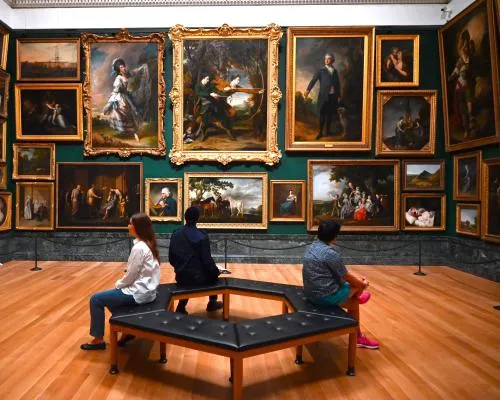 Don’t lose sight of the big picture in art galleries
Letters: Dr Penelope Jackson, Sue Lewis and Fiona Willan respond to an article and letters on art overload


