In the highly competitive world of mobile applications, every kilobyte counts. A smaller app download size can dramatically improve conversion rates, reduce uninstalls, and enhance the overall user experience, especially in regions with limited bandwidth or on devices with constrained storage. While Apple provides robust tools and optimization flags, the quest for the leanest possible binary often leads advanced iOS developers to explore the very core of the compilation process: Custom LLVM Passes. This deep dive into compiler-level optimization is where some of the most impactful binary size reductions occur, a specialized skill that a growing number of iOS App Development Services in Austin are mastering.
For developers, the binary size of an iOS app is a critical metric. It impacts user acquisition, update frequency, and overall app health. A bloated app can quickly lose users and hinder a company's growth.
While traditional methods like asset optimization, App Thinning, and minimizing third-party libraries are essential, they often hit a ceiling. To achieve truly significant reductions, developers must look beyond the surface.
Xcode, Apple's integrated development environment, leverages the LLVM compiler infrastructure. LLVM (Low-Level Virtual Machine) is a collection of modular and reusable compiler technologies, widely used in modern software development. The Swift and Objective-C compilers both rely on LLVM to transform your source code into executable binary.
LLVM provides various optimization levels (like -Os for size optimization and -Oz for even more aggressive size optimization), which applies a series of predefined "passes" to your code. These passes perform transformations to improve performance or reduce size. However, for highly specialized applications or unique code patterns, these general-purpose optimizations might not be enough. This is where the power of custom LLVM passes comes into play.
A custom LLVM pass is essentially a piece of code that you write and integrate into the LLVM compilation pipeline. It allows you to analyze and transform the Intermediate Representation (IR) of your program at various stages of compilation. This is the ultimate level of control over how your code is compiled.
To understand custom passes, it's crucial to grasp LLVM's core architecture. When you compile your Swift or Objective-C code, it doesn't immediately become machine code. Instead, it goes through several stages:
Custom LLVM passes fit into the "Optimizer" stage. By inserting your own pass, you can analyze the IR for specific patterns or apply targeted transformations that the default LLVM passes might not perform, or perform them in a more aggressive, application-specific way.
LLVM offers different types of passes, each operating at a specific level of granularity:
For binary size optimization, module and call graph passes are often the most effective, as they can identify and eliminate redundant code or merge similar functions across an entire module or even the entire program.
The adoption of custom LLVM passes is a sophisticated technique, typically employed by experienced software development companies and dedicated optimization teams. In Austin, a hub of technological innovation, some iOS App Development Services in Austin are at the forefront of this advanced optimization strategy.
Before writing a custom LLVM pass, the crucial first step is identifying areas where default optimizations fall short. This often involves:
Once opportunities are identified, custom LLVM passes can implement various strategies:
Aggressive Function Merging/Deduplication:
Specialized Dead Code Elimination:
Data Layout Optimization:
Targeted Instruction Simplification:
Metadata Stripping and Symbol Optimization:
Developing a custom LLVM pass is not for the faint of heart. It requires a deep understanding of LLVM's internals, C++, and compiler design principles.
Austin's tech scene, known for its strong emphasis on deep engineering and innovative solutions, provides a fertile ground for developing specialized skills like custom LLVM pass optimization.
The presence of major tech companies with significant engineering teams, coupled with a vibrant startup ecosystem, fosters a culture of deep technical expertise in Austin. Developers are encouraged to explore low-level optimizations and contribute to open-source projects like LLVM itself. This environment naturally breeds specialists capable of tackling complex compiler-level challenges.
The Austin developer community is highly collaborative. Meetups, conferences, and shared workspaces facilitate knowledge exchange on advanced topics. When it comes to niche areas like custom LLVM passes, this collaboration is invaluable for sharing experiences, troubleshooting complex build issues, and developing reusable tools. This collective wisdom directly benefits iOS App Development Services in Austin, seeking to optimize their products.
For competitive software development companies in Austin, investing in this kind of deep optimization knowledge is a strategic differentiator. While standard app development can be commoditized, the ability to squeeze out significant binary size reductions or unlock unique performance gains through compiler-level interventions sets a company apart. This translates to superior products and a stronger market position.
While powerful, custom LLVM passes come with their own set of challenges.
Writing and maintaining custom LLVM passes is a highly specialized skill. It requires ongoing familiarity with LLVM's evolving API and the intricacies of compiler design. Any changes to the LLVM version used by Xcode can potentially break a custom pass, requiring significant re-engineering.
Introducing custom passes can increase compilation times. Developers must carefully balance the benefits of binary size reduction against the added time in the development cycle.
Debugging issues within LLVM IR can be significantly more challenging than debugging high-level Swift or Objective-C code. Specialized tooling and deep compiler knowledge are required.
Despite these challenges, the drive for smaller, faster, and more efficient apps will continue to push the boundaries of optimization. As iOS applications become more complex and sophisticated, the role of compiler-level interventions, particularly from skilled practitioners in hubs like Austin, will only grow in importance. The ability to perform Custom LLVM Passes represents the pinnacle of binary size optimization, transforming good apps into truly exceptional ones.
In the competitive and resource-conscious world of iOS app development, the pursuit of optimal binary size is not just a best practice—it's a strategic imperative. While conventional optimization techniques lay a crucial foundation, the true frontier of efficiency lies in Custom LLVM Passes. This advanced discipline, mastering the very essence of how source code transforms into executable binary, offers unparalleled control and the potential for significant, often otherwise unattainable, reductions in app size.
The expertise required for this level of compiler-driven optimization is rare and highly specialized. However, in innovative tech hubs like Austin, a growing number of iOS App Development Services in Austin and forward-thinking software development companies are embracing this challenge. By delving into the intricacies of LLVM's Intermediate Representation, they are crafting bespoke solutions that prune excess, merge redundancy, and strip away bloat, delivering apps that are not only performant but also remarkably lean.
While the journey of implementing custom LLVM passes is fraught with complexity, demanding deep compiler knowledge and rigorous testing, the rewards are substantial: faster downloads, happier users, and a tangible competitive edge in the crowded App Store. As the mobile ecosystem continues to evolve, the ability to fine-tune an app at its most fundamental level through Custom LLVM Passes will remain a hallmark of engineering excellence, distinguishing the good from the truly exceptional in the world of iOS development.

Sophia Happy
20 posts
-
 Những robot động vật giải quyết thách thức kỹ thuật
Lấy cảm hứng thiết kế từ tự nhiên, một số robot động vật đáp ứng xuất sắc các nhiệm vụ khó khăn từ giám sát công nghiệp tới thám hiểm dưới nước.
-
 Rò rỉ khung iPhone 18 Pro với ba màu mới
Một số hình ảnh được cho là khung sườn của iPhone 18 Pro xuất hiện trên mạng, cho thấy các tùy chọn màu sắc thực tế của sản phẩm.
-
 Robot 'chú hề' đá trúng khán giả nhí
Khi biểu diễn trước đám đông tại Tân Cương, robot hình người G1 của công ty Unitree vô tình đá vào bụng một cậu bé đứng xem.
-
 Các mẫu laptop gaming nổi bật của ROG 20 năm qua
Dòng Zephyrus G14 mỏng nhẹ, Zephyrus Duo với màn hình đôi, Flow Z13 thiết kế lai tablet là các mẫu laptop gaming đặc biệt của ROG.
-
 AI hỗ trợ xạ trị trúng đích trong 'siêu máy' 2.000 tỷ đồng
Máy proton Mevion S250-FIT dùng AI tấn công khối u chính xác và an toàn hơn, là hệ thống xạ trị tư thế ngồi đầu tiên trên thế giới của Mevion (Mỹ), được Bệnh viện Tâm Anh đưa về Việt Nam.
-
 Tái cấu trúc phòng thí nghiệm trọng điểm, làm chủ công nghệ chiến lược
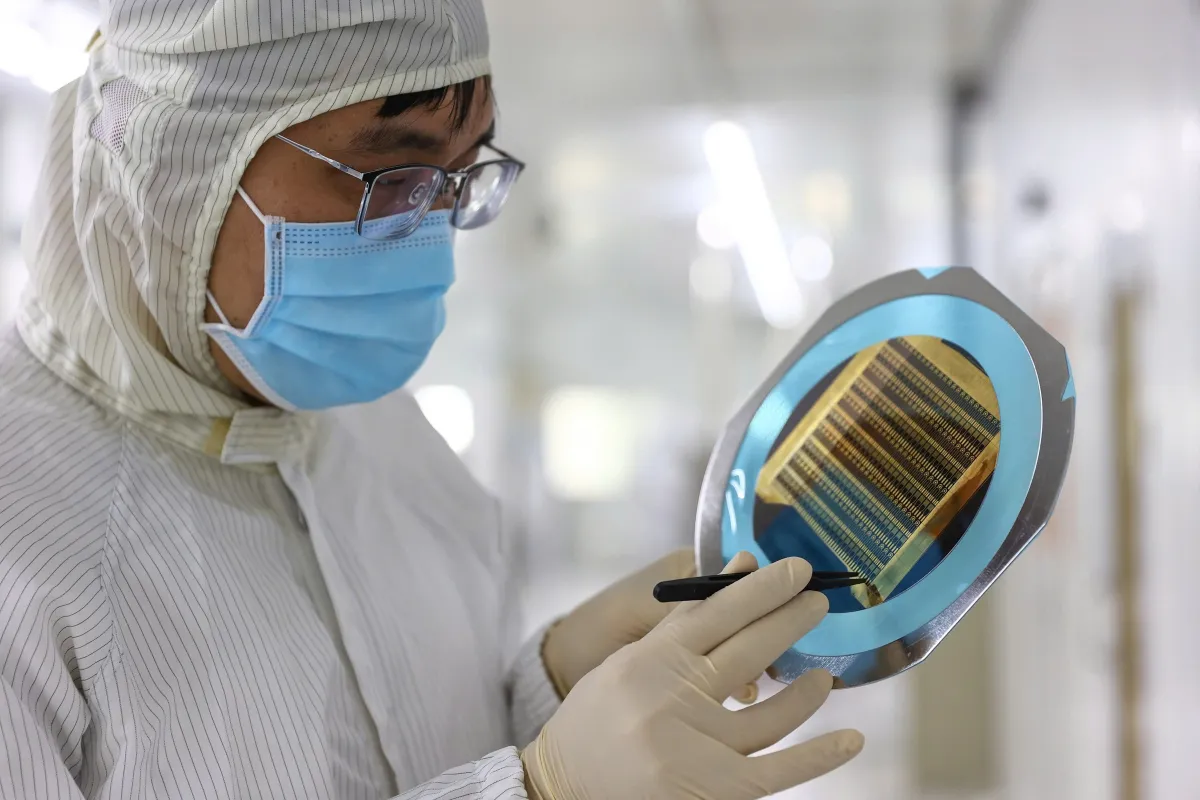
Việt Nam dự kiến xây dựng khoảng 10-15 trung tâm nghiên cứu và phòng thí nghiệm quốc gia quy mô lớn, tập trung vào AI, bán dẫn... phục vụ mục tiêu làm chủ công nghệ chiến lược.
-
 Anthropic: Cần cơ chế dừng phát triển AI toàn cầu
Startup Anthropic cho rằng thế giới cần chuẩn bị phương án giảm tốc hoặc dừng phát triển AI nếu các mô hình có khả năng tự nâng cấp quá nhanh.
-
 Tổng Bí thư, Chủ tịch nước Tô Lâm đề nghị chuyên gia Google hỗ trợ phát triển AI
Trong buổi tiếp ông Eric Schmidt, nguyên Chủ tịch Google, cùng đoàn chuyên gia, Tổng Bí thư, Chủ tịch nước Tô Lâm đề nghị hỗ trợ Việt Nam xây dựng tầm nhìn, chính sách và hệ sinh thái AI.
-
 Máy bay chở khách có tầm bay xa nhất thế giới
Máy bay A350-1000ULR của Airbus có thể bay liên tục 22 giờ với tầm bay tối đa lên tới trên 18.000 km.
-
 Apple 'đá xoáy' trình duyệt Chrome
Trong video giới thiệu khả năng bảo mật dữ liệu riêng tư của Safari, Apple ẩn ý trình duyệt Chrome không bảo vệ người dùng trước những kẻ theo dõi.
-
 Tổng Bí thư, Chủ tịch nước Tô Lâm đề nghị Google hỗ trợ xây dựng hệ sinh thái AI
Trong buổi tiếp ông Eric Schmidt, nguyên Chủ tịch Google, cùng đoàn chuyên gia, Tổng Bí thư, Chủ tịch nước Tô Lâm đề nghị hỗ trợ Việt Nam xây dựng tầm nhìn, chính sách và hệ sinh thái AI.


