
As the global demand for efficient energy storage soars, driven by the rise of electric vehicles, renewable integration, and portable electronics, the importance of battery electrolytes cannot be overstated. Often overlooked compared to electrodes, electrolytes play a critical role in battery performance, safety, and longevity.
The battery electrolyte market is set for rapid expansion, propelled by continuous innovations in electrolyte chemistry and increasing global battery demand. Solid-state electrolytes, in particular, are expected to disrupt the market by enabling safer and more energy-dense batteries.
What is Battery Electrolyte?
Battery electrolyte is the medium that enables ion transport between the cathode and anode inside a battery. It facilitates the flow of electric charge by allowing ions to move freely while preventing electrons from directly passing through, which is essential for generating electrical energy.
Electrolytes come in various forms:
Liquid Electrolytes: Common in lithium-ion batteries, typically composed of lithium salts dissolved in organic solvents.
Solid Electrolytes: Used in emerging solid-state batteries, offering improved safety and energy density.
Gel Electrolytes: Combine properties of liquids and solids, providing flexibility and better thermal stability.
Polymer Electrolytes: Used in flexible and thin batteries.
Why Electrolytes Matter
The choice and quality of electrolyte affect several key battery parameters:
Energy Density: Efficient ion transport enhances battery capacity and charge speed.
Safety: Stable electrolytes reduce risks of leakage, combustion, or thermal runaway.
Cycle Life: Electrolyte stability affects how many charge-discharge cycles a battery can endure.
Temperature Range: Electrolytes designed for wide operating temperatures expand battery usability.
Market Trends and Innovations
The battery electrolyte market is experiencing rapid growth fueled by the EV boom, grid storage needs, and consumer electronics demand. Key trends include:
Solid-State Electrolytes: Offering higher energy density and safety, solid electrolytes are attracting major R&D investments.
Eco-Friendly and Non-Flammable Electrolytes: Development of safer, greener formulations to meet regulatory and consumer demands.
Advanced Lithium Salts and Additives: Improving ionic conductivity and extending battery lifespan.
Customized Electrolytes: Tailored for specific battery chemistries such as lithium-sulfur and sodium-ion batteries.
Market Outlook
The global battery electrolyte market was valued at around USD 2.5 billion in 2024 and is projected to grow to over USD 6 billion by 2033, reflecting a CAGR of approximately 10%. Growth is driven by:
Expanding electric vehicle production.
Increased grid-scale energy storage installations.
Rising consumer electronics penetration.
Government policies promoting clean energy and battery recycling.
Challenges
Material Costs: High purity salts and solvents contribute to electrolyte costs.
Safety Concerns: Organic liquid electrolytes pose flammability risks, driving demand for safer alternatives.
Manufacturing Complexity: Producing consistent and defect-free electrolytes at scale remains challenging.
Leading Players in the Battery Electrolyte Market
Key companies innovating and supplying battery electrolytes include:
Mitsubishi Chemical Corporation
Ube Industries, Ltd.
Soulbrain Holdings Co., Ltd.
Mitsui Chemicals, Inc.
Panasonic Corporation
Conclusion
Battery electrolytes are the silent enablers behind the electrification revolution. As technology advances, electrolyte innovations will be pivotal in making batteries safer, more efficient, and longer-lasting. For industries and investors alike, understanding the battery electrolyte market is key to tapping into the future of energy storage.

mahima jaiswal
5 posts
-
 US opens second federal investigation of deadly Tesla crash into Texas home
Driver told authorities he had driver-assistance technology engaged before crash that killed 76-year-old Martha Avila
-
 Elon Musk loses trillionaire status as SpaceX and Tesla stock drops
Falling shares push tech mogul back down to billionaire ranks after SpaceX IPO made him world’s first trillionaire
-
 AI helps read papyrus scroll burnt to crisp during Vesuvius eruption
Previously hidden text revealed without unrolling scroll discusses stoic philosophy on ethics, art and human behaviour
-
 Meta pauses employee tracker for AI training amid privacy concerns
About 1,600 workers signed petition against tool that tracked staff keystrokes, mouse clicks and computer screen content
-
 ‘You can’t make billions without hurting people’: Cory Doctorow on Elon Musk, the AI bubble and bosses’ cruel fantasies
The writer who coined the word ‘enshittification’ tells us why AI will never deliver what it promises – and why it still appeals so much to those in power
-
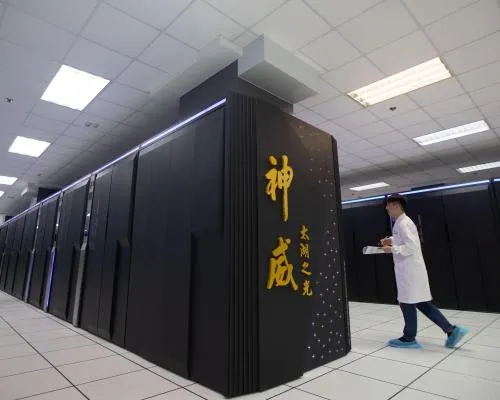 Chinese supercomputer leapfrogs best US machines to be ranked world’s fastest
China’s LineShine debuts at number one in Top500 – a list sometimes viewed as a national measure of global tech prowess
-
 Will California’s billionaire tax proposal make it to ballots?
Despite more than double the needed number of signatures to qualify for ballot, there’s uncertainty it’ll make it to voters
-
 Met to expand use of live facial recognition into central London by Christmas
Technology to be used in six more areas next year as critics say tens of thousands of people will be forced into ‘digital police lineup’
-
 HR consultant wins English court case using AI lawyer in apparent legal first
Barrister who was given material produced by Garfield AI says advocacy at trial ‘remained fundamentally human’
-
 Two Britons plead guilty to £39m 2024 cyber-attack on Transport for London
Thalha Jubair and Owen Flowers, linked to the Scattered Spider hacking group, change pleas on first day of expected six-week trial
-
 AI models that can take down governments and business months away, rare Five Eyes statement warns
Signal agencies in Australia, the US, the UK, New Zealand and Canada sound alarm after Trump blocks foreign nationals from Anthropic’s Fable AI model


