Bank of England leaves interest rates on hold and lowers inflation forecast amid Middle East ‘uncertainty’ – business li

By Graeme Wearden • June 18, 2026 • Business
Rolling coverage of the latest economic and financial news, including the latest UK jobs report and the Bank of England’s interest rate decision
City lobby groups are being incredibly cautious in responding to Tory leader Kemi Badenoch’s proposals to eradicate bank ringfencing and the Financial Ombudsman Service (FOS) (see earlier post). There seem to be a few factors at play, including the fact that not all of their members are going to be on board (read: Barclays’ opposition to changing ringfencing rules). Scrapping the FOS could also prove politically sensitive and there is also no guarantee that its replacement would be swiftly introduced and efficiently implemented. There’s also a matter of how much a FOS replacement and reversing ringfencing might cost firms in the end. In a statement, TheCityUK’s CEO Miles Celic was careful not to take sides, saying: “The Leader of the Opposition’s speech is an important contribution to the debate on how financial services can best support growth across the UK. There is a clear need to ensure our tax and regulatory framework is competitive, proportionate and predictable. This has to be built on the high standards that underpin trust in the UK markets.” Likewise, UK Finance said: “Financial services are vitally important to the UK economy, and we welcome engagement on how to get the best from the sector and enhance UK competitiveness. Ensuring reforms are delivered, from enabling responsible risk‑taking to reform of bank capital requirements, will help the sector support investment and growth across the wider economy, as set out in our recent Plan for Growth: From Strategy to Delivery report.” Meanwhile in the US, there appears to have been a small drop in the number of people being laid off. The number of new initial claims for unemployment support fell by 4,000 last week to 226,000, indicating American workers continued to hold onto staff. Reaction to today’s UK interest rate decision is pouring in. ING’s James Smith predicts the next move in UK interest rates will be downwards, next year: There’s nothing in today’s decision that changes our mind that the next move is likely to be a rate cut in 2027. It feels like it would take a lot for the five more neutral-to-dovish members of the nine-strong committee to vote for a hike, barring the Iran deal falling apart and energy prices moving materially higher Ruth Gregory, deputy chief UK economist at Capital Economics, says the Bank of England is talking “a good hawkish game” – with two votes to raise interest rates – but is unlikely to deliver. The last thing the MPC wants to do is unwind some of the tightening in financial conditions priced into the markets. And while there are important differences with the energy shock in 2022, the Bank won’t want to make the same mistake as then, when it was widely criticised for keeping policy too loose for too long. The key point is that the hawkishness of Pill and Greene does not seem to have been replicated amongst the four “centrists” (Lombardelli, Bailey, Breeden and Ramsden). This suggests there hasn’t been a material shift in the Bank’s “reaction function”. And it means the hawks probably won’t have the five votes required for a rate hike soon. David Muir, senior economist at Moody’s Analytics, suggests the Bank could avoid raising interest rates this year, unless the US-Iran peace deal falters: With demand subdued, labour market conditions weak, and the outlook for energy prices less concerning, a rate hold was no surprise at June’s Monetary Policy Committee meeting. The decline in energy prices following the U.S.-Iran agreement gives us greater confidence that the Bank of England will avoid a rate hike in the second half of the year and instead address the energy-driven rise in inflation through a prolonged pause. But an unravelling of the deal would raise the risk of a precautionary hike aimed at anchoring inflation expectations and containing second-round effects on prices and wages. The pound has fallen to its lowest level against the US dollar in over two months, after the Bank of England left interest rates on hold today. Sterling is down 0.8 of a cent, or -0.6%, to $1.3207 against the dollar, the lowest since 6 April. That suggests the City sees today’s decision as somewhat dovish, with the bank also lowering its forecasts for inflation by the end of the year (see earlier post). However, the money markets are still pricing in one interest rate hike by the end of the year. Daniela Hathorn, senior market analyst at capital.com, says: Despite the hawkish undertones of the BoE statement, sterling weakened sharply against the dollar, the euro, and the yen following the decision. The move suggests markets focused less on the 7-2 vote split and more on the Bank’s decision to lower its inflation outlook and acknowledge progress on disinflation. However, the decline in GBP does not necessarily reflect a dovish repricing of UK rates. Indeed, markets continue to price in the possibility of a rate hike by year-end, supported by the dissenting votes from Greene and Pill, the MPC’s emphasis on second-round inflation risks, and Bailey’s warning that higher energy prices could still feed through into broader price pressures. Policymakers Huw Pill and Megan Greene have both insisted that it would have been better to raise UK interest rates today, rather than hold them. BoE chief economist Pill warns that “upside risks” to hitting the Bank’s 2% inflation target have increased in recent months due to war in the Middle East. He explains that he continues to favour “prompt but modest action” on interest rates now. saying: Recognising the significant uncertainty that surrounds the UK inflation outlook, raising Bank Rate to 4% continues to be the most robust monetary policy response to the intensification of these risks. Greene, who joined with Pill in voting for a rate rise today, argues that the Bank should be pursuing a “risk management strategy”, of raising rates now in case the ‘second-round effects’ from the energy shock (ie, a wage-price spiral) are stronger than the Bank predicts. She argues that higher interest rates would cool households’ and firms’ inflation expectations, saying: Hiking Bank Rate assuming greater second-round effects, then discovering they were smaller and course-correcting results in a very moderately lower output gap and inflation returns to target at the end of the forecast period. These risks are asymmetric, so we should insure against the possibility of larger second-round effects until we have evidence to determine they are not materialising. A proactive hike now in Bank Rate should help anchor inflation expectations. The Bank of England’s governor, Andrew Bailey, has explained that he is content to hold interest rates today – but would respond ‘promptly’ if there were signs that high energy cost were driving up prices in the shops, or wages. Bailey uses the MPC members’ views section of today’s minutes to lay out his thinking, saying: There has been a marked fall in energy prices in recent days, reflecting progress on talks involving US and Iran. But the situation remains unpredictable, and there is clearly a risk that energy prices remain elevated for an extended duration. Recent inflation outturns give greater confidence that gradual underlying disinflation has continued. Labour market data show some further softening, and there are further signs of demand weakness. Our remit recognises that attempting to bring inflation back to the target too quickly may cause undesirable volatility in output. Given the context at present of softness in the real economy and uncertainty around the scale and duration of the shock to energy prices, tolerating temporarily above-target inflation as part of a return to target is an appropriate way to approach the trade-off, providing inflation expectations remain contained. I am content at the present time with holding, while accepting that risks to inflation and interest rates are on the upside, as reflected in the upward slope in the sterling yield curve, which appears to be accounted for more by risk premia than expected rates. I would respond promptly to any signals that an extended period of elevated energy prices could be leading to stronger possible second-round effects. The Bank of England has trimmed its forecast for how fast UK inflation will rise this year. The BoE now predicts that CPI inflation – which was 2.8% last month – is now expected to be a little under 3% in the third quarter of this year, and “pick up to a little over 3.25% in Q4”. That’s a downgrade compared with April; two months ago, the Bank forecast inflation would hit 3.3% in Q3, and “rise somewhat further in Q4.”. Announcing today’s interest rate decision, the Bank of England says that the conflict in the Middle East, and its impact on energy prices and the UK economy, remained the “dominant source of uncertainty for the inflation outlook”. The minutes of this week’s meeting say: As had been outlined in the April Monetary Policy Report and Minutes, monetary policy could not influence global energy prices. And it would take time for monetary policy to work through the economy, so any action the MPC might take would not prevent higher inflation in coming months. What the MPC would do is set monetary policy to make sure that the effects of the shock did not become embedded into broad-based inflationary pressures, so that inflation fell back to the 2% target and stayed there. Bank of England chief economists Huw Pill again voted to raise interest rates, as he also did at the last meeting (and was outvoted then too). But this time he had company – external MPC member Megan Greene also voted to increase rates to 4%. Newsflash: The Bank of England has voted to leave UK interest rates on hold. In a decision widely expected by economists, the BoE is maintaining Bank rate at 3.75%. The decision is not unanimous, though – two policymakers wanted to hike interest rates to 4%, but were outvoted by the other seven who voted to hold rates. Announcing the decision, the Bank says: Global energy prices have fallen since the previous meeting in response to events in the Middle East. But they remain higher than pre-conflict and have continued to be volatile. The impact of the energy shock on the UK economy remains uncertain. Monetary policy cannot influence energy prices but is being set to ensure that the economic adjustment to them occurs in a way that achieves the 2% inflation target sustainably. The policy stance required to achieve this will depend on the scale and duration of the shock, and how it propagates through the economy. The Bank of England had cut rates six times since mid-2024 and was expected to continue doing so, before Trump’s Operation Epic Fury led to Iran choking off oil supplies from the Gulf. The BoE’s MPC will almost certainly keep interest rates on hold today, and probably in July as well, reports Professor Costas Milas, of the University of Liverpool’s Management School. He explains: First, as Dr Papapanagiotou and I show in a brand new blog published today for LSE Business Review, a model which takes into account UK economic policy uncertainty (EPU) in addition to output growth and inflation developments (Chart 3 in the blog) is quite impressive at forecasting BoE’s policy rate. EPU is currently elevated, not least because of today’s by-election, and this will put off MPC members for hiking. Second, and as we discuss in the LSE Business Review blog, the BoE has been looking at interest rate rises in three different scenarios, depending on oil prices hitting $108 or $130 per barrel. Following the 60-day “deal” between the US and Iran, oil currently trades at less than $75 currently. All in all, my expectation is that the MPC will hold both today and on July the 30th! Britain’s stock market is in the red ahead of the Bank of England’s interest rate decision, due in 15 minutes time. The FTSE 100 share index is down 107 points, or just over 1%, at 10,401 points. That follows losses on Wall Street last night, after the US Federal Reserve was more hawkish than expected. Other European markets are faring better, with Germany’s DAX and France’s CAC both up over 0.1%. The US dollar has climbed to its highest level in over a year, after America’s central bank indicated it could raise interest rates later this year. Half the policymakers at the Federal Reserve predicted there would be at least one increase in US interest rates this year. The Fed also left rates on hold last night, as expected. This has pushed the dollar index up to its highest level since May 2025. Conservative leader Kemi Badenoch has called on City firms to back her at the next election, promising sweeping reforms to boost risk-taking, at a time when, she says, “the rest of the world is eating London’s lunch”. She has told executives gathered in Westminster’s QEII Centre this morning that a Conservative government would usher in an economic “revolution”, that would involve scrapping: ring-fencing – the protections that her Conservative party brought in after the 2008 financial crisis to protect everyday bank customers from riskier operations; and the Financial Ombudsman Service (FOS), which is a key adjudicator when consumers feel they have been mistreated by financial firms. Badenoch said this is part of a UK growth plan that will revitalise the UK’s powerhouse financial sector, which she says is “smothered in red tape”, being burdened by taxes, and has lost a quarter of its stock market listings over the past decade. She added: Every great enterprise is built on risk. The desire for a zero risk environment means Britain’s financial services sector is now more regulated in any of the major markets in the world. It is cheaper and easier to do business elsewhere. The rest of the world is eating London’s lunch. Reception to Badenoch’s speech was mixed, with some people in the audience grimacing at her proposals, and others nodding in enthusiastic agreement as her assessment of the red tape and taxes holding back the City. It’s worth keeping in mind that the Labour government is currently planning to reform the ring-fencing regime, and that there isn’t a consensus among bankers – with Barclays having been a vocal opponent to changing the protections that cost so much to implement in the first place. The Labour government is also looking at reforming the FOS, following heavy lobbying by banks embroiled in the motor finance scandal, in part by aligning it more closely with FCA rules. Badenoch clearly believes this does not go far enough. The Bank of England may not be unanimous in its interest rate decision, due in just over an hour’s time. A Reuters poll found that City economists predict seven of the nine MPC policymakers will vote to leave interest rates on hold, with two pushing for a rise. At last month’s meeting, the Bank voted 8-1 to hold rates, with BoE chief economist Huw Pill the lone vote for a rate hike. Kathleen Brooks, research director at XTB, says: At the last meeting, one member dissented and voted in favour of a hike. We could see a similar 8-1 split in favour of no change, later today. Hawks at the BOE, including Megan Greene, are likely to point to the high levels of input inflation, which could eventually boost consumer prices. Added to this, inflation will rise in July, due to the 13% rise in the energy price cap. The market will hope that the spike in price pressures caused by the energy price cap is temporary and does not lead to a wage-price spiral in the UK. The head of the International Energy Agency has warned that the Iran war has shown that the strait of Hormuz could be closed again in future. Speaking in Istanbul, IEA chief Fatih Birol welcomed the interim agreement to end the Iran war and called for the strait of Hormuz to be reopened without conditions. He added: We will now see the details of the agreement and the negotiation process, and what happens next. Echoing comments made to the Guardian in April, Birol added: The vase is broken. Now all actors know that the strait of Hormuz was closed once and it can be shut down again. The UK government has declared it is “strongly minded” to nationalise British Steel, having taken control of the company from its owners Jingye Steel. Nationalisation of the Scunthorpe steelworks already looked likely, after the Steel Industry (Nationalisation) Bill was introduced to Parliament earlier this month. In a written ministerial statement today, the government says: The government is strongly minded to use the powers in the bill to bring British Steel into public ownership in the future, subject to the public interest being satisfied. Jingye, though, won’t let the steelworks go lightly, or indeed cheaply. It has begun a formal process under an international treaty to win compensation from the UK government. Insurance market Lloyd’s say six “practical steps” must be taken before vessels that have been stranded in the Gulf for the last 110 days can resume transiting the strait of Hormuz. Sheila Cameron, CEO at the Lloyd’s Market Association and Neil Roberts, head of marine and aviation at the Lloyd’s Market Association, say: The first step is the importance of cooperation between Iran, US and other states such as Oman on navigational safety and the prioritisation of vessel passage. The second is verified mine clearance and ongoing surveillance. The threat of mines remains a significant barrier to the resumption of trade in the region. Ongoing monitoring of the seaways is required to provide reassurance and confidence to shipowners and their crew, particularly when it comes to vessels who are considering re-entering the Gulf in the future. The third is clarity of provision of emergency services support in the event of a vessel or crew requiring rescue whilst in Iranian territorial waters. In order to return to the ‘shipping as usual’ state, ordinary salvage and maritime services, including for incoming vessels, should be readily available. Fourth, vessels will need to be fully restored to a seaworthy state prior to transiting the Strait, including GPS services, and there are reports of issues, such as stores, fuel and bottom scraping, from vessels as a result of being at anchor for such an extended period. Fifth, there needs to be a full reopening of the port infrastructure system, including pilotage, berthing and bunkering, to enable the safe loading and discharge of cargos. And finally, clarity around sanctions, terrorism legislation and toll payments. There must be clear advice and consistency of approach from the UK, EU and US on the extent to which sanctions and designations of Iranian entities have been amended. The MoU refers to shipments of Iranian oil and that there will be no toll payments. However, a greater level of detail will be required before insurers and insureds can be clear as to what trade can safely take place. UK wholesale gas prices have fallen to their lowest level since the start of the Iran war. The month-ahead UK gas price fell as low as 95p per therm this morning, following the signing of the interim peace deal by the US and Iran. That’s the lowest since 2 March, the Monday after the conflict began. Reminder: Brent crude oil has also fallen to its lowest since 2 March today (see earlier post). However, this still leaves UK gas prices above their level just before the start of the war – 78.57p per therm. Continential European gas prices have also fallen today, down 3% to €40.6 per megawatt hour. Hopes for a resumption of traffic through the strait of Hormuz are pushing down energy costs, despite concerns that it will take time for the situation to return to pre-war levels. Oxford Economics say: With the new US-Iran ceasefire including an agreement to reopen the Strait of Hormuz, Oxford Economics anticipates an initial surge in traffic as ships that have been stuck are finally able to exit. Flows are then expected to slow until confidence builds that the ceasefire is durable. The firm expects the recovery in shipping to be gradual as logistics are adjusted and oil and gas production restarts In a sign that oil flows from the Middle East are returning to normal, three Saudi-flagged supertankers with six million barrels of crude onboard have sailed through the Strait of Hormuz, ship tracking data showed on Thursday. The sailings from Saudi ports were the biggest departures through the strait in weeks, according to Reuters analysis of shipping movements. The head of the International Monetary Fund has predicted that oil prices are likely to ease, not plummet, as the U.S.-Iran interim peace deal lets shipments through the Strait of Hormuz resume. IMF chief Kristalina Georgieva pointed out that countries will want to replenish oil reserves which were run down during the conflict, and that it will take time for maritime traffic through the Strait to return to normal, Reuters reports. Georgieva was speaking at a “fireside chat” at a conference hosted by the Austrian National Bank. Oil has already eased quite a long way in the last week. Brent crude is now trading around $78 a barrel, down from $95.50 a week ago, having hit a peak over $126 a barrel at the end of April. Before the Iran war began, Brent was trading around $72 a barrel. It’s a busy day for central bankers. In Oslo, Norway’s central bank has kept its policy interest rate on hold at 4.25%, but hinted that rate rises could be on the way. Governor Ida Wolden Bache says: Inflation is too high, and the rapid rise in business costs in recent years will contribute to keeping inflation elevated ahead. New information indicates that inflation pressures are slightly stronger than we had anticipated earlier. We expect that a somewhat tighter monetary policy stance will be needed to bring inflation down to target within a reasonable time horizon. If developments turn out as currently envisaged, the policy rate will be raised at one of the forthcoming monetary policy meetings”. Switzerland’s central bank has left interest rates on hold. The Swiss National Bank voted to keep its key interest rate at zero for a fourth quarterly meeting, after inflation rose to 0.6% in May, saying: Inflation has risen in recent months as a result of higher energy prices. Medium-term inflationary pressure, however, is virtually unchanged compared with the last monetary policy assessment. The SNB’s monetary policy is appropriate to keep inflation within the range consistent with price stability and it supports economic development. The SNB will continue to monitor the situation and adjust its monetary policy if necessary, in order to ensure price stability. Tesco’s UK sales growth has more than halved as it said the conflict in the Middle East had created “ongoing uncertainty for many households”, knocking its shares in early trading. The UK’s biggest retailer said comparable sales rose 1.8% to £13.4bn in the three months to the end of May, below both the 4.2% reported in the previous quarter and the 2.3% growth City analysts had expected. The numbers were, however, lifted by an 8.9% rise in online sales and group sales rose 1% to £16.8bn. The slowdown in UK sales growth reflected dampened consumer confidence in the face of higher fuel prices linked to the conflict in the Middle East. Exceptionally warm and sunny weather during the same period last year helped to increase sales of food and drink, distorting comparisons with this year. More here: Shares in Tesco are down 2.8% in early trading, among the larger fallers on the FTSE 100 share index this morning. The Resolution Foundation have calculated that private sector pay in the UK continues to shrink, once you account for inflation. That’s because annual average regular earnings growth was 2.9% for the private sector in February to April, slightly behind the pace of price rises. Louise Murphy, senior economist at the Resolution Foundation, explains: The UK labour market is weaker than it has been in recent years. This weakness is showing up through rising irregular work in the form of self-employment and zero-hours contracts, higher youth unemployment and lower wage growth. The real wages of private sector workers have now been falling since last October. With further inflation rises expected over the coming months, these workers should brace themselves for this squeeze to continue over the summer. The Bank of England will also be pleased to see that the oil price has dropped again today. Brent crude has hit its lowest level since 2 March – the first week of the Iran war - down over 2% to as low as $77 a barrel. Oil prices added to their recent losses after Donald Trump signed a 14-point agreement with Iran that will reopen the strait of Hormuz, and hand Tehran a series of political and financial concessions. It’s clear that the labour market is not out of the woods yet, argues Sanjay Raja, chief UK economist at Deutsche Bank. And as such, he sees little reason for the Bank of England to rush into raising interest rates. Raja says: Survey data remain weak. HR1 advanced redundancy notifications have jumped in April and May. The claimant count rate is also back to its highest level since March last year. And still falling vacancies point to more slack in the jobs market. We expect the labour market to remain a bit sluggish through the coming months. But there is some light at the end of the long enduring US/Iran conflict. Should the MoU [memorandum of understanding] hold, we would expect employment trends to pick back up on the margins. For now, today’s mixed data buys the MPC (monetary policy committee) more time to wait and see how the economy evolves and how geopolitics play out. We see little rush for the MPC to push for rate hikes just yet. Instead, the Bank can let the dust settle on the energy conflict before recalibrating policy again. Worryingly, the number of vacancies in the UK economy has dropped to a five-year low. The Office for National Statistics estimates that vacancies fell by 19,000 in March to May, to 707,000 – the lowest level since February to April 2021. Anna Leach, chief economist at the Institute of Directors, blames the government, saying: “Low levels of employer demand for labour unfortunately reflect a combination of government policies which have increased the cost and risk associated with hiring employees. This is choking off work opportunities for young people in particular, as jobs continue to decline in important youth employment sectors such as accommodation and food and retail. “The cost of doing business has risen sharply in recent years, driving persistent weakness in hiring. On the face of it, the latest UK jobs report doesn’t look so bad, says ING economist James Smith: The unemployment rate ticked down to 4.9%. Payrolled employment rose after three consecutive monthly declines (it increased by a marginal 2000 workers). Average weekly earnings growth was higher than expected. But the details still look dovish for the Bank of England. And the report is another reminder that the case for higher rates is far from the clear cut. Take those payroll numbers. April’s atrocious 100,000 fall in employment has been cut in half, after revisions. That’s not a surprise; the latest reading is always prone to change – and usually in an upwards direction. But the newly revised April figure, showing a 53k drop in workers, is still pretty bad. The better May figure should be read in that context – and if you strip out government, private-sector payrolls still fell. Another encouraging sign in today’s UK jobs report – fewer people fell off company payrolls than first feared in April. The Office for National Statistics has halved its estimate for payroll losses in April to 53,000, down from its first estimate of a decrease of 100,000. For May, the ONS estimates payrolls rose by 2,000. UK wage growth was stronger than expected in the three months to April, this morning’s labour market data shows. Basic pay (which excludes bonuses) rose by 3.4% year-on-year in the quarter, while total pay (including bonuses) rose by 4.4%; both measures were unchanged compared with a month earlier. Average pay rose by 5.1% for the public sector and 2.9% for the private sector. “Public sector pay growth is once again affected by the timing of pay awards varying this year,” the ONS explains. Unemployment across Britain has fallen back, as more people either found work or dropped out of the labour market. The UK unemployment rate dipped to 4.9% in the three three months from February to April, down from 5% a month ago, easing fears that the energy crunch could drive up job losses. The Office for National Statistics reports that the number of people unemployed dropped by 105,00 in the quarter to 1.764m. The number of people employed rose by around 100,000 to 34.410m, while the number economically inactive (neither in work nor looking for a job) rose by 137,000 to 9.136m. ONS director of economic statistics Liz McKeown says: The labour market remained broadly stable in the latest quarter, with further softening evident in some measures. Payroll numbers continued to fall over this period, with new recruits at their lowest level in five years. However, overall employment was little changed, with some signs of workers moving into self‑employment. Vacancies also continued to fall, further suggesting that firms are becoming more cautious about taking on new staff. The decline has been most persistent among lower‑paying sectors and smaller employers, although the largest fall this quarter was in professional services. Good morning, and welcome to our rolling coverage of business, the financial markets and the world economy. UK households and businesses could be spared a rise in borrowing costs today, as the British economy creaks under the strain from the Iran war. The Bank of England is widely expected to leave interest rates unchanged at 3.75% at noon today, after its latest monetary policy committee meeting. Policymakers at the BoE will try to balance the challenge of containing imported inflation from the Middle East conflict, while avoiding intensifying the squeeze on firms and consumers who have been hit by the rise in energy costs. With the economy shrinking slightly in April, and inflation lower than forecast in May (we learned yesterday), a hike in borrowing costs appears unnecessary. The City of London money markets indicate there’s a 98% chance that interest rates are left on hold, and just a 2% chance of a rise. Tomasz Wieladek, chief European macro economist at investment management firm T. Rowe Price, argues that the Bank may not need to tighten monetary policy at all in the coming months. Monetary policy in the UK appears to be finally working. A prolonged period of restrictive monetary policy has, to a degree, weakened inflation dynamics. Given the good news on inflation and the recent decline in oil prices, the MPC will likely conclude that no more hikes are necessary to stabilise inflation in the UK. The agenda 7am BST: UK labour market data Noon BST: Bank of England interest rate decision 1.30pm BST: US initial jobless claims 1.30pm BST: Philadelphia Fed Manufacturing Index
Source: The Guardian
Business Daily
125 posts
-
 The Growing Importance of Precision Hardware in Modern Cabinet Systems
The global furniture and interior design industry is experiencing continuous growth as manufacturers strive to meet increasing consumer expectations for quality, durability, and modern aesthetics.
-
 Migsun Alpha Central – A Prime Commercial Destination
Explore Migsun Alpha Central Greater Noida, a prime commercial hub offering premium shops and strong business growth opportunities in a high-demand location.
-
 Exploring ISMS in Bangalore: Making the Technology Hub of India Stronger in Respect to Information Security
With the current explosion of information in the tech centric cities like Bangalore, information security excels top priority for businesses.
-
 The Importance of the Modern Security Audit Services
With the rise in cyber threats in the digital, businesses from all sorts of sectors today cannot do without Security Audit Services.
-
 Đề xuất bổ sung quy định tháo dỡ chung cư, tập thể cũ xuống cấp
Đại biểu Trần Văn Tuấn đề nghị bổ sung quy định về tháo dỡ công trình hết hạn sử dụng, nguy cơ sụp đổ, nhưng chưa tới mức khẩn cấp, như chung cư cũ.
-
 Thủ tướng: Tạo điều kiện khi doanh nghiệp tư nhân tham gia các dự án lớn
Thủ tướng yêu cầu tạo điều kiện nếu doanh nghiệp tư nhân nhận nhiệm vụ khó khăn ở những dự án lớn.
-
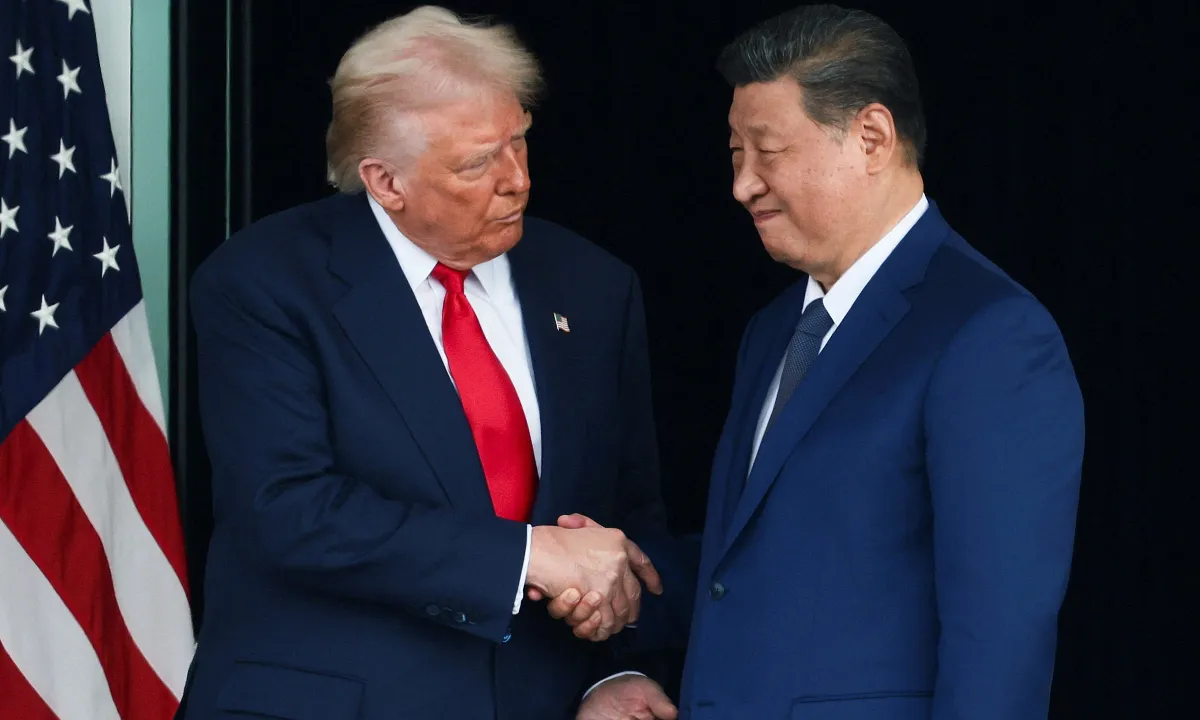 Mỹ - Trung Quốc thống nhất gì trong cuộc họp tuần này
Ngày 1/11, Nhà Trắng công bố chi tiết thỏa thuận mà Tổng thống Mỹ Donald Trump đạt được với Chủ tịch Trung Quốc Tập Cận Bình tại Hàn Quốc.
-
 IT Security Certification – Importance Today Digital World
IT security professionals in an age of rising cyber threats are in very high demand.
-
 Safety Valve Supplier in Saudi Arabia
Middleeast valve is the best Safety Valve Supplier in Saudi Arabia.
-
 System and Network Security in Bangalore: Safeguarding Digital Infrastructure
With Bangalore becoming a technological powerhouse, Bangalore requires more and more effective system and internet security in Bangalore.
-
 Understanding Data Security Information: Protecting against Digital Theft
The more data we produce, the more critical to understand data security information is.


