A Beginner’s Guide to HIL Testing for Efficient Software and Hardware Validation

Ensuring software and hardware components function seamlessly in the fast-paced world of embedded systems is crucial. Hardware-in-the-loop (HIL) Testing has become a go-to solution for developers seeking reliable and efficient validation methods. By simulating real-world scenarios, HIL Testing provides a risk-free environment to test embedded systems thoroughly. For companies like Servotech, embracing HIL Testing is a significant step towards achieving high-quality and robust solutions.
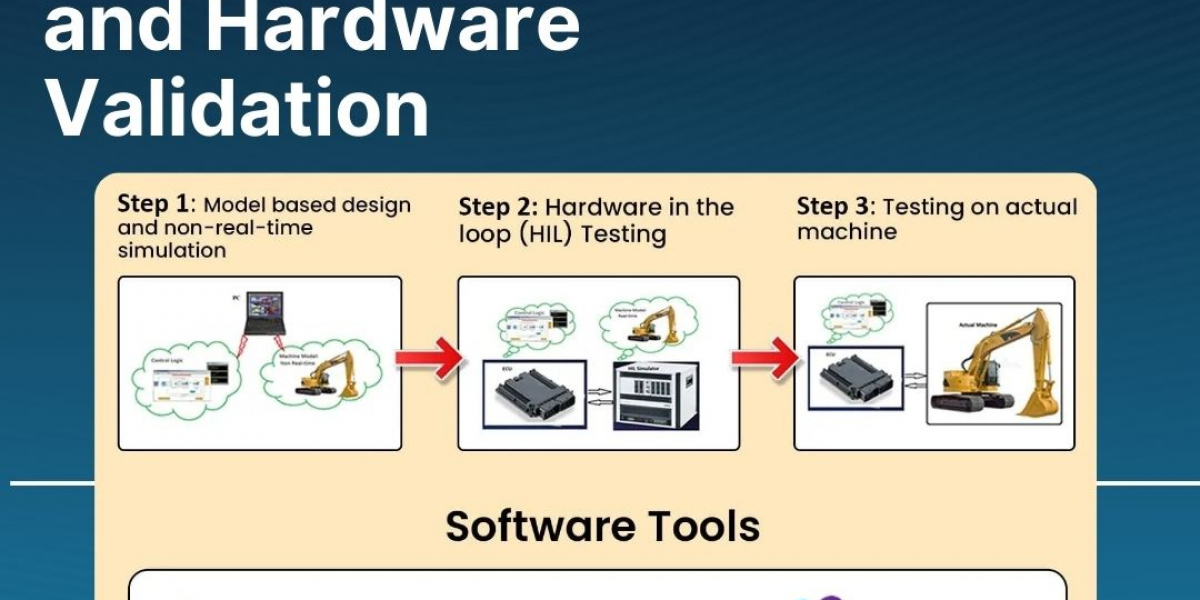
HIL Testing stands for Hardware-in-the-Loop Testing. This technique allows developers to test software and hardware interactions using real-time simulation. The primary goal is to validate the control systems without the need for a complete physical prototype. By integrating simulated inputs with the actual control hardware, engineers can identify issues early in the development process.
HIL Testing bridges the gap between virtual simulations and real-world testing. It helps reduce the risks associated with product launch by providing a comprehensive testing environment. For industries like automotive and aerospace, where safety and reliability are paramount, HIL Testing ensures that the control systems work as expected under various conditions.
Traditional testing methods often involve direct testing on physical prototypes, which can be time-consuming and expensive. In contrast, HIL Testing uses a simulated environment to test the software and hardware components in real-time. This not only accelerates the development process but also enhances the accuracy of the tests.
The process of HIL Testing involves connecting the control system to a simulation model that mimics real-world conditions. The simulation model provides inputs to the control system, and the system's responses are analyzed. This setup allows developers to test various scenarios without the need for an actual physical setup.
HIL Testing is widely used across various industries, including:
Despite its numerous benefits, implementing HIL Testing can present some challenges:
To maximize the benefits of HIL Testing, it is essential to follow some best practices:
At Servotech, we leverage advanced HIL Testing techniques to ensure the highest quality in our embedded software solutions. By simulating real-world conditions, we help clients achieve robust and reliable products, reducing the time to market and ensuring compliance with industry standards.
HIL Testing is a powerful tool for efficient software and hardware validation, enabling early issue detection, cost savings, and enhanced product reliability. For companies like Servotech, adopting HIL Testing practices ensures a robust development process, delivering high-quality products to meet the demands of industries like automotive, aerospace, and industrial automation. Embracing this testing method can be a game-changer for businesses looking to stay ahead in the competitive market.
For more information on how Servotech can assist with your HIL Testing needs, visit our HIL Software Testing page.
Khanh Chill
16Blog posts
-
 Play-to-Earn Gaming: The New Era of Digital Income in Gaming Industry
The gaming industry is undergoing a significant transformation with the rise of the play-to-earn model, which is redefining how players interact with games and derive value from them.
-
 Website Developer In Karachi, Pakistan
Karachi is the commercial and business hub of Pakistan. With thousands of businesses competing online, the demand for a skilled website developer Karachi has increased significantly
-
 Web Design Pakistan | Professional Web Development Pakistan Services
Looking for expert web design Pakistan and web development Pakistan services? Discover how professional websites help businesses grow online with modern design
-
 How a Professional mobile app developer in Dubai Boosts Business Efficiency and Growth?
Discover how a professional mobile app developer in Dubai boosts business efficiency and growth with scalable apps, automation, and enhanced user experience.
-
 Top 10 Tips to Boost User Engagement on Your Uber Clone
Launch uber clone in your region for high revenue
-
 Why Investing in a Food Delivery App is the Smartest Business Move in 2026
Discover why investing in a Food Delivery App in 2026 is a smart business move. Learn about market growth, revenue opportunities, key features, and future trends driving success.
-
 Recover Your Memories: Best Photo Recovery Software to Restore Deleted Images Easily
Losing your important photos can be stressful, but do not worry. There are different tools that can be used for photo data recovery.
-
 Recover Your Memories: Best Photo Recovery Software to Restore Deleted Images Easily
Losing your important photos can be stressful, but do not worry. There are different tools that can be used for photo data recovery.
-
 Cloud Adoption Strategies Guided by DevOps Consulting Companies in India
Leading DevOps consulting company in India offering CI/CD setup, cloud automation, infrastructure scaling, and secure deployment workflows for enterprises.
-
 How Do Indian Teams Manage Mobile App Projects Successfully?
Indian teams excel in managing mobile app projects successfully, and Devherds leverages skilled developers, agile methodologies, and clear communication to deliver high-quality, timely, and scalable app solutions.
-
 Key Services Offered by a Web Development Company in Chennai
We are a website development company in Chennai offering website development services that are fast, mobile-friendly, and built to grow your business online.


