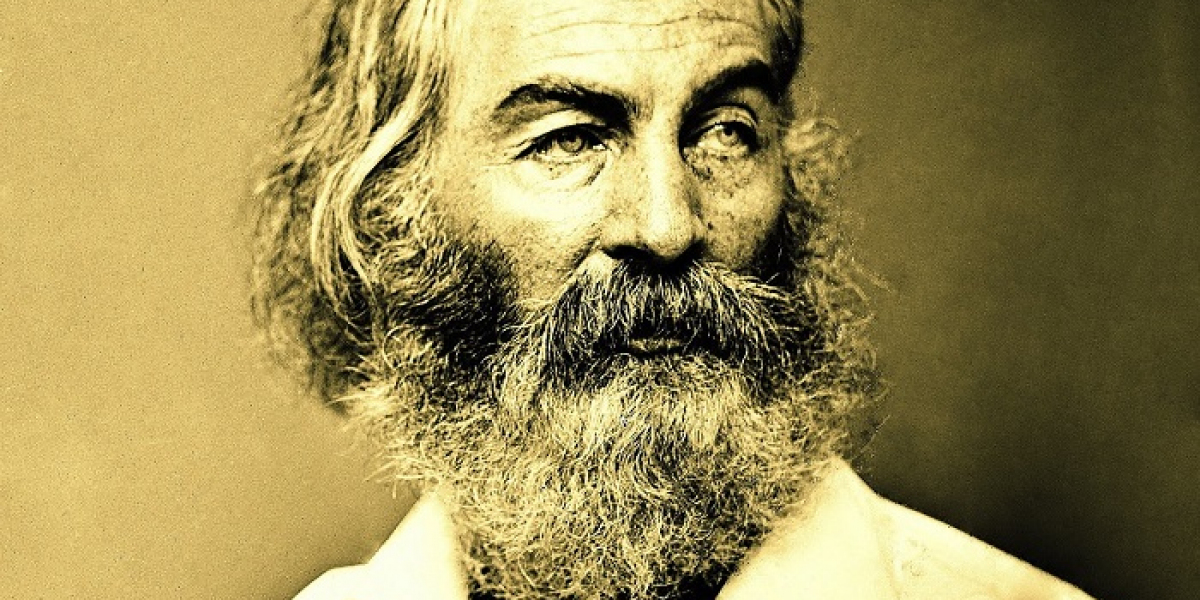
Walt Whitman stands as one of America’s most important and original poets. His poetry speaks with a powerful and open voice. He celebrated democracy, nature, the human body, and the soul. He praised the common people. He honored work, struggle, and the mysteries of life. More than anything, Whitman’s poetry often expressed a deep sense of praise—praise for existence itself.
Whitman’s major work, Leaves of Grass, contains a wide range of poetic styles and themes. It evolved throughout his life. He revised and expanded the collection in several editions. Within these pages, readers can find dozens of poems that express joy, admiration, respect, and spiritual wonder. Whether praising the body, the laborer, the landscape, or the soul’s journey, Whitman gives his words with boldness and passion.
In this article, we explore thirty poems by Walt Whitman that center on praise. These poems may uplift the spirit, open the heart, or stir the reader’s mind. Each one reflects a facet of Whitman’s poetic vision. The language is often simple. The meaning, however, reaches deep.
This long poem stands at the heart of Whitman’s work. It is both personal and universal. He praises the self, the soul, and the world around him. He celebrates the human body and the interconnectedness of all people.
In this poem, Whitman praises the human form. He sees beauty and holiness in both male and female bodies. He connects physical appearance with spiritual worth. The poem is a hymn to the human presence.
This poem begins with a declaration of praise. Whitman sings the self, the individual, the modern man. He honors equality between body and soul, between male and female.
This short, joyful poem praises the working people of America. It gives attention to mechanics, carpenters, mothers, and more. Each person’s song becomes part of a national chorus.
Here, Whitman praises freedom and travel. He walks forward on the open road and invites others to join him. The poem lifts up the spirit of movement and possibility.
Whitman reflects on time and unity. He praises the shared experience of people across generations. The river becomes a symbol of connection.
This elegy for President Lincoln is filled with deep sorrow, but also reverence. Whitman praises Lincoln and honors his death with images of nature and song.
This poem combines memory, longing, and music. Whitman praises the mysterious power of nature and the origin of poetic inspiration.
Whitman praises the soul’s brave efforts. Like a spider casting its thread, the soul seeks meaning and connection. The poem quietly honors persistence.
In this famous elegy for Lincoln, Whitman uses nautical imagery to praise leadership and sacrifice. The tone is both admiring and grieving.
This energetic poem praises the people of the entire world. Whitman addresses many nations, cultures, and languages with open arms. He expresses love for global humanity.
Whitman looks closely at human faces. He sees mystery and story in each one. The poem praises the uniqueness of each person.
This short piece addresses the unknown reader. It praises the bond between poet and audience. It also hints at shared understanding beyond time and space.
Here, Whitman praises everyday labor. He respects work of all kinds. He sees dignity in effort and equality among all workers.
This poem praises childhood and learning. Every object and person the child sees becomes part of him. Whitman celebrates growth and perception.
Though this poem focuses on suffering, it still contains admiration. Whitman honors those who endure pain in silence. He bears witness with respect.
In this poem, Whitman praises the future of America. He envisions a strong, poetic voice rising from the nation. He ties poetry with freedom.
Whitman quietly praises the experience of wonder. Instead of scientific charts, he chooses direct experience of the stars. The poem honors silent awe.
This poem declares that everything is a miracle. From daily scenes to large events, Whitman praises all things with equal joy. Nothing is too small.
Whitman praises the healing power of nature. Even death and decay return to life. The earth renews itself. He admires its silent work.
This passionate poem praises desire. Whitman expresses human longing without shame. He lifts it up as a natural and sacred force.
This poem overflows with praise. Whitman sings of many things—laughter, labor, landscapes, friendship. He names joy after joy.
Whitman addresses the reader with intimacy. He praises connection between writer and reader. He asks for deep, honest attention.
In this visionary poem, Whitman walks among sleeping people. He blesses them. He enters their dreams. He praises their hidden lives.
This sequence contains several poems that praise time, nature, and the unfolding of the day. Whitman moves from sunlight to starlight with reverence.
Whitman praises the quiet hour of reflection. He honors the soul’s need for thought, poetry, and night. It is a peaceful poem of praise.
The poet speaks to the Earth as a mirror. He praises the world as both companion and reflection. There is intimacy in the voice.
Whitman praises human connection—even a momentary glance. He suggests that all people may share deep, hidden bonds.
Though filled with self-doubt, this poem ends with renewal. Whitman finds praise in struggle. He honors the ocean and his own poetic path.
Whitman praises the spirit of creation. He walks in nature and addresses the unseen force behind it. The tone is mystical and grand.
Walt Whitman wrote with a wide and generous heart. He found praise in the body, the soul, the earth, the stars, the worker, and the unknown reader. His voice welcomed all. It blessed the ordinary and the divine.
Through these thirty poems, we hear Whitman’s deep affirmation of life. His praise is not limited to religion or poetry—it fills every corner of human experience. He invites the reader to see, to feel, and to celebrate. In Whitman’s world, every person and every moment is worthy of song.

nevermorepoem nevermorepoem
58 posts
-
 Common Mistakes Non-Technical Students Make While Learning Power BI
In today’s data-driven world, Power BI has become one of the most valuable business intelligence tools for students and working professionals.
-
 Why Non-Technical Students Sometimes Struggle in Power BI Courses — and How the Right Training Can Help
In today’s data-driven world, Power BI has become one of the most valuable business intelligence tools for students and working professionals.
-
 The Role of Technology in Modern Commercial Office Workstation Cleaning
Modern tech in workspace cleaning
-
The Role of Empathy in UX Design
Empathy is the heart of UX design. It transforms interfaces from functional tools into meaningful experiences that resonate with users.
-
 Jack Ma Success Story: From Struggles to Global Entrepreneurship Icon
The Jack Ma success story is a remarkable example of resilience, vision, and innovation. Born as Ma Yun in 1964 in Hangzhou, China, Jack Ma’s journey from a humble English teacher to one of the world’s leading entrepreneurs is nothing short of extraordinary
-
 How to Style Your Trapstar Hoodie for Any Occasion
Trapstar hoodies have evolved from simple streetwear staples into versatile fashion pieces that blend comfort, attitude, premium style, and cultural influence.
-
 Electrical Masters – Melbourne’s Trusted Solar Experts
Melbourne is leading the charge in Australia’s renewable energy transition, with solar power emerging as a dependable and cost-effective solution for sustainable energy needs.
-
 Beyond the Bluebook: Dubai's Secret to Conquering the Adaptive Digital SAT
The SAT has always been a significant hurdle for students aspiring to study at top universities globally. For students in the UAE, this challenge has taken on a new dimension with the global transition to the register for sat in uae. This isn't just the old paper test on a screen; it
-
 Chardham tour operators in Haridwar
Trimurti Travels is one of the most trusted Chardham tour operators in Haridwar, offering well-planned and comfortable pilgrimage packages for devotees from across India.
-
 How Did Edward Lear’s Nonsense Writing Affect Popular Culture?
Edward Lear redefined the boundaries of language, humor, and imagination. Through his inventive works, he influenced literature, art, and entertainment, leaving a lasting mark on popular culture.
-
 How Did Edward Lear’s Nonsense Writing Affect Popular Culture?
Edward Lear redefined the boundaries of language, humor, and imagination. Through his inventive works, he influenced literature, art, and entertainment, leaving a lasting mark on popular culture.


