By Joanna Partridge • June 9, 2026 • Business
175-year-old Stoke-on-Trent company says Christopher Bailey’s investment will ensure continued production
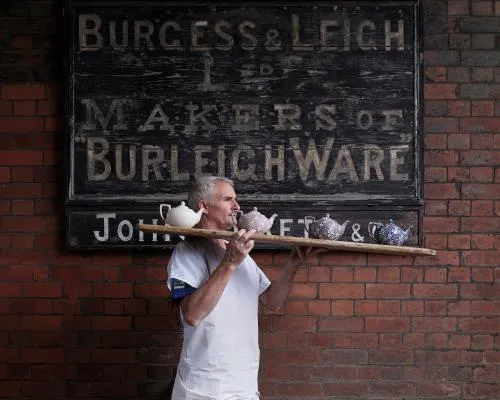
Christopher Bailey, the fashion designer who turned the British trenchcoat maker Burberry into a global brand, has acquired the Stoke-on-Trent company Burleigh Pottery along with a small group of private investors. The ceramics company, founded in 1851 and best known for its intricate floral designs, said Bailey’s investment would ensure that production of its cups, saucers and plates could continue without interruption at the city’s Middleport Pottery site. The company’s future had been called into question after its parent company, Derbyshire-based Denby, established in 1809, called in administrators in March after struggling with rising energy and labour costs. Manufacturing was stopped the following month, when workers were made redundant. Denby was the latest in a number of traditional British ceramics companies to collapse amid soaring energy costs – driven up by the ongoing conflict in the Middle East – and higher employment costs, as well as pressure from cheaper international competitors. Rachel Reeves announced a £120m support package for the industry last month, but that came too late for Denby and other well-known brands, including Royal Stafford and Heraldic Pottery, which both went bust in 2025. Burleigh said none of its 62-strong staff had been made redundant following Denby’s collapse. The value of the deal to save the company has not been made public. Halifax-born Bailey has mostly remained out of the spotlight since he stepped down in 2018 as the creative head and chief executive of Burberry, until news broke on Tuesday of his involvement with another heritage British brand beginning “Bur”. “I have always loved Burleigh pottery,” Bailey said in a statement. “This company has an extraordinary history, and what makes it so special today is the skill, care and creative spirit that continue to define the business.” Burleigh is Britain’s last continuously working Victorian pottery, where every item is still made by hand at its Stoke-on-Trent factory, as it has been since 1889. Its ceramics are made using its distinctive “tissue transfer” printing technique: designs featuring pheasants or botanical prints are engraved by hand on to copper rollers, before being transferred on to delicate tissue paper and then clay to create its tableware and teaware. The intensive and intricate nature of the work means that Burleigh ceramics retail for relatively high prices, with a mug costing £45 and upwards, while teapots sell for £164. The company is the last heritage pottery in the world still using this traditional method and said the technique and its 62-strong workforce would be preserved by the investment. Bailey said he was “deeply committed to protecting and showcasing the craftsmanship and character that make Burleigh unique, while helping to shape its future as a distinctive and meaningful British design and ceramics house”. During his 17 years at the helm of Burberry, Bailey was credited with turning an ailing raincoat company into Britain’s biggest fashion brand with an international clientele and boutiques around the globe. He rebuilt the brand around its traditional trenchcoat and was known for emphasising the company’s British heritage and designs. Burleigh is a portmanteau of the names of the two men – Frederick Rathbone Burgess and William Leigh – who took over running the company in the early 1860s. As the business grew, the owners invested in a purpose-built factory, Middleport Pottery, which became known as a model factory thanks to its modern technology and a special layout aimed at helping the flow of products through the site. The term Burleigh was first introduced to refer to a new pattern, and then in 1903 was chosen as the name of the brand.
Source: The Guardian

Business Daily
44 posts
-
 Embracing the Freelancer Loan Opportunity
Moreover, these loans can serve as an important software for expertise acquisition.
-
 Understanding Housewife Loans
Housewife loans are an more and more popular financial answer that cater to the wants of homemakers looking for investment or funding options.
-
 Understanding Employee Loan Options
Yes, obtaining a credit score loan with poor credit remains to be potential.


