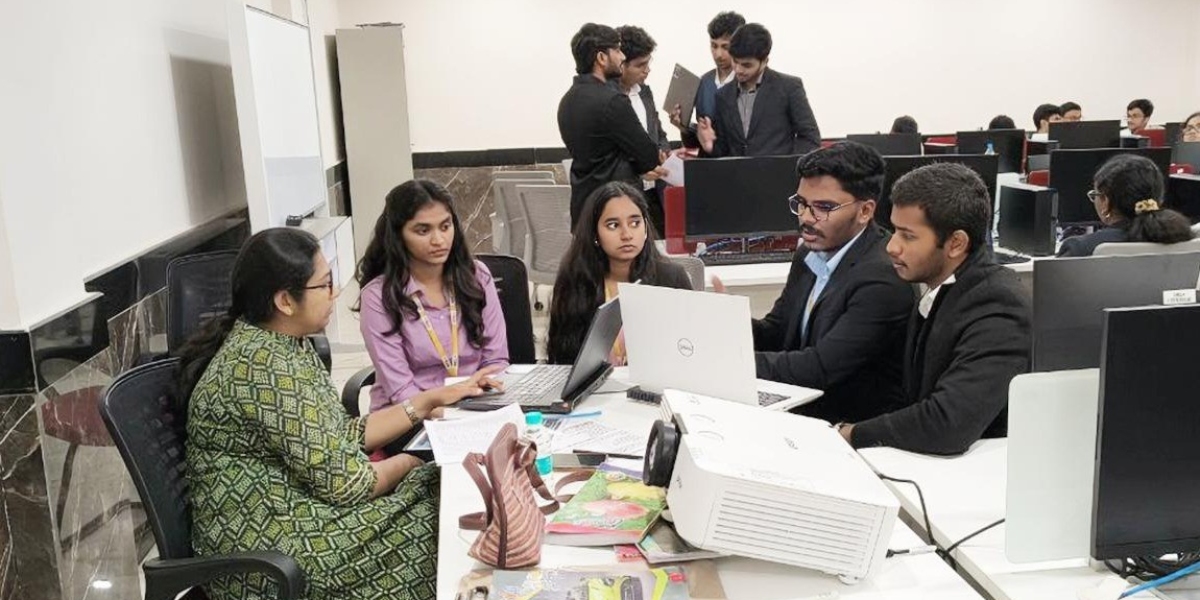
What started as a simple class assignment on computer networks gradually evolved into a real cybersecurity experience. KLU second-year CSE students P. Shashindra Reddy, M. Yashaswini, G. Anshika, and Sushil, along with their mentor, Mr. Shaik Asif, created a smart honeypot. The goal was to understand the true nature of network security.
This honeypot gave students the opportunity for the first time to see for themselves how an attacker tests the system, how he tries to penetrate and how every small activity leaves behind digital evidence, Top universities in Vijayawada .
Real attacks on simulated systems
The team created a controlled setup on two virtual machines. One machine was simulated as a vulnerable Linux system, while the other acted as an attacker. The Cowrie-based honeypot silently recorded every scan, every command, and every suspicious activity.
On the other hand, the attacker running Kali Linux tried to exploit the system in every way possible – scanned, probed, tried to login and even ran commands over a fake SSH session.
Every click, every keystroke, every packet left a trail. Fortunately, the entire setup was contained within a closed virtual network, so there was no real-world threat.
The real power of honeypots lies not just in collecting logs, but in understanding patterns from them. The students converted JSON logs to CSV and then created clear graphs showing which IP addresses were most active and how attacks changed over time.
Detecting attacks isn't a guessing game. It's about piecing together small clues. This platform helped students do just that.
They understood the context of each attack using methods such as IP analysis, session tracking, command patterns, timing information, packet signatures, and Nmap fingerprinting.
All these elements together reveal how the attacker thinks, what his intentions are, and how his strategy proceeds.
Learning goes beyond assignments
In the end, this project wasn't just a technical exercise. It was a real-world experience that showed students how a cyber-attacker works and how a security team understands their activities.
For the students, this project went beyond installing software. It was an opportunity to observe an attack in progress, understand it, and learn how to build defenses in the world of cybersecurity.
This experiment proves that when learning is connected to reality, even an ordinary classroom can become a real cybersecurity laboratory.

KL University
1Blog posts
-
 Common Mistakes Non-Technical Students Make While Learning Power BI
In today’s data-driven world, Power BI has become one of the most valuable business intelligence tools for students and working professionals.
-
 Why Non-Technical Students Sometimes Struggle in Power BI Courses — and How the Right Training Can Help
In today’s data-driven world, Power BI has become one of the most valuable business intelligence tools for students and working professionals.
-
 The Role of Technology in Modern Commercial Office Workstation Cleaning
Modern tech in workspace cleaning
-
The Role of Empathy in UX Design
Empathy is the heart of UX design. It transforms interfaces from functional tools into meaningful experiences that resonate with users.
-
 Jack Ma Success Story: From Struggles to Global Entrepreneurship Icon
The Jack Ma success story is a remarkable example of resilience, vision, and innovation. Born as Ma Yun in 1964 in Hangzhou, China, Jack Ma’s journey from a humble English teacher to one of the world’s leading entrepreneurs is nothing short of extraordinary
-
 How to Style Your Trapstar Hoodie for Any Occasion
Trapstar hoodies have evolved from simple streetwear staples into versatile fashion pieces that blend comfort, attitude, premium style, and cultural influence.
-
 Electrical Masters – Melbourne’s Trusted Solar Experts
Melbourne is leading the charge in Australia’s renewable energy transition, with solar power emerging as a dependable and cost-effective solution for sustainable energy needs.
-
 Beyond the Bluebook: Dubai's Secret to Conquering the Adaptive Digital SAT
The SAT has always been a significant hurdle for students aspiring to study at top universities globally. For students in the UAE, this challenge has taken on a new dimension with the global transition to the register for sat in uae. This isn't just the old paper test on a screen; it
-
 Chardham tour operators in Haridwar
Trimurti Travels is one of the most trusted Chardham tour operators in Haridwar, offering well-planned and comfortable pilgrimage packages for devotees from across India.
-
 How Did Edward Lear’s Nonsense Writing Affect Popular Culture?
Edward Lear redefined the boundaries of language, humor, and imagination. Through his inventive works, he influenced literature, art, and entertainment, leaving a lasting mark on popular culture.
-
 How Did Edward Lear’s Nonsense Writing Affect Popular Culture?
Edward Lear redefined the boundaries of language, humor, and imagination. Through his inventive works, he influenced literature, art, and entertainment, leaving a lasting mark on popular culture.


